
Personal Stories

Friendship and IBD: Know when to not give advice

By Varada Srivastava (India)

Hanging out with friends, attending parties, going to school are all things kids with Crohn's disease lose out on. You’re hospitalized or too sick to get out of bed many times, especially during the beginning stages of diagnosis. Not to mention the mental health issues that come with dealing with a chronic illness from a young age - anxiety, depression, PTSD associated with hospitalization are all too common. It can be very difficult to maintain friendships when you’re trying to survive daily life. How people react to your chronic illness is one of the pivotal points of friendship. I couldn't help but notice a pattern between the friendships I’ve maintained over the years. The common factor between them has been my friends’ ability to listen and not give unsolicited advice when I am talking about my disease. This is a quality I personally look for, however I have heard from many of my other friends who have a chronic illness that this is something they appreciate as well.

As someone who has been living with this illness for more than 6 years now, I have received my fair share of undesired advice from family, friends and random strangers. It is something that really aggravates me. Getting advice when you're trying to rant is pretty annoying in general but when you add IBD - something that is a very personal and a sensitive topic - the reaction you get can be explosive. Living with a chronic illness is tricky, most of us have figured out what works for us whether it's medicine or food after a long and painful journey. And as young adults, most of that journey is still left. One of the main reasons why some of us have such a negative reaction towards this is because it comes across as insensitive and like a privileged view on something very complicated.

This however, doesn’t mean that you don't look out for your friends with IBD. One of the foundations of a good friendship is caring for and helping out your friends. If you are a loved one of someone who suffers from a chronic illness, ironically, this is the advice I would give you:

1

Ask your friend whether this is something they are comfortable talking about. Never push them to talk about their diagnosis, medicines or journey.

2

Don't take it personally if this is something they would like to keep private. Many of us have gone through very difficult diagnosis journeys and talking about them can bring back a lot of trauma.

3

Research about the condition. Try to understand where your friend is coming from and what they struggle with on a daily basis.

4

Try not to give unsolicited advice, but do intervene if you notice them doing something that may not be in their best interest.


Having a good support system is extremely important for someone with a chronic illness. Friends give us a safe space to express and explore our emotions. Friends are, in reality, the best emotional medicine for people like us to overcome sadness and motivate us to take a leap of faith to transform our lives for the better.

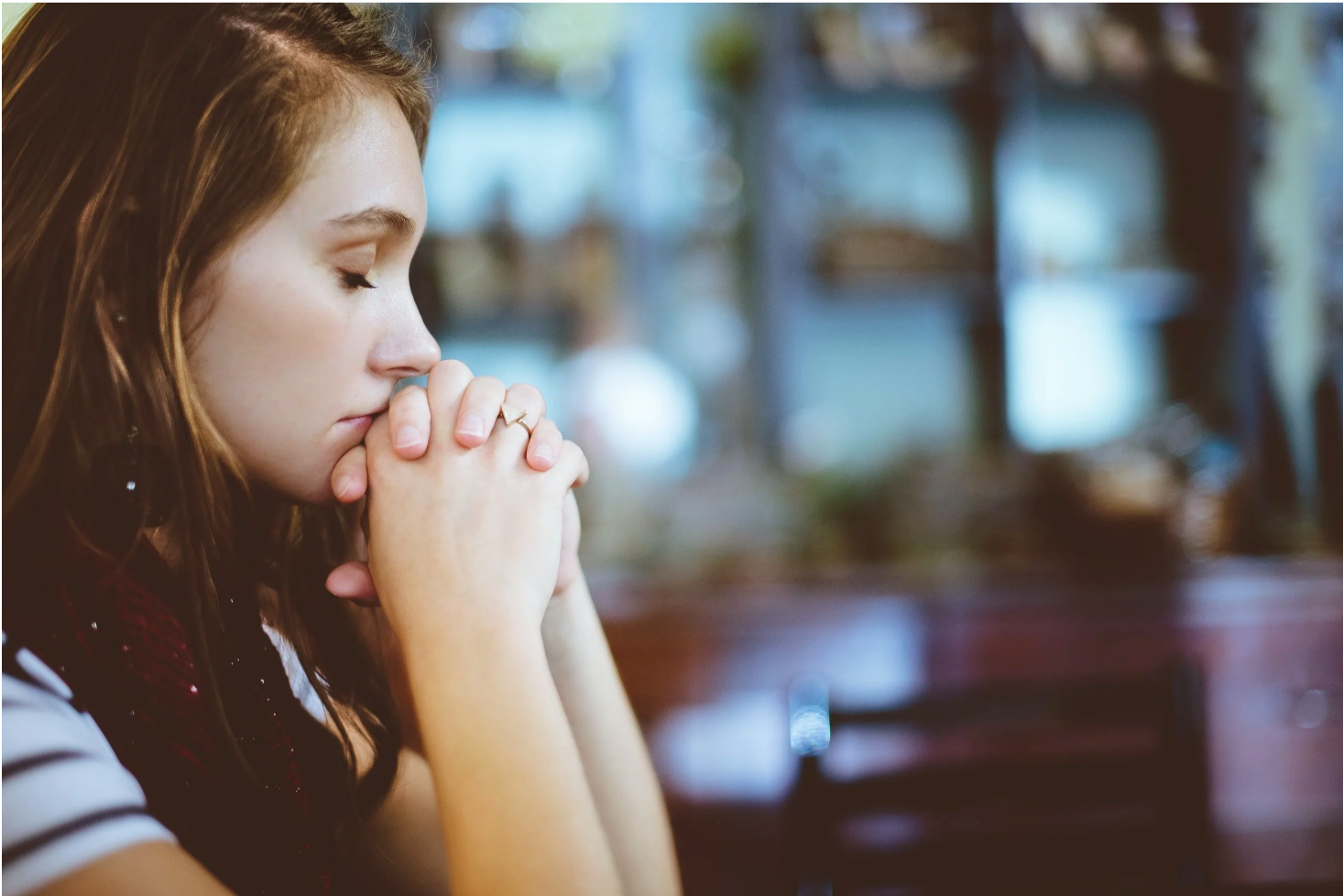
Photo by Helena Lopes from Pexels.
To Anyone Who’s Been Called a “Difficult Patient”

By Carina Diaz (Texas, U.S.A.)

My experience with getting a diagnosis and how it still affects me today.

This summer will be my ten year anniversary of having Crohn’s Disease, and throughout the years, I’ve been told the same phrase over and over again by many doctors: “You’re a difficult patient.” 

Hearing this since the age of 18 has been hard on my mental health. I’ve internalized those words and blamed myself for the state of my body. I thought that my symptoms being out of control was because I ate something that I should’ve have (I can’t resist pasta or cheese), I was thinking too negatively, or maybe it was just karma for something I did wrong. But none of that is true.

This is for anyone who has also been told that they’re a hard case, a real head scratcher if you will, as my ostomy nurse tells me. I’m going to tell you the words I wish someone would’ve told me: It’s not your fault. You did nothing to deserve this. You aren’t being punished (although it can definitely feels that way at times). 

I used to always look for a reason for why I was going through this. Maybe by having an explanation, I would feel better about my situation. I wanted something to blame. I wanted to be able to direct my anger towards something more tangible. I was craving to have some level of peace or stability. Getting diagnosed felt like my world was ending.

I was having abnormal symptoms for just a few months. I had to go to the bathroom frequently and having a bowel movement was very painful. I would try to avoid food as much as possible, because food meant having to poop and pooping meant pain. When my mom confronted me about skipping dinner and learned about what I was going through, she took me to my primary care doctor, which led to getting a referral for a gastroenterologist. I thought I would be told what was wrong with me, given medicine to treat it, and that everything would fine once again. That had always been my experience with doctors. I had always gotten answers and something to help. I didn’t know that there were things that doctors couldn’t fix or at the very least, have answers for. Getting a diagnosis meant I could no longer ignore how my body was feeling.

I didn’t know what was realistic for me to want out of life anymore. Would I be able to travel, have kids, or even live on my own? My doctor didn’t seem to take my age into account when he told me the results of my colonoscopy and endoscopy. I was finishing high school and getting ready to begin college. I was overwhelmed with the possibility of not being able to keep up with my peers, of not being normal. 

Hearing this since the age of 18 has been hard on my mental health. I’ve internalized those words and blamed myself for the state of my body.

The language that doctors use, whether or not it’s intentional, often puts the blame on the patient. “I don’t know what to do with you.” “You’ve failed this medication.” “I’m referring you to someone else. I can’t help you.” This has been so harmful to my mental health. It made me think I had done this to myself. At the end of every day, my mind would race through all the possible factors: I wasn’t managing my stress levels, I ate something that I shouldn’t have, I didn’t check the ingredients in what I ate thoroughly enough, I wasn’t taking the right supplements, or I needed to try another diet. For years, I picked apart my thoughts and actions. I dealt with a lot of toxic positivity from family. As well meaning as it may have been, it just fed into blaming myself. 

If you can relate to my experience or have been through it yourself, I hope you’ve been able to find comfort and support in community. It’s what organizations like CCYAN are here for. You’re not alone, you’re not to blame, and there are people out there who understand what you’re going through. I hope that knowing you aren’t alone brings you a bit of comfort. 

My Journey with Exercise and IBD

By Isabela Hernandez (Florida, U.S.A.)

Exercise can be a sensitive topic for people with IBD. For me, diagnosed with ulcerative colitis early on in my childhood, I never consistently played a sport growing up due to flares and frequent hospital visits. Little did I know that this inexperience would shape my relationship for years to come. People subconsciously implement exercise as a basic part of their everyday life throughout childhood. Because of this, as adults, they’ve developed a sense of comfortability with the idea of exercise. But for those with IBD, Saturday soccer games or just a run around the block is not a top priority. Getting into remission is always the goal and once it happens, the need to exercise is one of the many things that follows. This often leads to frustration on what to do and how to feel comfortable in the gym or at home trying to better your physical health. I never realized how dysfunctional my relationship with exercise was until I got to college.

College was the first time I began to exercise consistently without quitting. I was not forced to deal with severe sickness or constant hospitalizations, which led me to explore my ability to exercise. Gradually, I was able to learn exactly what I enjoyed doing to get my heart rate up. The journey of finding a relationship with exercise is an individual process. It is different for everyone and takes time. Personally, my life changed when I discovered strength training.

I’m sure many with IBD can understand what it is like to feel the relentlessness of feeling physically weak. I never once felt strong, and especially while flaring, the physical weakness I sometimes experienced was debilitating. I was hesitant at first to enter the gym, since I had no idea what I was doing. I was numb at the thought of embarrassing myself trying to exercise. This is a common fear that many have and it’s something that an individual must push through. In living with a chronic condition, there will always be times when we feel weak, but it is our responsibility to power through and uncover moments within exercising that make us stronger. As time progressed, my level of comfort in the gym grew, and my idea of what strength was began to shift. Not only was I physically feeling stronger than I ever had in my life, but more so, I mentally grew stronger. I really do believe that working on my physical health catapulted me on a journey to finding strength everywhere, not just in the gym. However, not every journey is perfect.

The more time I spent strength training, the more I began to get frustrated trying to build muscle. An uncommonly known fact about IBD for some is that individuals with UC or Crohn’s typically have a harder time putting on muscle. Sarcopenia is the reduction of muscle mass/strength and it exists in roughly 52% of Crohn’s patients and 37% of UC patients. [1] This is still an ongoing and evolving area of research, but it explains why for some IBD patients, it is extremely difficult to put on muscle. Many things drive sarcopenia in IBD patients, including chronic inflammation, vitamin D deficiency, adiposity, malabsorption and the dysregulation of the muscle microbiome axis. [1] Protein intake/absorption is usually reduced in IBD patients, so it is typically recommended that higher protein intake could serve as a solid attempt to prevent muscle loss. [1] This could result in a lot of frustration for IBD patients, and it needs to be recognized that it is not you; it is the IBD.

The science behind this phenomenon is very complicated and ever evolving. The reason I highlight this fact is that if you are like me and are on your journey with exercise, the frustrating roadblocks you are experiencing specific to exercise are not uncommon. Keep going and find what makes you feel good physically. For me personally, it was strength training, and my roadblock was the struggle to build muscle. Nevertheless, I will continue to do what makes me feel good while trusting the process and recognizing that IBD will always affect every area of my life. Whether we realize it or not, our IBD will always be there and try to prevent us from progressing in certain areas that we didn’t even realize it would affect. We must accept this and move on without letting it stop us. It is extremely important to talk to your doctor about the role of exercise in your life and what your body is capable of doing in the moment, taking into consideration disease activity. I hope that every person with IBD finds their own form of exercise that makes them feel happy, at peace, and above all, strong!


References:

1.         Dhaliwal A, Quinlan JI, Overthrow K, et al. Sarcopenia in Inflammatory Bowel Disease: A Narrative Overview. Nutrients. 2021;13(2):656. doi:10.3390/nu13020656


 This article is sponsored by Trellus

Trellus envisions a world where every person with a chronic condition has hope and thrives. Their mission is to elevate the quality and delivery of expert-driven personalized care for people with chronic conditions by fostering resilience, cultivating learning, and connecting all partners in care.

Learn more about trellus

Pregnancy & IBD: My Experience

By Dr. Fasika Teferra (Ethiopia)

Pregnancy is a gift from above. I believe when a child is born, so is the mother. I am a completely different person now than I was a year ago. There is no one specific time, but the whole pregnancy and childbirth experience changed me to the core. The journey was not perfect; I had so many lows, as I had highs. Although it is difficult, I wouldn’t change a thing, and here is why.

I had always wanted to have a baby at an early age. I was never taught what it means to be a mother nor what a child expects of you; they don’t teach that in med schools. It was fair to say that I never got the proper guidance from anywhere, but I believe it is like that for most moms. We don’t know what we are getting into until we are actually in it.

The first time I felt this was when I was in labor. The word I could use to explain that moment is stuck. I felt stuck because I couldn’t do anything to make the pain go away. It reminded me of the awful pain I had around the time I was first diagnosed with Crohn’s Disease. I couldn’t take any medicine to make it stop (there were no epidurals in Ethiopia when I gave birth). I was not in control, which is something I was accustomed to. All the labor related videos I watched and the breathing technics by doulas didn’t help because I was in over my head. Labor sucked.

But my pregnancy journey was amazing. I loved seeing my belly grow, feeling my baby kicks, assembling his crib and getting him cute outfits. Although the fear of relapsing still lingered at the back of my mind, it was easy to set it aside and enjoy the process.

I am well aware that I was able to stay in remission throughout my pregnancy and that could have contributed to me having a medicine free throughout my pregnancy. I experimented with a lot of diet and meditation just to make sure I stay in remission. As each person’s journey with IBD is different, I encourage you to work with your doctor to find out when it is best to have a baby. I hope that for anyone reading this article that may want to be a mother someday but is scared, I am here to tell you that you shouldn’t be. Pregnancy and delivery, whether you have IBD or not, is a rollercoaster ride, but one that is worth it in the end.

Grief with IBD: Remember to Turn on the Light

By Maalvika Bhuvansunder

Grief is a term generally associated with the loss of a loved one. In this scenario, the loved one is me. Grief for me was losing the person I used to be before my Crohn’s. I was always a happy and vibrant kid who would just never stop talking, never one to make plans beforehand, and was very flexible. I used to take life easy and would never overthink any scenario. I became a completely different person, to be precise, the exact opposite of who I was before. I’m always overthinking, moody, and can not function without a plan. It felt that instead of being a part of my life, Crohn's became my life. Activities that used to bring me happiness like dancing and reading, were no longer of interest to me. I used to love going out with family and friends, but the thought of going out scared me. I felt the safest inside my house, having minimum interaction with the outside world. This “safety”, however, did not bring me any happiness. I was constantly miserable even when I was not in a flare. My mood started reflecting on my behavior with others. I was constantly snapping at my family and getting angry for no reason. I became this person that I could not recognize. I remember distancing myself from my friends and internally blaming them for the distance.  

After a struggle of three years, I reached a short-term remission in 2019. The timing could not have been any better, as I was relocating to Manchester to pursue my Master's. For my Master's thesis, I was researching grief and suicide bereavement. That is when I had my eureka moment! The themes that emerged from the research were isolation, anger, guilt, and loss of interest in activities that once used to bring them happiness. During this research I realized these were the exact emotions I had felt. Upon self-reflection, it made sense that, in a way, what I experienced was a type of grief. Grieving the girl that used to get happy at the smallest of things, the one who used to take life as a beautiful journey, and the girl who never used to get angry. I was using unhealthy coping strategies to make up for the grief I felt from losing the person I was before.  Along with grieving the past me, I was grieving the future. All these questions of will I be able to work, find someone who accepts my condition, and a lot of other things. I remembered one of my research participants expressing how much she lost in the present day by worrying about her past and future; it was completely futile. This type of grief is something I am sure many individuals with a life-long illness might feel but would not have realized what it meant.

“Happiness can be found, even in the darkest of times, if one only remembers to turn on the light.”
— Albus Dumbledore, 'Harry Potter And The Prisoner Of Azkaban'

At that particular moment, this quote from Harry Potter resonated with me: “Happiness can be found, even in the darkest of times, if one only remembers to turn on the light.” I was so focused on hating my situation that I forgot to switch on the light in my life, to appreciate those that stuck by me. Crohn's may have played a part in this internalized grief of mine, but it was me that refused to see the good things. Yes, I am no longer the girl I used to be; however, Crohn's made me a much more resilient and empathetic individual. It instilled in me the sense of being nonjudgemental and understanding others struggles. I started to appreciate my body for working its best to survive despite the condition. I was grateful for my family and friends that stuck by me despite my infuriating behavior. It was an eye-opening moment for me.

I made a promise to myself to start doing the things that once bought me happiness, no matter how small they are. We cannot change the past, nor can we predict the future. Why waste away our present amidst this?! It is very natural to grieve the things we lost due to our illness and what we think we might miss out in the future. At such times, I stand in my balcony and remember to switch on the lights in my present life and find happiness in the smallest moments. When we have an illness that takes a huge toll on our body, we must make sure that on the days we do feel okay to make the most of it.

Energy Management with a Chronic Illness

By Varada Srivastava (India)

Finding a way to manage time with a chronic illness is a complicated process. It can be frustrating to figure out the new normal when you are originally diagnosed. For people with chronic illness it can be very difficult to figure out what is physically and emotionally possible for us to do that day. There are a few theories that have come to help us cope with this.

Moreover it’s very important for people who don’t have a chronic illness to understand it.

Christine Miserando is a lupus advocate who is known for coming up with the spoon theory. According to her, the difference between being sick and being healthy is having to make choices or to consciously think about things the rest of the world doesn’t. The healthy have the luxury to live life without having to make constant choices which is something most people take for granted. People with chronic illness are given a certain amount of spoons whereas healthy people have an unlimited supply. In her story, she gave her friend 12 spoons to get through the day. Each spoon represents the amount of energy we have for a certain task. For people with chronic illness, each task is also divided into smaller tasks.

For example: wearing clothes in the morning requires a series of decisions in which we have to keep our illness in the front of our mind. If you are getting blood drawn that day, you need to make sure to not wear long sleeves; if you feel the onset of body ache, you need to wear warmer clothes. These micro calculations take up the majority of our mental space. Do I take my medicine before or after lunch? Should I just wear a summer dress to relieve the pressure on my stomach? Are my hands too sore to handle buttons? I can't do many tasks if I take pain medicine. These are only a few of the many questions we tackle everyday. Each task requires a game plan. This constant mental gymnastics is incredibly tiring.

Emmeline Olsen wrote another article for IBD New Today which focused on the pitfalls of following the spoon theory. The spoon theory is based on the loss people with chronic illness face. But according to Emmeline, having a chronic illness piles stuff onto our original to do list. She gave the analogy of a filled bucket, healthy people can fill their bucket as much or as little as they want. Having a chronic illness is like filling the bucket with stones, each time you do a task which is exclusive to people with chronic illness, a stone is added to the bucket. Having a flare is compared to having a bucket filled to the rim. The worse the disease gets, the heavier the bucket is, the more chance it has of overflowing.

Having read both these theories, I think I tend to follow a mixture of both. Right now, I'm in remission, I am able to carry a heavier bucket. Doing daily tasks is comparatively easier and the stones in my bucket are less. However during a flare when I don't have enough energy to get out of bed the thought of lugging a bucket around seems exhausting. The amount of tasks seems overwhelming. That's when I like to follow the spoon theory. It helps in breaking down everyday tasks into smaller, more manageable activities.

Dealing with a chronic illness is very subjective, while some things work for one person they might not work for others. The goal is to find what works best for you, mostly through trial and error. And while going through this process it is very important to remember to be kind and patient with yourself.

Featured photo by Pixabay.

The Impact Patient Advocacy has had on my Life

By Varada Srivastava (India)

Patient advocacy has helped me feel a part of a community as well as cope with my illness.

Patient advocacy is something I was first introduced to thanks to the blog of Natalie Hayden. She's a former news anchor and author of the blog, “Lights Camera Crohn’s”. A person who suffers from chronic illness has to constantly face challenges since the time of diagnosis, which is excruciating, to say the least. Overcoming challenges faced throughout our journey, from diagnosis to daily life, is something many of us experience. In fact, it seems like I would break down every time I read her blogs. I spent the entire day reading her blog and crying.

Many people don't realize the severe impact that chronic illness occupies in the lives of patients. How much chronic illness impacts our daily lives. Fighting an invisible illness is often isolating and heartbreaking. I discovered Natalie Hayden’s blog probably 5 years after my diagnosis and that was the first time I did not feel alone with my disease. I acknowledged the importance of patient advocacy when I realized that if I had this support when I was diagnosed, perhaps I would not have felt so lost until coming to terms with my illness.

India faces a lot of misdiagnoses because of health illiteracy, lack of medical facilities, and expensive medications. The feedback IBD patients may get is also typically insensitive.

Having a system of people who help you and encourage you during difficult times is crucial. It's easy to feel alone when you're struggling on the sidelines. And when people don't reach out, it can be difficult to stay optimistic. When it comes to Crohn's disease, it is often referred to as debilitating. And that it is. However, I’d also argue that what's really debilitating is constantly worrying about the unexpected.

It is common for Crohn's disease and ulcerative colitis patients to have what is known as "psychophysical vulnerability." 1 Stress, emotional distress, and inadequate coping skills can all have a negative impact on how the disease progresses and decreases quality of life. 1 There are always two types of reactions you receive from people. Friends who support us and people who give unwanted advice.

For several years following an initial diagnosis, the number of procedures and medications can be overwhelming. Determining trigger foods and finding medications that work, are also among the significant challenges. Having a network of individuals who have gone through the same process is helpful to a great extent. It has been an invaluable experience for me to connect with young adults from around the world who face similar challenges.

Patient advocacy has helped me feel a part of a community as well as cope with my illness. If you can find a friend who understands, even if you've never met in person, you can gain comfort. It may be something you didn't know you needed it until it was offered to you. I have accepted that rather than being afraid to reveal my disease, it is more helpful to be vocal about it and get advice on how to cope with it.

As a result of this, starting a support group at my university and applying for the Crohn’s and Colitis Young Adult Network fellowship has been two of the most rewarding personal experiences in my life. Being able to help others with things I have struggled with, is an incredible opportunity for me. I'm very grateful to patient advocates for this reason. The awareness of autoimmune disorders is constantly growing all over the world and I feel blessed to be a part of it.

Featured photo by Polina Kovaleva on Pexels.

Resource: (1) Bonaz BL, Bernstein CN. Brain-gut interactions in inflammatory bowel disease. Gastroenterology. 2013; 144(1):36-49.

My Ileostomy Story

By Carina Diaz (Texas, U.S.A.)

In May of 2021, I went to the ER for what felt like the millionth time. I had been struggling with cysts and abscesses forming in my vagina for the past three years and this time was no different. Or so I thought.

I had already been to the ER earlier that week and was seen by a male doctor who, in hindsight, wanted to quickly drain the cyst and get it over with to move on to the next patient. I told him that I wanted a CT scan, but he said it wasn’t necessary. For my second ER trip of the week, I was seen by a female doctor. I made a comment about this being my eighteenth time having to do this in the last three years and with a look of concern on her face, she said, “That’s not normal. Let’s do a CT scan.” To which I said, “Brilliant idea.”

The part that I hate most about going to the emergency room is having to wait. And wait. A nurse takes your vitals. Then you have to wait. Someone comes to get your insurance information. More waiting. You tell the doctor what’s wrong. Even more waiting. The doctor comes back with a nurse. They do what they need to do. And you wait some more for either discharge paper work or to be admitted. 

After getting a scan, it was decided that I would need incision and drainage surgery. But guess what? My gynecologist only does surgery at one hospital and it wasn’t the one I was currently at. So I had the joy of, you guessed it, waiting for an ambulance to come to transport me to another location. Watching the night sky through the back windows wouldn’t have been so bad if I wasn’t strapped to an uncomfortable bed made of plastic.  

This was the second time I’ve had to get incision and drainage surgery, so it wasn’t a new experience to me. What was new was being presented the choice of potentially having to get ileostomy surgery. It would give my colon a break and let the fistula heal (a surprise that was discovered during the surgery). 

To be honest, getting an ostomy bag was the worst-case scenario in my head as someone with Crohn’s Disease. It sounded scary and uncomfortable. What clothes could I wear? Would people see it? Would I smell? Am I going to wake up in pain after the surgery? When the hell will I be allowed to eat?! I don’t want a poop bag strapped to me. All of these thoughts were floating in my head while three doctors stood in front of me explaining the process. The good thing was that it would be temporary. 

I let a doctor use a robot to cut me open and pull a bit of my intestine out. I didn’t wake up in pain, but I was scared to look at my body. The rest of the week was a blur of learning how to empty it, clean it, and how to live with this new change.

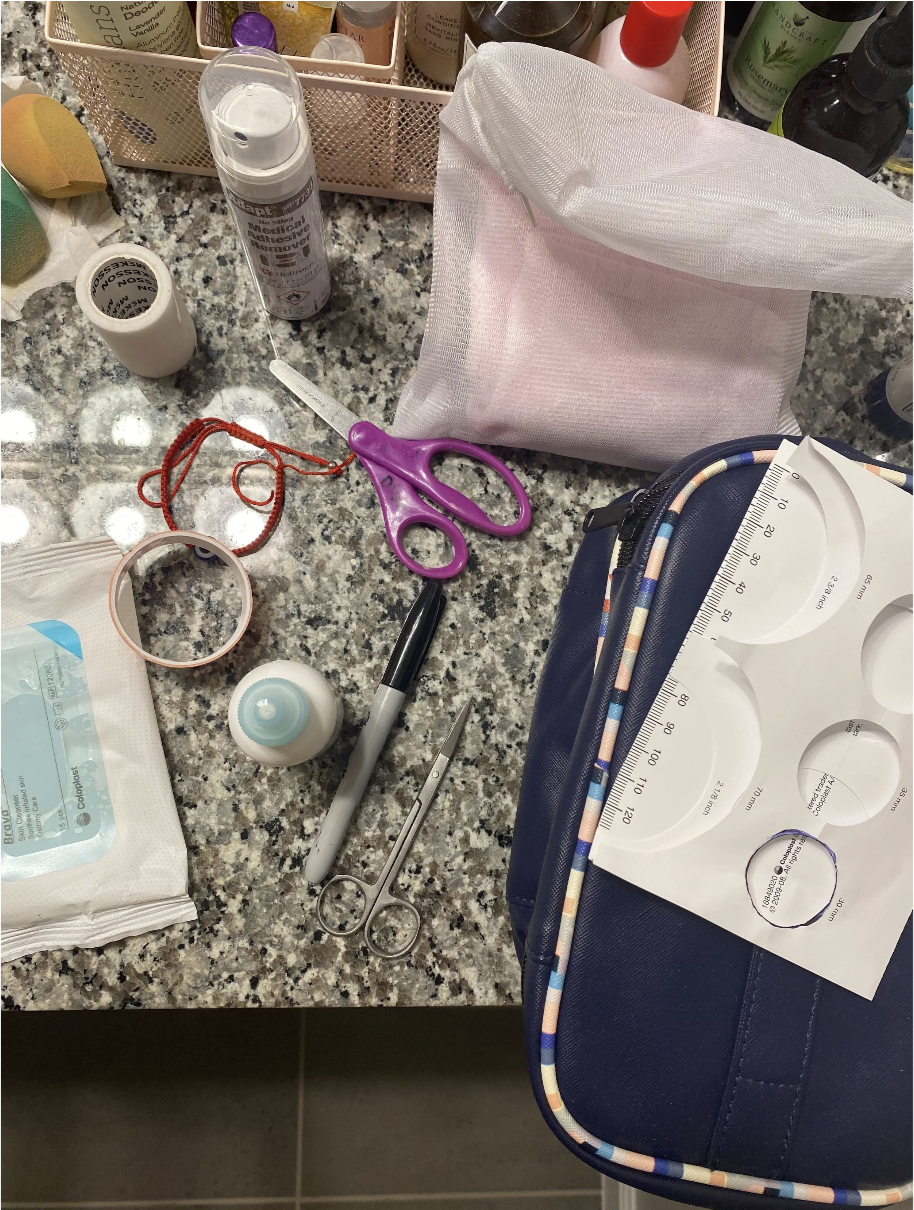
At the time of writing this, I’ve had an ostomy bag for ten months. While it has greatly improved my quality of life and lowered the severity of my symptoms, it has definitely been challenging. I have three different skin conditions, so my torso really hates having something taped to it. I have yet to find a bag that doesn’t irritate my skin. During my second month after surgery, I kept getting blowouts at night and barely got any sleep. It was painful and itchy. My ostomy nurse likes to describe me as “a real head scratcher.” 

Having IBD makes me think a lot about the duality of life. I’m grateful that this surgery was an option for me because it has helped in many ways, but I still have to make sacrifices. I still have to deal with discomfort, and I’ve had to relearn my body yet again. That cycle will continue when I eventually (hopefully) get reversal surgery at some point.

Some people have positive experiences with ostomies and say that it has given them their life back. If that’s not the case for you and you’re also struggling with having an ostomy, try to remind yourself that you’re doing your best. Take it one day at a time and cry when you feel the tears forming. I recommend watching your favorite show if you’ve had a hard time changing your bag. Those stomas can be so unpredictable.  

Constructing a Visual Language in the Chronic Illness Community

By Ibrahim Z. Konaté (U.S.A. and France)

Featured photo by JULIO NERY from Pexels

Learning at the age of 23 that I have a life-long disease was incredibly destabilizing. Once my care team developed a treatment plan that allowed me to regain some normalcy, I felt that I was still struggling to find my footing in this new reality.

The power of receiving my diagnosis lay in finally having the vocabulary to explain to others what I was experiencing, but I was still left without the tools to process this journey for myself.

I turned to my care team and was introduced to resilience, coping, acceptance, and many other important post-diagnosis concepts. Though I was able to receive guidance on these tools and worked to incorporate them into my life, I felt like I was missing something. As these words started piling up, it became harder for me to grasp their meaning.

The more I read about these words, the greater the chasm between myself and these concepts grew. I was meant to apply these ideas to my life but felt incapable of seeing them as anything beyond research frameworks.

I needed a way to animate these notions to see how I could fit them into my daily life. As a visually-oriented person, my first reaction was to see what imagery was already associated with these terms. When I put these words into Google Images, I was confronted with drawings of flowers growing through cracks in the sidewalk and stock photos of mountain hikes. Though these images got the basic point across, I was seeking something that could translate these ideas from words on a page to relatable human experiences and emotions.

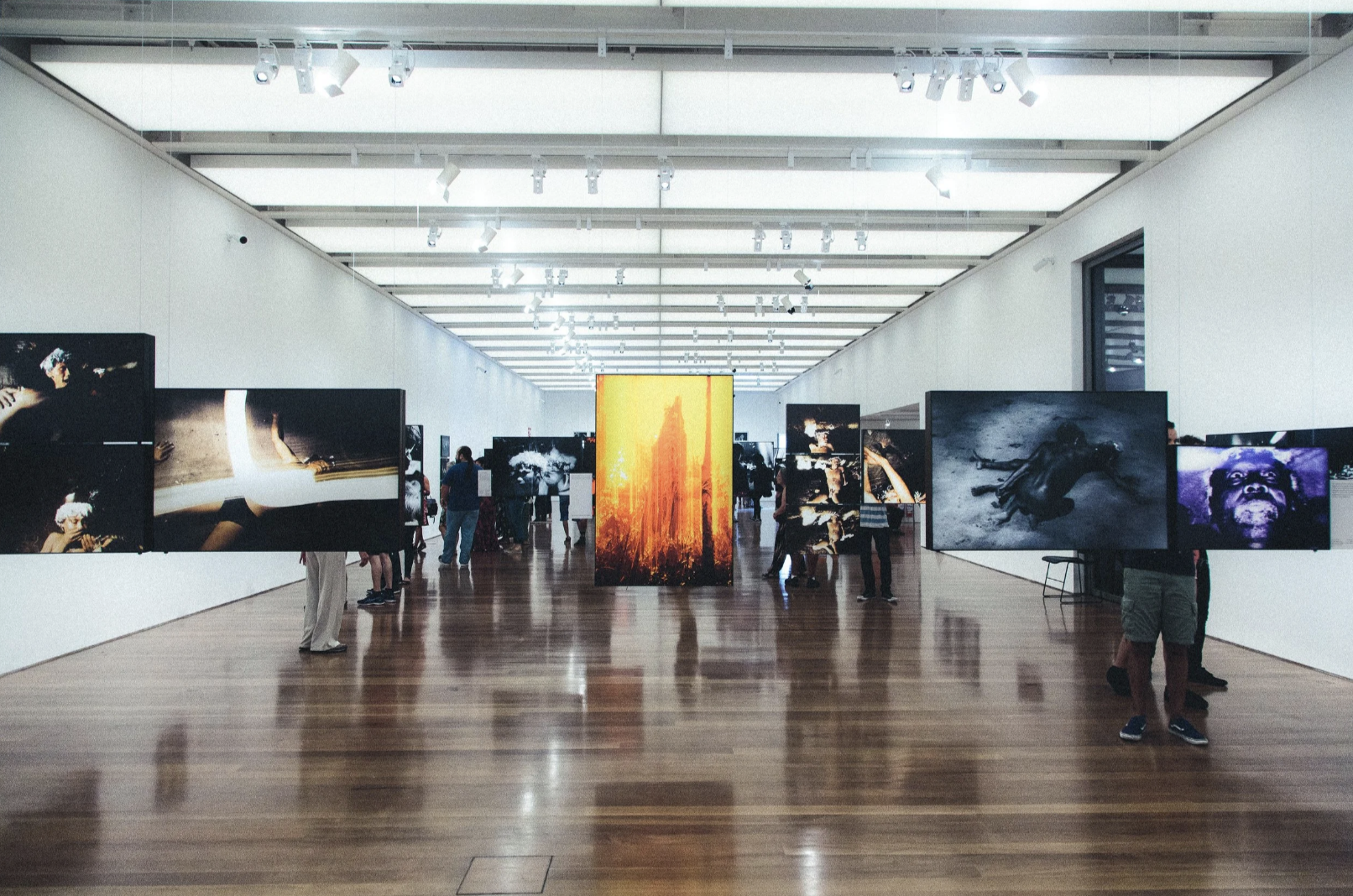
For inspiration, I took a trip to the Brooklyn Museum and saw an exhibit entitled The Slipstream: Reflection, Resilience, and Resistance in the Art of Our Time. This collection showcases the work of intergenerational, BIPOC artists to “hold space for individuals to find their feelings of fear, grief, vulnerability, anger, isolation, and despair—as well as joy, determination, and love—reflected in art.” Though this exhibit was curated in response to the global pandemic and social events of 2020, I recognized my own struggles in the featured artwork. My favorite part of the exhibit was a room dedicated to centering pleasure to cope with and overcome conflict.

This is black text written on a white wall. At the top of the image is the word “Pleasure.” Below this image is a paragraph of text that reads: “In tumultuous times, experiences of joy, humor, leisure, and rest can hold radical possibilities for transformation. These artists capture moments of everyday pleasure, be they located in family, friendship, and community, in life’s daily rituals, or in creativity and the act of art-making itself.”

I started to wonder - if I could place any piece of art in this room to represent my experience as a Crohn’s Disease patient, what would I choose?

I spent the next week searching through digital archives to find an image that not only would embody my journey thus far but would also remind me of how developing resilience would help me keep moving forward. Finally, I found the perfect image, bought a poster of it, and hung it up on my wall. Now, the first thing that I see when I get up in the morning is a picture taken by Malian photographer, Malick Sidibé, entitled Nuit de Noël.

This photograph was taken in the early 1960s after the liberation of most West African countries from colonial rule. I think about the insecurity that was experienced by many people, including my parents, during this time of transition. When I see this picture, I remember how my family taught me that even in uncertainty one can still smile, dance, and hope that the future brings better days.

A square picture frame with black borders hangs on a white wall. The image in the frame is a black and white photograph showing a man and a woman dressed in light clothing dancing at night in a courtyard. Below the framed image are 5 sunflowers.

Words are important, but sometimes they are not enough. To conceptualize the abstract notions of resilience and acceptance, I needed to find imagery that could help me envision these concepts in my life. My belief is that there is something incredibly universal that can be found in our subjective experiences. I want us to create a new visual language to describe our journeys in this community. My hope is that we can replace the stock photos we find when we search for images related to resilience with artwork or even our own pictures. So I ask, what images describe your story?


This article is sponsored by IBDStrong.

IBD Strong is a volunteer grassroots organization that provides a community of hope, connection, inspiration and empowerment to children, teens and families living with Inflammatory Bowel Disease. They believe that every individual diagnosed with IBD deserves hope and opportunities to thrive. IBD Strong’s mission is to inspire and empower individuals living with IBD to not let the disease define them.

Learn more about IBDStrong

Taking the Road Less Traveled

By Mara Shapiro (U.S.A.)

Two roads diverged in a yellow wood,

And sorry I could not travel both

And be one traveler, long I stood

And looked down one as far as I could

To where it bent in the undergrowth;


Then took the other, as just as fair,

And having perhaps the better claim,

Because it was grassy and wanted wear;

Though as for that the passing there

Had worn them really about the same,

And both that morning equally lay

In leaves no step had trodden black.

Oh, I kept the first for another day!

Yet knowing how way leads on to way,

I doubted if I should ever come back.


I shall be telling this with a sigh

Somewhere ages and ages hence:

Two roads diverged in a wood, and I—

I took the one less traveled by,

And that has made all the difference.

- Robert Frost


This Robert Frost poem has been long imprinted in my heart. It was one of my mom’s favorite poems. My mom passed away from aggressive breast cancer when I was 8 years old. Ever since, this poem has felt like a connection between my mom and me. For years I have turned to this poem when I have longed to feel her close. However, this poem has also become a roadmap for me in many ways, a guide for finding my way through life’s adversity (of which there has been plenty).


“Two roads diverged in a wood, and I—

I took the one less traveled by,

And that has made all the difference.”


This famous excerpt from the poem hits home the most and is the part most up for interpretation by readers. Two roads diverged in a wood… and I took the one less traveled by… and that has made all the difference. In the context of my life with chronic illness, the two roads here are being healthy and being ill. As one with a chronic illness, we are on the road less traveled. I interpret this last line to mean that my chronic illness journey has impacted me so strongly, led to so much personal growth, made me the person I am today and that it has made all the difference. It is often through the journey and experiences that are less appealing and less traveled that we find out the most about ourselves. Adversity and our response to it are our biggest teachers. That has certainly been the case for me.

For me, this poem has allowed me to see the meaning and value my chronic illness, my journey on the road less traveled, has had on my life. That is not to say that there have been countless times where I wished I was on the road more traveled, the journey of a healthy person, but through acceptance and perspective, this poem helped me see that I am grateful for the path I am on (even though it was forced and not a choice I made because the path looked like it needed more wear, to use the words of Robert Frost).

The general theme of this poem implies having a choice in which road one gets to chose. In many situations in life that is the case. However, I never viewed this poem within that scope because the roads in my life have been characterized by frequent dead ends, U-turns, K-turns, and certainly a few lonesome, unpaved, rugged roads. While the interpretation of this poem falls naturally onto those who have faced some difficult choices in their life and had to later grapple if they had taken the right path, mine differs slightly and takes into account such forced early life adversity that a lot of us with chronic illness can relate to.

I want to thank Robert Frost for helping me see that while the path of being ill is not the path I would have chosen, it has certainly made all the difference in shaping who I am and who I was meant to become.

The poem has been popularly interpreted to mean a lot of different things about the power (or lack thereof) of choice and how to retrospectively make meaning out of said choices. However, I have always had a different interpretation of this poem, as did my mom. We think of the roads, not as choices where we had full agency but rather roads that life put us on anyway and most importantly, the CHOICE we all have in making the most out of whatever road we end up on. Losing a parent as a child certainly puts you on the road less traveled. Being diagnosed and living with multiple chronic medical conditions, especially through childhood, adolescence, and young adulthood also puts you on the road less traveled. Where I look to Frost and think of choice is in the last line, “And that has made all the difference.” I have been on the road less traveled my whole life, and it has made all the difference. I would not be ME without my journey on the road less traveled. Despite the suffering, the grief, the pain of this road we’re on together as people with chronic illness, I would not change the person it has made me.

_

I’m curious to know your thoughts and interpretations of “The Road Not Taken” by Robert Frost. Post a comment here or reach out to me on Instagram @m.shappy, I’d love to hear from you!

Featured Photo by Mohan Reddy on Pexels.


This article is sponsored by Lyfebulb.

Lyfebulb is a patient empowerment platform, which centers around improving the lives of those impacted by chronic disease.

Learn more about Lyfebulb