
Navigating IBD Symptoms

A Breakdown of All the Medications, Treatments, and Supplements I’ve Tried

By Carina Diaz (Texas, U.S.A.)
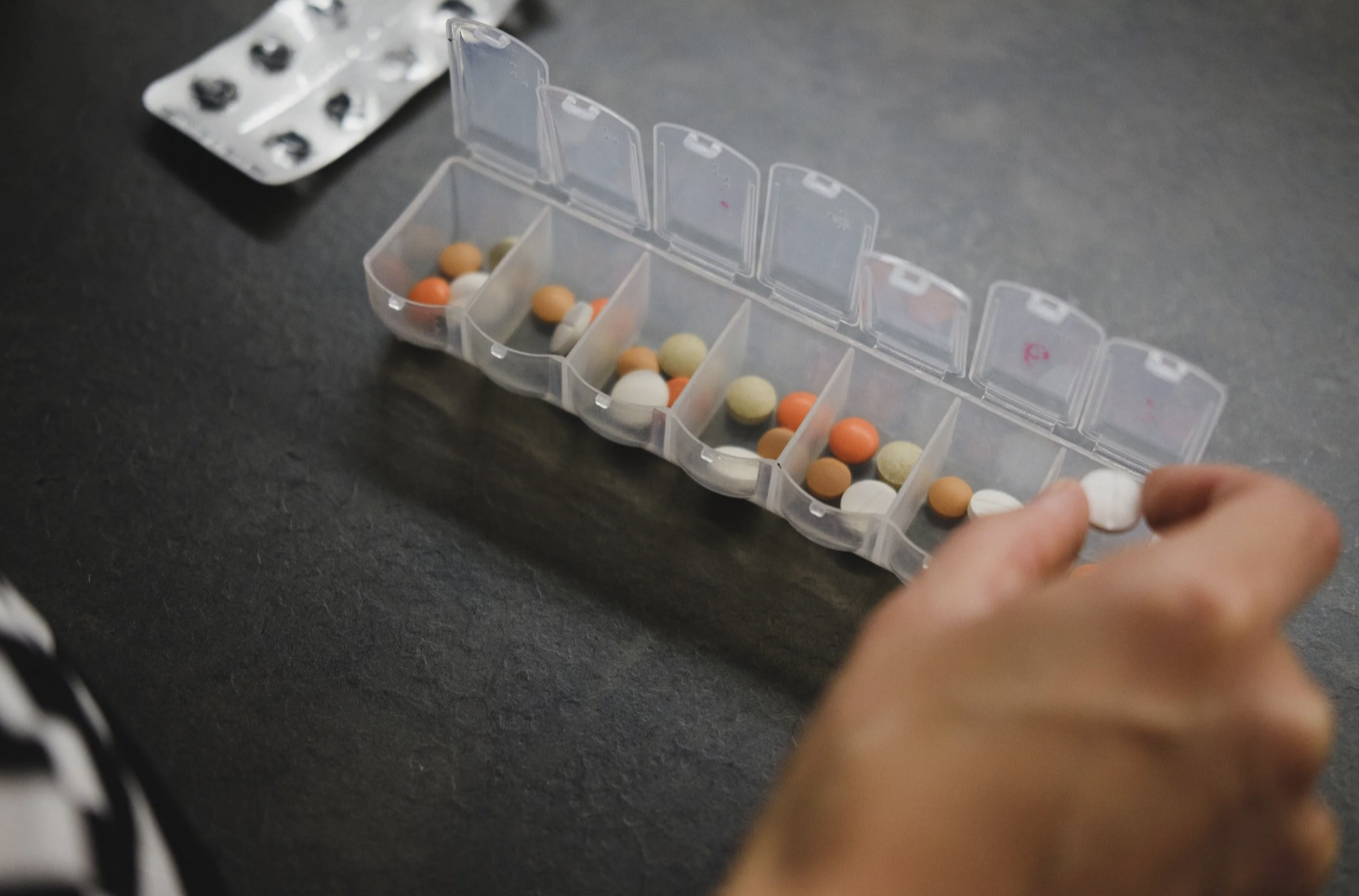
I’ve tried a mix of conventional and holistic medicines over the years to try to find what works for my Crohn’s disease. Chronic and autoimmune illnesses can often feel like a never-ending journey of trial and error. Sometimes, a diet or medication can work for a short period of time, and then you have to pivot to something new. Below is a list of some of the medications and methods I’ve tried to treat my IBD.

A quick disclaimer: The purpose of my writing about what I’ve tried is simply to share my experience. I am in no way suggesting that there are right and wrong ways of treating IBD. Different things work for different people. 

Biologics: 

  • Humira: This is probably the most common medication for IBD. I had talked to my gastroenterologist about going on Entyvio, but my health insurance forced me to go on Humira first. If I “failed” it, then I could try the biologic that I wanted. Humira is a shot that you or a nurse can do in either the thighs or belly. The first round is four shots, and the device looks like a pen, so you don’t see the needle. A nurse helped me with this, and it stung like hell. The pain didn’t last long, but it was very intense. I felt very itchy all over my body for the next few days and in very random places like between my toes and ears. I was able to then move on to Entyvio since I had a reaction. I have heard from nurses that there is now a version of Humira that is “sting-free.”

  • Entyvio: This biologic is an infusion that was about one hour long. I didn’t get any side effects from it, but after trying it for a year and not seeing any change, I had to have another conversation with my gastro about what to try next. Fatigue was one of my biggest symptoms while I was on this, and it made me feel a little more tired after the infusion. 

  • Stelara: It’s a shot that’s in a typical syringe, but unlike Humira, it didn’t sting. I was never brave enough to do it myself, so I would go to the doctor’s office for a nurse to do it. It was quick and painless (for the most part). I didn’t feel tired after. In my opinion, seeing the needle makes it harder to be able to administer it yourself. 

  • Remicade/Inflectra: This is my current medication. I was put on Remicade in 2019. It’s a pretty popular biologic and has been around longer than Entyvio and Stelara. This is an infusion that takes about two and a half hours, but it depends on your weight. I had to switch to Inflectra in 2021, which is a biosimilar to Remicade, because of insurance. I also had to go through a lot of blood tests to figure out if the dosage was enough to make a difference. I used to have an infusion once every three months and now it’s once a month.

Pills:

  • Prednisone: I have been put on this WAY too many times to count. It’s a hospital’s go-to medication every time I’ve been admitted. For me, it was like going through puberty again. I was moody and it altered my body, especially my face. When I was on a high dose, all I could think about was burgers, specifically the ones from Freddie’s. I’ve heard that it’s common to have side effects once you’re weaning off of it, but I didn’t experience that. The only positive part of being on prednisone for me was that it gave me an appetite, and I was able to gain some much-needed weight back. It’s a short-term solution ,and I honestly hope to never be on it again.

  • Budesonide: I was put on this steroid for a few months after Entyvio. This had no effect on me, so I wasn’t on it for very long.

Diets:

  • Specific carbohydrate diet: This is a grain-free diet that has low sugar and lactose and was created specifically for IBD. From what I remember, there are two phases, and after you complete the first one, you’re already supposed to see a difference in the number of bowel movements in a day. I’ve tried this twice and it wasn’t helpful at all. 

  • Rainbow diet: It was all about eating more fruits and vegetables. I was at my sickest around this time and my body couldn’t withstand much fiber without causing pain, so I only tried it for a few weeks. 

  • Gluten, dairy, and soy-free: This one probably affected me the most negatively. I love pasta and cheese with my whole heart, and it was very difficult to cut those out. Vegan cheese has a particular smell that made it very difficult for me to want to eat it. Having to be this restrictive with food was not only time-consuming and expensive, but also boring and frustrating. All I could think about while I was on this diet was all the food I wasn’t allowed to eat. 

Holistic practices:

  • Colon hydrotherapy: I had this treatment done in college, and my only symptom at the time was bloating, but it was very severe. I would look several months pregnant. Colon hydrotherapy involves using water to flush out the large intestine. A tube was inserted into my butt so that water could flow through, and a medical professional would massage my stomach at the same time. I would have to go to the bathroom immediately after. I remember feeling much better, but I don’t think it helped with inflammation. 

  • Vitamin C IV drip: This had no effect on me whatsoever. 

  • Supplements: I’ve tried so many kinds from probiotics to powders, and I haven’t experienced any changes from them. I was taking these while I was really sick and going to the bathroom up to 20 times a day, so I wasn’t really absorbing anything I was ingesting. The only ones that I currently take that are suggested by my medical team are vitamin D and liquid iron. I’ve gotten very bad reactions from iron infusions.

This is not an exhaustive list, but it’s the majority of what I’ve tried. I will say that I’ve gotten to a point where I’m very cautious about holistic medicine. It has further complicated my relationship with food and my body. The practices also have less research than conventional medicine and aren’t regulated by the FDA. 

I really try to focus on listening to my body, which has taken years to learn. To be honest, food doesn’t really seem to help or hurt me. I’ve learned that my symptoms work in cycles and that stress management is important. Stress seems to be the biggest factor when it comes to going in and out of flares. 

When I was really sick, I was willing to try anything and everything under the sun to treat my IBD. I thought that remission not only meant that I would be symptom-free, but also free of medication, which is actually very rare. I’ve even gotten treatment in Colombia and Puerto Rico. While I’ve definitely been through trying to find what works for me, I am very fortunate to even have the option to try all of these things. Whether your IBD is mild or severe, I hope that you are gentle with yourself along the way. 

To Anyone Who’s Been Called a “Difficult Patient”

By Carina Diaz (Texas, U.S.A.)

My experience with getting a diagnosis and how it still affects me today.

This summer will be my ten year anniversary of having Crohn’s Disease, and throughout the years, I’ve been told the same phrase over and over again by many doctors: “You’re a difficult patient.” 

Hearing this since the age of 18 has been hard on my mental health. I’ve internalized those words and blamed myself for the state of my body. I thought that my symptoms being out of control was because I ate something that I should’ve have (I can’t resist pasta or cheese), I was thinking too negatively, or maybe it was just karma for something I did wrong. But none of that is true.

This is for anyone who has also been told that they’re a hard case, a real head scratcher if you will, as my ostomy nurse tells me. I’m going to tell you the words I wish someone would’ve told me: It’s not your fault. You did nothing to deserve this. You aren’t being punished (although it can definitely feels that way at times). 

I used to always look for a reason for why I was going through this. Maybe by having an explanation, I would feel better about my situation. I wanted something to blame. I wanted to be able to direct my anger towards something more tangible. I was craving to have some level of peace or stability. Getting diagnosed felt like my world was ending.

I was having abnormal symptoms for just a few months. I had to go to the bathroom frequently and having a bowel movement was very painful. I would try to avoid food as much as possible, because food meant having to poop and pooping meant pain. When my mom confronted me about skipping dinner and learned about what I was going through, she took me to my primary care doctor, which led to getting a referral for a gastroenterologist. I thought I would be told what was wrong with me, given medicine to treat it, and that everything would fine once again. That had always been my experience with doctors. I had always gotten answers and something to help. I didn’t know that there were things that doctors couldn’t fix or at the very least, have answers for. Getting a diagnosis meant I could no longer ignore how my body was feeling.

I didn’t know what was realistic for me to want out of life anymore. Would I be able to travel, have kids, or even live on my own? My doctor didn’t seem to take my age into account when he told me the results of my colonoscopy and endoscopy. I was finishing high school and getting ready to begin college. I was overwhelmed with the possibility of not being able to keep up with my peers, of not being normal. 

Hearing this since the age of 18 has been hard on my mental health. I’ve internalized those words and blamed myself for the state of my body.

The language that doctors use, whether or not it’s intentional, often puts the blame on the patient. “I don’t know what to do with you.” “You’ve failed this medication.” “I’m referring you to someone else. I can’t help you.” This has been so harmful to my mental health. It made me think I had done this to myself. At the end of every day, my mind would race through all the possible factors: I wasn’t managing my stress levels, I ate something that I shouldn’t have, I didn’t check the ingredients in what I ate thoroughly enough, I wasn’t taking the right supplements, or I needed to try another diet. For years, I picked apart my thoughts and actions. I dealt with a lot of toxic positivity from family. As well meaning as it may have been, it just fed into blaming myself. 

If you can relate to my experience or have been through it yourself, I hope you’ve been able to find comfort and support in community. It’s what organizations like CCYAN are here for. You’re not alone, you’re not to blame, and there are people out there who understand what you’re going through. I hope that knowing you aren’t alone brings you a bit of comfort. 

A Post-Colonoscopy Reflection

By Mara Shapiro (U.S.A.)

Colonoscopies and endoscopies or “scopes” as I like to refer to them, quickly become a part of our lives as inflammatory bowel disease (IBD) patients. Everyone and their doctors’ are different, but most of us will get scoped every year or two for the rest of our lives. For pediatric and young adult patients with IBD, that can be a daunting realization. Even though they aren’t a major surgical procedure, the prep is torture, and it is still a day or two we need to spend away from school or work at the hospital and then recovering. It’s a lot. Scopes can become a huge source of stress and anxiety, they certainly are for me.

I just got my yearly scopes and it was definitely an experience I won’t forget. Between chugging Suprep at 4 am, wearing a diaper for the drive to the hospital, and then going into an adrenal crisis at home following anesthesia, this was an experience for the books. Like with other recent parts of my chronic illness journey, I’ve been trying to be more mindful of all these difficult experiences and what I can learn about myself and about life as a result. Here are some of my reflections from my latest scopes and from where my Crohn’s disease is at in general. I hope these reflections can spark some new insights for you as well.

I am stronger than I think.

For me, chronic illness is a constant reminder that I can do hard things. I can do hard things that previously terrified me. Not only can I do these hard things, but I can excel and come out the other end a stronger and more confident person. I try to go into big appointments, procedures (big or small), and flare-ups with the mindset that I am stronger than I think and know that I have what it takes to make it through. This is how I try to be positive and optimistic. I’m not perfect! I oftentimes struggle with negative self-talk and we are all entitled to feel bad for ourselves on occasion, but the difference is knowing deep down that YOU CAN DO THIS and returning to a similar positive mantra especially when things are tough. I went into these scopes with the mantra that “I am stronger than I think” and “I can do hard things” and I survived and I’m proud of myself for getting through them with such a positive mindset.

It’s all about the mindset.

Over the past year, I have really focused a lot of my energy on my mindset and the narratives I am telling myself about what’s going on around me. I have found that being in control of my mindset, and how I feel and view what’s happening, has allowed me to create a much healthier relationship with my chronic illness(es). For example, I went into these procedures with the mindset that: This is going to be hard, I’m going to hate it, but I can do it because I can do hard things. I need to do this for my present and future health. This mindset that I am suffering for a few days for information that will help my doctors and I better control my IBD was very humbling for me and gave me that extra motivation to chug that last gulp of Suprep.

I know my body best.

In addition to having Crohn’s I also have Addison’s disease, a form of adrenal insufficiency where my adrenal glands don’t produce any cortisol (our body's natural stress hormone needed for most of our bodily function). Since January 2022 I have been on a cortisol pump which allows me to get a 24/7 continuous subcutaneously infusion of cortisol in a way that closely mimics the circadian rhythm pattern of a healthy person’s cortisol cycle. This treatment has been life-saving and given me my life back in remarkable ways that are hard to express. Having surgery or anytime my body is under intense periods of physical stress can be dangerous because my body does not naturally increase cortisol production in response to stress the same way a healthy person does. I need to manually try to guess how much extra cortisol I need and also increase my dose for a few days or longer. This was my first time going under anesthesia since having Addison’s disease. Long story short, the anesthesia team did not follow the protocol my endocrinologist wrote out and I ended up going into an adrenal crisis within an hour or two of returning home after the procedure. I am very thankful for my intuition and my dad’s help - we were able to quickly increase my cortisol pump rate and within a few hours, I stabilized. Thankful is the only way to describe how I feel, as this situation could have easily ended differently. Especially after this incident, I always know that I know my body best.

Remission is not a cure.

Thankful is also how I feel that my scopes showed no signs of active disease. Stelara is continuing to work wonders for my Crohn’s disease. However, even though I am in “endoscopic remission”, I am still not symptom-free and there’s a common misconception that being in remission means you’re cured and good as new. I hope in time I will become one of those patients who forget they have IBD, but for now, even though my ileal ulcers have begun to heal, I still have just as many bad days as good ones.

I have Crohn’s but it doesn’t have me.

This one is a bit cheesy but throughout the course of these procedures, I realized that I am in control of my disease. By in control, I mean that I have the power to decide how much my disease impacts my life regardless of how much power and control it tries to take from me. Even on the days when I’m in a lot of pain and not sure how I’ll be able to get more than a few feet from the bathroom, I am still in control of how I let that affect me. My disease is not my entire identity nor my self-worth, it is just a part of me. I have Crohn’s and it’s a huge part of who I am and how I interact with the world, but it is not my entire world. There’s a lot of strength to be found in being able to reclaim some of the power and control that this disease has previously had over me.

Featured photo by Scott Webb from Pexels.

Energy Management with a Chronic Illness

By Varada Srivastava (India)

Finding a way to manage time with a chronic illness is a complicated process. It can be frustrating to figure out the new normal when you are originally diagnosed. For people with chronic illness it can be very difficult to figure out what is physically and emotionally possible for us to do that day. There are a few theories that have come to help us cope with this.

Moreover it’s very important for people who don’t have a chronic illness to understand it.

Christine Miserando is a lupus advocate who is known for coming up with the spoon theory. According to her, the difference between being sick and being healthy is having to make choices or to consciously think about things the rest of the world doesn’t. The healthy have the luxury to live life without having to make constant choices which is something most people take for granted. People with chronic illness are given a certain amount of spoons whereas healthy people have an unlimited supply. In her story, she gave her friend 12 spoons to get through the day. Each spoon represents the amount of energy we have for a certain task. For people with chronic illness, each task is also divided into smaller tasks.

For example: wearing clothes in the morning requires a series of decisions in which we have to keep our illness in the front of our mind. If you are getting blood drawn that day, you need to make sure to not wear long sleeves; if you feel the onset of body ache, you need to wear warmer clothes. These micro calculations take up the majority of our mental space. Do I take my medicine before or after lunch? Should I just wear a summer dress to relieve the pressure on my stomach? Are my hands too sore to handle buttons? I can't do many tasks if I take pain medicine. These are only a few of the many questions we tackle everyday. Each task requires a game plan. This constant mental gymnastics is incredibly tiring.

Emmeline Olsen wrote another article for IBD New Today which focused on the pitfalls of following the spoon theory. The spoon theory is based on the loss people with chronic illness face. But according to Emmeline, having a chronic illness piles stuff onto our original to do list. She gave the analogy of a filled bucket, healthy people can fill their bucket as much or as little as they want. Having a chronic illness is like filling the bucket with stones, each time you do a task which is exclusive to people with chronic illness, a stone is added to the bucket. Having a flare is compared to having a bucket filled to the rim. The worse the disease gets, the heavier the bucket is, the more chance it has of overflowing.

Having read both these theories, I think I tend to follow a mixture of both. Right now, I'm in remission, I am able to carry a heavier bucket. Doing daily tasks is comparatively easier and the stones in my bucket are less. However during a flare when I don't have enough energy to get out of bed the thought of lugging a bucket around seems exhausting. The amount of tasks seems overwhelming. That's when I like to follow the spoon theory. It helps in breaking down everyday tasks into smaller, more manageable activities.

Dealing with a chronic illness is very subjective, while some things work for one person they might not work for others. The goal is to find what works best for you, mostly through trial and error. And while going through this process it is very important to remember to be kind and patient with yourself.

Featured photo by Pixabay.

Keeping Up with Your Care

By Isabela Hernandez (Florida, U.S.A.)

Having a chronic condition isn’t easy. It’s something that needs constant upkeep, monitoring, and attentiveness. For me, a sometimes lazy 22-year-old college student, keeping up with my care is at times the last thing I want to do. I’ve neglected to refill my prescriptions, get my labs done, and reschedule my appointments. It is not something I am trying to recommend to anyone, but the difficultly of taking care of yourself is sometimes just plain irritating and difficult.

The way I’ve justified this behavior is: if I am going to have my ulcerative colitis forever, then I can take care of this later.

It creates this toxic cycle of neglect that can lead to dangerous outcomes. Once I let this neglect and annoyance take over, it’s difficult to pull myself out of it. Sometimes my wakeup call is even a mini flare. This would happen to me because I would view my disease as this burden that I could never escape. Something that only I had to constantly maintain day in and day out, and no one else. With this mentality, there was no way I was going to stay on top of my care. I would ignore things and push appointments off as much as possible. However, after my neglect facilitated the progression of an intense flare, I realized I needed to incorporate my disease into my life in a positive way.

What helped me the most was just treating my ulcerative colitis as a class that I needed to do assignments for and keep up with.

I started to schedule things into my day and treat it as task, rather than a pestering duty that if I didn’t do it, my health would suffer. Sometimes I would even write things into my planner so I could visually see that at this hour I absolutely needed to take my medication and at that hour I needed to call my physician for follow up labs. These were small changes that helped me stay as present as possible while trying to take care of my Ulcerative Colitis. It is something easier said than done but it is okay if you sometimes feel like taking care of yourself is too much and it is too hard. It’s because it is. It’s hard, its draining, and sometimes laziness takes over.

IBD patients are fundamentally built in a way that our health is the one thing always consuming our thoughts, and at some points this mentality overwhelms the mind.

And it is ok, too, at times get angry at our disease and wonder what life would be like without it, but this does no one any good. If you’re anything like me, finding ways to schedule health tasks into your day rather than just “getting around to it” really changed how I take care of myself. It relieved stressors that would follow if I didn’t do certain things for my care and allowed me to just do the task and move on. Just remember that even on days when we don’t feel like taking care of ourselves, we are still doing the best that we can do. 

This article is sponsored by Trellus

Trellus envisions a world where every person with a chronic condition has hope and thrives. Their mission is to elevate the quality and delivery of expert-driven personalized care for people with chronic conditions by fostering resilience, cultivating learning, and connecting all partners in care.

Learn more about Trellus