
NEWS
A Not So Invisible Illness: Inflammatory Bowel Disease
By Maria Mutka from NC, USA
Content Warning: Body dysmorphia, abnormal eating and exercise patters.
As a high school teenager, I thought I was doing well at hiding my illness from my friends and peers. When there were snacks or meals served at school that I knew would send me straight to the bathroom, I deftly avoided them and made excuses that I had already eaten or just wasn’t hungry. If I was experiencing extreme abdominal pain, bloating, and gas during the school day, I tried to ignore it while positioning myself as close to the door as possible, just in case.
For most of high school, I experienced a constant flare that fluctuated between mild and moderate symptoms. This made hiding the tangible symptoms of my ulcerative colitis somewhat possible in my mind, although my friends and peers undoubtedly knew I was experiencing gastrointestinal health issues. I had briefly mentioned to them before that I had inflammatory bowel disease (IBD), but avoided elaborating on what that meant out of embarrassment and fear that it would make them uncomfortable.
I soon realized that there was one facet of my illness I could not hide from my classmates: while being a sophomore in high school, I was 5’2” and barely 80 lbs., with the face and the body of an 11- or 12-year-old. This visible manifestation of my illness through delayed puberty caused me to experience a lot of insecurity, which in turn led to becoming obsessed with food intake and exercise. I was constantly trying to find the perfect balance between food and exercise that could overcome the deleterious impacts of my ulcerative colitis on the absorption of nutrients critical to my growth.
Perhaps the reality of my underdeveloped body so heavily impacted me because of my journey with ulcerative colitis since the age of 6. I had gotten used to the other physical manifestations of the disease: frequent bowel movements, diarrhea, blood, pain, and extreme fatigue, but this limbo stage of early pubescence was new to me. It was extremely damaging to my adolescent attempts at processing and accepting my body for what it was, and at developing anything resembling a positive body image.
At the time, it felt as though with my IBD symptoms continuing, the very least my body could offer me was a sense of somatic belonging and self-worth that I felt could only come from looking like my peers. I was determined that looking my age would help me finally feel like I had access to the same sort of normal teenage experiences they did. Maybe once I looked like everyone else, I would feel more confident in making new friends, being involved in athletics, straying outside the comfort of a singular, perfectionistic focus on academic success by making mistakes, and dating.
For so long, I let my physical appearance dominate my social interactions and extracurricular activities because I felt like an imposter in my own body, completely estranged from what I thought it meant to be a teenager like my peers. In my mind, I was only able to watch from the sidelines as high school, along with the seminal memories and lessons that accompany adolescence, unfolded for everyone else.
Part of the issue was that I was not simply imagining my peers’ perceptions of my physical appearance. Under the guise of concern, while trying on costumes for high school theater productions, several of my peers would tell me that I needed to eat more, bluntly stating that I looked like a twig. In those moments, I could not have felt more infantilized or more childlike not only in appearance but in how my peers treated me.
It was not only my peers who infantilized me. Eventually, I was referred to an endocrinologist for my stalled growth. While I had looked forward to identifying possible solutions to my inability to gain weight and progress further in puberty, all I received from my doctor were vague assurances I would eventually grow and that my endocrine system was in working order. These small efforts at placating the concerns that were wreaking havoc on my mental and social quality of life while well-meaning, were harmful. They reinforced my ever-growing anxiety that my situation would never change and that my mental health and social quality of life did not matter.
My experience with US health care systems’ large deficits in addressing chronically ill youths’ psychosocial needs and quality of life is, unfortunately, not at all unique. Whether these needs are avoided intentionally through health systems causing direct medical trauma, or through omission in failing to address social determinants of health (e.g., housing needs or food needs), the harm done is impactful and lasting. If providers had screened for or discussed my mental health and psychosocial needs related to my IBD at any point, I would have jumped at the chance to talk about it. However, my physical symptoms were the only topic of discussion and implied to be the only issue that could even concern me.
I know now that delayed puberty is not an uncommon comorbidity of pediatric inflammatory bowel disease, as many studies on the subject have shown. Despite my at-the-time unassuageable fears, I did eventually grow and complete puberty, although I do still receive comments that I look young for my age.
Looking back at my adolescence, when I felt like I was perpetually stuck in a Groundhog Day scenario due to my delayed puberty, in hindsight, I can appreciate all my body did for me. I was able to make it through a multi-year-long flare, and all things considered, my body managed it pretty well. Looking back, I try to have compassion for my perfectionistic teenage self who was determined to look like her peers to an unhealthy extreme. What she needed was a pat on the head or vague assurances everything would turn out okay. She did not even need hormone therapy, medication, or any sort of quick fix to help her start puberty earlier. It was in many ways a lot simpler than that: she needed providers and a broader health care system that could recognize her need for mental health support and do something about it.
Featured photo by mododeolhar from Pexels.
A Dozen Extra Organs: 12 Organs You Could Survive Without
By Zahraa Chorghay, Toronto, Canada

“I don’t have guts.”
“Hahaha.”
“No really, I don’t have guts. I’m literally missing my large intestine.”
“Wait, are you serious?”
“Yes, why would I joke about that? Plus, I’m one of those people who like to use the word literally for literally, unlike some people who mean figuratively when they say literally.”
“But… how is it possible to not have a large intestine?” [and still be alive?]
That last part no one says out loud, but I can fill in the blanks. After all, this is a fairly representative template of how these conversations tend to go. Somewhere between awkwardness, disbelief, and my personal favourite, curiosity, lives disclosure – a process that is central to forming and maintaining relationships (Willems et al., 2020).
So if you want to progress from stranger to friend, or just have more honest conversations with your friends, lover(s), or family, preferably with a [wry] sense of humour about missing organs, here is a list I created. It’s a list of organs, not including limbs and sensory organs, that can be removed from the human body that would still allow someone to survive with a fairly decent quality of life.
“Decent” quality of life is, of course, a subjective statement. For our present purposes, let’s define it to be that most people who have had this organ removed and fully recovered from the surgery are able to have a fairly independent life, including performing essential daily personal and professional tasks and maintaining social relationships.
It’s a fairly morbid list. Most of the information comes from my own knowledge on the subject gathered through readings and discussions, though I fact-checked details on the Mayo Clinic website.
Without further ado, here’s the list of 12 organs that you could probably survive without:
#1 Appendix.
If you have appendicitis, in which your appendix becomes inflamed, enlarges, and can even burst, then your appendix may be removed by performing an appendectomy. Since the removal of the appendix did not seem to lead to noticeable adverse effects for most people, it has been traditionally thought of as a vestigial organ, although increasing research suggests that the appendix plays an immunoprotective role.
#2 Tonsils, including adenoid tonsils.
If you have tonsillitis, in which the tonsils become infected and swollen, your tonsils can be removed during a tonsillectomy. This used to be a common childhood procedure, but given the role of tonsils in preventing pathogens from entering the body and other medical considerations, non-surgical interventions for tonsillitis are increasingly preferred.
#3 Thyroid.
If you have the unfortunate diagnosis of thyroid cancer or dysfunction, such as goiters or hyperthyroidism, a thyroidectomy may be performed. If partially removed, your thyroid may still function normally. However, following a total thyroidectomy, you would require daily hormonal replacement therapy, given the crucial role of the thyroid gland in producing hormones essential for metabolism, growth, and development.
Digestive Organs
#4 Colon / Large intestine.
Your colon may develop cancerous polyps or inflammation due to diseases such as Crohn’s or ulcerative colitis. During a colectomy surgery, to get rid of this cancerous or highly inflamed bowel tissue, your large intestine may be partially or totally removed.
The remaining colon or small intestine may be diverted towards the abdominal wall to allow faecal matter to safely and easily leave the body through an opening on the belly called a stoma. This is an ileostomy, and people with stomas often refer to themselves as “ostomates.” The ostomy bag must be emptied every few hours and changed every few days for the individual to live comfortably.
Alternatively, the remaining intestinal tissue can be restructured to form an internal J-pouch where faecal matter is collected and then passed through the rectum. Unlike an ileostomy, in this case, no medical aids like the ostomy pouch are required.
#5 Rectum.
Depending on the presence of diseased tissue due to rectal cancer or if intestinal inflammation spreads into the rectum, a proctectomy can be performed to remove all or part of your rectum. People with total proctectomies may refer to themselves as “having a barbie butt,” hinting at the lack of an anal opening just like a doll. In this case, they would also rely on an ostomy bag for daily functioning.
#6 Gallbladder.
A cholecystectomy can be performed to remove your gallbladder if complications or cancer resulting from the presence of gallstones, polyps, or inflammation is detected. Most people recover from cholecystectomies with little or no digestion issues. Since the gallbladder is responsible for storing bile, a fluid that helps your digestive system break down food, in the case of digestive issues, this can be managed through dietary and lifestyle choices or medication.
#7 Spleen.
Following trauma, infection, cancer, or blood disorders, your spleen can become inflamed, enlarge, or rupture. In this case, a splenectomy is performed to remove this organ. Since the spleen plays immune functions like red blood cell filtration, following surgery, some individuals may be more prone to infections and would require specific vaccinations or medications.
#8 Stomach.
There are many types of bariatric surgery that you can undergo. Some surgeries address trauma to the stomach or cancer. Other surgeries are for weight-related health issues where non-surgical interventions have not been sufficiently effective, and the issues are life-threatening (e.g. can lead to cardiac arrest). The stomach can be partially or fully removed, and the stomach can be partially or fully bypassed when connecting the oesophagus (food pipe) to the small intestine. Following surgical recovery, your quality of life can be managed through dietary and lifestyle choices.
Urinary Organs
#9 Kidneys.
A nephrectomy can be performed to remove you kidney, typically for organ donation, in which the recipient has failed kidneys and may even rely on dialysis for kidney function. While you can technically survive without both kidneys, because the kidneys provide an essential function of blood filtration (resulting in urine production), you would need ongoing dialysis, which is an intensive procedure that can highly compromise quality of life.
#10 Bladder.
In the presence of cancer, or of development or neurological or inflammatory disorders of the urinary system, a cystectomy can be performed to remove your bladder. The details of the cystectomy vary depending on the spread of disease; for example, reproductive organs may also be removed. In the absence of the bladder, a urinary diversion is created so that urine can safely and easily leave the body through an opening on the belly, called a stoma. This is a urostomy, and people with stomas often refer to themselves as “ostomates.” The urostomy bag must be emptied every few hours and changed every few days for the individual to live comfortably.
Reproductive Organs
#11 Testicles / Testes.
In the event of testicular cancer or trauma, an orchiectomy may be performed to remove your testicles. While most people can return to a good quality of life following full surgical recovery, the individual would be unable to conceive and may also experience sexual dysfunction. Given the role of the testicles in producing testosterone, hormonal replacement therapy following surgical recovery is increasingly recommended to prevent long term adverse outcomes.
#12 Ovaries and Uterus.
Following cancer, trauma, conditions such as endometriosis, or for reproductive control (particularly in areas of the world where menstrual care and contraceptive options are limited), an oophorectomy to remove one or both of your ovaries and/or a hysterectomy to remove your uterus may be performed. Following surgical recovery, the individual would be unable to conceive. While most people can return to a good quality of life following surgical recovery, given the role of the female reproductive organs in producing oestrogen and progesterone, hormonal replacement therapy is increasingly recommended to prevent long term adverse outcomes.
Featured photo by Karolina Grabowska from Pexels.
Seeking meaning in illness
By Tanisha Singh from India

Psychoanalytical literature has often suggested that every symptom/illness often has an adaptive purpose, no matter how intolerable and unpleasant. In some aspects, in which the illness prevented something worse and prevented the recognition and perpetuation of a reality that was probably intolerable. It is in this that the illness may offer to the bearer something of value to be derived from one’s future with illness. Freud was of the idea that neurosis or illness would block the instinctual energies of one’s psyche which are so essential for one to be able to live a full life, as if split off from one’s internal drives/instincs. So, it is suggested that perhaps, in one sense, illness may offer an opportunity to free up those psychical forces that are now presenting in front of us as illness, which otherwise would have operated overtly, hidden from view, somewhere in some layer of the psyche.
I have learnt that a chronic illness does not just fit into my life as it was, or into my personhood as it was, and that a new life/self had to be constructed for me to accommodate this reality of having a chronic illness in a way that is atleast somewhat tolerable or settled. That I suppose, would require even a cognitive and emotional meaning making exercise, which I feel this psychoanalytical view of illness has offered to me.
I was living a life where I was working two jobs (having halted my studies), eating less, working hard at work, at the gym, at every aspect of my life to be able to overcome my reality: a reality with minimal familial support, with meagre financial resources, what have you. I was extremely lonely, unhelped, and alone. I missed having a family, I missed feeling supported and I really missed not having to put out one fire after another which was wearing out my nervous system at a rapid rate. What was worse is that this sense of turmoil was not just environmental, it was also an internal state. I was determined to change my circumstances, so day in and day out I breathed the fire of restless ambition. The fire, which is often idealized in the capitalistic world, was not a home the body-mind should have to perpetually rest in. Where was the ‘rest’ even?
To cut the long story short, a couple years later, I found myself with an illness that would said, “I am here to stay, and I can’t be ignored.”
It took falling this severely ill for me and my family (atleast a part of it) to notice me and come to my aid. It took falling this sick for me to finally quit chasing a ghost and to slow down. It took me the morbidities of a being a mortal being to acknowledge my mortality and not try to outrun it. To reasses my choices. To really ask myself, “If I am to live a difficult life, what would I want to really spend it doing? What would make the pain of it all slightly worth living through?”
It took my illness for me to find better meaning in my life. I wanted to live to be able to do the work that made other people’s lives a bit more tolerable, I wanted to live to be able to enable my closest friends and other loved ones lives their lives feeling more supported and loved! I wanted to love and laugh with my people, I wanted to dance, and read and speak to people about their realities and such. I wanted to rest! I wanted to slow down! I wanted to be helped. (And as I have said oftentimes before, there is respite in patienthood.)
And in a very twisted sort of way, rest and support only come with my illness. I still hate it though, but begrudgingly sometimes, I have to agree that it wasn’t random. It prevented something much worse: a complete exhaustion of the self in the pursuit of something while desiring and needing something entirely different that at the time didn’t feel like it could come.
Featured photo by Pixabay/www.pexels.com/photo/pile-of-books-159866/
The Pandemic Changed My Life... for the better
by Natasha Kacharia from the United States
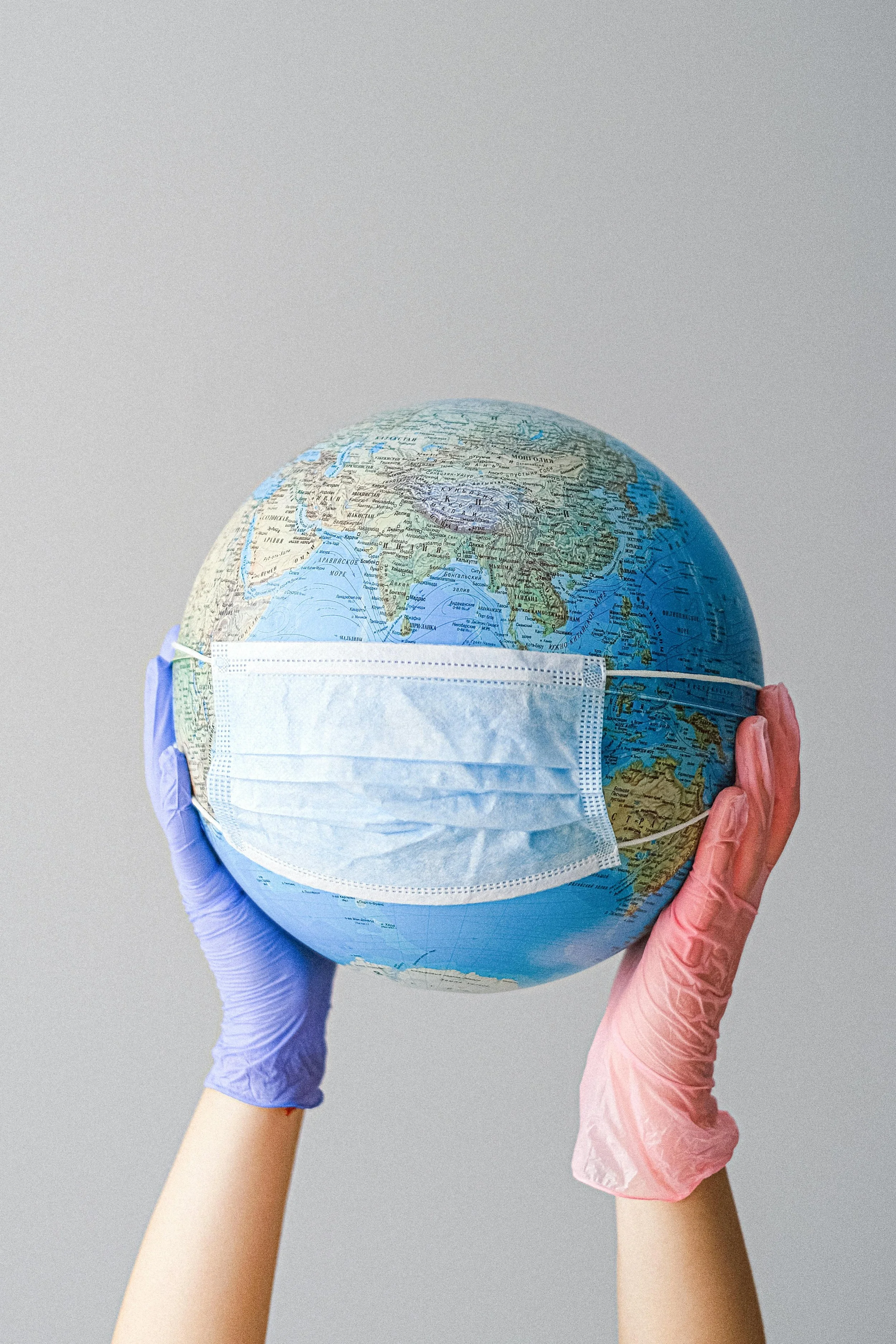
If I got $1 for every time one of my peers said the pandemic robbed them of a year of their college experience, I would be a rich woman. Among college students laid a universal hatred over Zoom University. And, while the pandemic undoubtedly sucked for the world, for me, it was arguably one of the best things that could have happened. I want to preface that I never got COVID-19, and if I had, then maybe I would change my tune.
I spent August 2019 – the month before my freshman year of college – in and out of the emergency room. While I was diagnosed with ulcerative colitis (UC) my junior year of high school, my UC was mild. It was never ‘emergency room bad’ and definitely ‘cannot even digest water bad.’ I called Stanford up, asking if I could start college in the winter quarter instead of fall quarter for the 2019-2020 school year. As I was a freshman, they said no; if I wanted to take fall quarter off, then I had to take the entire year off, and at that time, it seemed like the worst possible scenario. Remember, pre-pandemic, a gap year had a certain taboo. So, I decided to pack to my bags and moved into freshman dorms with about 1000 over-eager freshman.
A week later I landed in the ER for joint pain.
You see, in high school, the maximum dosage of prednisone I was ever prescribed was 30 milligrams (mg). My freshman year of college was the first time that I was on 60 mg of prednisone. I did not know it at the time, but the higher dosage came with noticeable side effects.
While the prednisone worked wonders on the inflammation on my colon, it also did wonders on my day-to-day life. I woke up and 3 am; thus, I was constantly tired throughout the day. I could not stop eating, and I gained more weight than I could comprehend. Pimples graced my face. I thought I was going insane. It was not until my mom saw a picture of me and asked how much weight I had gained, I realized it was not in my head at all but rather reality. I felt that I was going insane and felt depressed at the same time. The worst part was that I had no one to talk too. My mom would simply comment on my weight gain and tell me to eat healthier; she did not understand the food cravings I would get. My dad thought I was brave for going to college with my UC; I was always the brave and strong one with him, and he would just placate me. My high school friends were off living their best lives. My sickness coupled with the short duration
of time that I attended Stanford meant that I did not have an established friend group. And
honestly even if I did have friends, my friends would not have known me, not really; they would
just have gotten to know ‘sick me.’
So, there I was, a month into the “best years of my life” in a new state, taking more meds than I could count, surrounded by joyful students, and yet I never felt more alone.
My life was in complete freefall.
But I could not leave. I was too ashamed. I spent my entire life working my ass off to get into a school like Stanford, so I kept telling myself that it would get better. Every sacrifice I made to get into Stanford had to mean something, so I stayed. I blamed my depression, my problems on prednisone. I read that depression is a potential side effect of prednisone. Yet, when January came, I was still depressed. If possible, I was more depressed.
Then the pandemic hit, and we were all sent back home.
The pandemic forced me to make the decision that I was too scared to make. It gave me
an escape from the noise. I needed a minute to regroup, to rethink. The pandemic gave me that. It
put everything in perspective.
I realized that I did not want to change the world; I just wanted to be happy. I just wanted
to be healthy.
Featured photo by Anna Shvets from Pexels.
Bittersweet Road to Recovery
By Maalvika Bhuvansunder

Recovery is a word that can be seen as both, something positive and negative. On one hand, recovery signifies better times, better life ahead, and no more pain. However, it also reminds us of what we had to lose in the process, the reality that we had something we needed to recover from, and a lot of other things. Recovery is even scarier when we do not know if it would last long or if it is just the calm before the storm.

My already low self-esteem took an even more downward spiral.
During our journey of recovery, we might not be our best selves. There is a lot we might have given up and the loss feels more real when we are healthier. Post my surgery and remission I started comparing my journey with others and started realizing all the ways I have been lacking behind. My career was on hold for the two years that I was in a horrible flare, my master's grades were not as great due to my flares, and my social life was practically non-existent. My already low self-esteem took an even more downward spiral, which was surprising, as I had expected being in remission would help improve my self-esteem. What did not help were comments of people saying finally I would stop crying all the time or that at least now I can start having a career. I started comparing myself to those my age and started resenting myself for not being where they were. In this process, I was becoming a bitter person who was unhappy with others' success and was wallowing in self-pity.

A year ago I could not get out of bed or eat a single morsel of food. Now, I am healthier, able to eat what I love, and do things I have wanted to do.
What I forgot to realize was that being in remission is my growth! A year ago I could not get out of bed or eat a single morsel of food. Now, I am healthier, able to eat what I love, and do things I have wanted to do. This is a huge accomplishment for anyone with a chronic illness! I did some self-reflection and realized I was being too harsh on myself. I am a part of a fellowship that helps others like me and I realized how big of an accomplishment this is! There is no fixed definition of growth and success. Instead of feeling bitter over others' success, I started being a part of their happiness. They were there for me when I was at my lowest, so it is my turn to be there for them. I started celebrating the small successes in my life and it made me feel proud of myself. One of the steps to recovering was accepting the fact that it is okay if I am not on the same path as others, as my journey is my own and is unique. Our bodies have been through a lot, so the fact that we can function with all the pain is a huge accomplishment. Our society is always going to have this “fixed” measurement of success. However, setting my definition of growth and success made me feel free and liberated.
“Each person has their journey and there is no fixed timeline for achieving goals in life.”
Thoughts On Being “Strong” with IBD
By Carina Diaz
This year was my ten year anniversary of being diagnosed with Crohn’s disease, and I’ve often thought back to that time period in my life – and how much I’ve been through since then. I was 18 and a senior in high school freaking out about entering college with a disease I’ve never heard of. I used to think that doctors could fix anything. I saw health as linear. You go to a doctor when you feel bad, they give you medication, and then you go home. Simple as that … except not really.
The process of getting my diagnosis was actually pretty linear compared to other stories I’ve heard. I was needing to go the bathroom a lot more frequently and would be late to class from time to time after lunch period. My mom also noticed a pattern at home, so we went to my primary care doctor. She gave me a referral to see a gastroenterologist and from there I had my first colonoscopy experience. The only thing that made it not so bad was going to my favorite restaurant after, which has since become a tradition.
I don’t remember the exact words that the gastroenterologist told me when he discussed the results, but I do remember how I felt in that moment. Very lost, extremely confused, and unsure of what having Crohn’s disease would mean for me. I immediately felt like an “other.” Different from my friends. I’ve never heard of this illness, I didn’t even know chronic illnesses existed, and I didn’t know anyone else who had a similar story. I felt alone.
Through these past ten years, so much has changed. I have changed and learned a lot. There has been so much information on IBD that my doctors didn’t tell me about that I had to learn on my own or from the internet. I have gained a lot more knowledge and understanding by hearing other people’s stories. Looking back, it makes me want to give 18 year old me a hug for all the suffering that could’ve been avoided.
Having a chronic illness pushes you in so many ways. I didn’t know not all doctors have your best interest in mind. I had to learn not only how to listen to my body, but how to advocate for myself – and that is a process that will never end. I’ve learned to identify my boundaries, prioritize who I allow into my life, how to cope with stress, and that no matter how much I try to take care of myself, I still might not feel well. And that isn’t my fault.
People who are chronically ill often get praised for being strong – and I wish able-bodied people would understand that we don’t have much of a choice. There are things I constantly need to do and be aware of to minimize the chances of a flare. But sometimes even my best efforts won’t prevent that. Crohn’s takes up a big space in my brain and there is not a day that passes that I’m not thinking about my symptoms.
"Lucky Girl": A reflection on privilege and IBD
By Natasha Kacharia from the United States

I go to Stanford. I have parents who still love each other. I have amazing friends and a wonderful sister. I drive a BMW convertible. I vacation in Costa Rica and Cabo. For all intents purposes, I have a picture-perfect life.
I always had.
I mean for as long as I can remember, I have always been referred to as a “Lucky Girl.” I never agreed with them. Am I privileged? Yes. Am I lucky? No, I just framed things a certain way. If I lost, I did not want it that much anyway. If I won, the entire world would know about it, and I would underplay how much effort I put into it in the first place. Everything that happened to me – the good, the bad, the ugly – is the best thing that ever happened to me. It is just part of my plan. I used to revel in the nickname “Lucky Girl.”
Now, it annoys me.
Despite being diagnosed with ulcerative colitis 5 years ago during my junior year of high school, this year (my senior of college) was the first time I applied for housing accommodations. I never felt justified before because if I was in remission, then I questioned if I truly needed them. However, after a bad flare during my junior year of college, I decided it was good to plan for the worst-case scenario, so I started my senior year with a single, a private bathroom, and a kitchen. People often thought I paid a doctor to write a letter asking for accommodations for me. Others assumed I simply sweet-talked Stanford’s office of accessiblility for accommodations. I often laugh, neither confirming nor disconfirming either theory. I am not shy about being chronically ill, but I clam up about the specific details. Besides, it is not anyone’s business on why I have certain accommodations. I told my mom about the situation, and she said, “That is a good sign that people think you are normal.”
I am not sure what my facial expressions conveyed, by my mom felt the need to correct herself, “I only meant that you do not look sick all the time.” I gave her a small smile. I knew that statement should have made me happy, but for some reason it did not.
This Thanksgiving, a cousin made a small dig on how lucky I am to attend Stanford and the opportunities that entailed. I wanted to say how lucky he was to have great health, but I simply commented on how we had similar, if not parallel upbringings, then I walked away.
His statement irked me, though. We grew up with the same education and the same access to opportunities. The biggest difference is that I spent my adolescence studying my ass off, and he spent his dating and hanging out with friends. Besides, if he wanted more opportunities, he could achieve it with a bit of hard work. I wanted better health. And there was nothing I could do to achieve that.
I am privileged and I have ulcerative colitis. Chronic illness does not distinguish based on socioeconomic class or a picture-perfect life. I just wish others understood that.
Featured photo by PhotoMIX Company from Pexels.
My Leadership Journey with IBD: It’s All About Mindset
By Dr. Fasika Teferra (Ethiopia)
I am a person living with Crohn’s Disease. It has taken me a long time to accept and learn to live with the condition, and through that time, I realized that I had a passion to serve the community. I had always been told the only institution that does good is a nonprofit, which was what pushed me to pursue one. I am thankful for the journey and all the life experiences that came with it.

Dr. Fasika Teferra featured in Lights Camera Crohns: An Unobstructed view in March 2021. Click the image to visit the article.
Being a co-founder of a nonprofit working in the IBD sector meant a lot to me, IBD patients, and the community in general. Since IBD had been assumed as rare in our country, IBD patients found comfort in knowing that there is an organization dedicated solely to increasing awareness to the condition. It also helped me to sharpen my leadership, communication and many other skills as I was the only one in the public talking about my condition. It also meant a lot for the community in general as I got feedback from many other people living with other noncommunicable diseases to see if they can replicate my path and raise awareness about their conditions as well! I had such a great impact that it shocked many to hear that I resigned 3 years into this work.
As I was starting out, I made a commitment to myself to create some type of ground work before I even attempt to apply for a grant. My reasoning was that since there is virtually no data on the condition and no one coming forward saying they had IBD, I believed I had to have a track record of projects and impact to convince the grant makers. In my mind, since those around me didn’t even grasp what IBD was, how can an institution support my vision for the IBD community? It had been so stigmatized that it took me well over two years to even get people to join our virtual community. Almost 3 years of full time service for this cause helped me learn a lot of things, especially when it came to grants and community work.

Dr. Fasika Teferra featured in The Guardian in October 2022. Article by Saeed Kamali Dehghan. Click on the image to visit the article.
From my perspective, I believe I took the right path as I was starting out. But as time went by, I realized how hard it was to receive any funding to local grassroots organizations. For the most part, there was a need for data as proof of the number of people living with IBD (rightfully so), but there needed to be some form of financial support to conduct that research. I was also introduced to the term social enterprise in the middle of my journey. Having worked with my husband in growing his business, I realized that it is not just nonprofits that do good in the community, and that is is all about mindset.
I would not have changed anything if I were to go back in time. I think my time in the nonprofit sector has taught me so much in terms of resource utilization and the skill to craft services tailored to the community’s need. After asking all the relevant offices, I have learned that there is no special license for social enterprise. After speaking to a couple of social entrepreneurs, I realized that social entrepreneurship is nothing but a mindset, atleast in my country. Having gone through the challenges of financial support for the organization while working full time as a volunteer for 3 years, I understand that it is now time to use my resources to create a system where I can multiply and triple what I have so I can be one of the local donors to this and other initiatives in Ethiopia.
I think being a first-time mom, being in remission, and having a strong desire to be a change maker in the healthcare system in Ethiopia has made me sit down and re-think a lot of things. Time and energy are resources that are precious in my opinion, and recalibrating those to maximize my impact in my community was crucial. Most don’t understand my decision, but that is okay. I believe that passion and vision mature and take different routes than anticipated, and I can only show the vision I have in my mind by bringing it to life. Although it is multifaceted, I have already taken the first step, and is almost ready for implementation. It has been a passion of mine to work on health literacy, but doing it in a way that is sustainable and most impactful had been a mystery to me until recently. I will be sharing my initiative in detail in the next article as it might be modified and replicated in other parts of the world.
Should You Be Open About Your IBD With Others?
By Isabela Hernandez (Florida, USA)
I’ve often wondered the effects of how open I’ve been about my disease, through these articles, on the mental coping of my disease. It has gotten me to look back on my journey and the strides I’ve taken when sharing the mental and physical fatigue I deal with. I used to be very closed off when it came to all things IBD. I would tell the people around me that I have “stomach issues,” and that’s it. As I entered into my advocacy journey, I started letting the people around me in; giving them the information I withheld for so long about a part of myself I repressed from the outside world. I truly believe that through this, I have been able to mentally process my disease better. So, this is where I wonder: does being more open with your disease mean better outcomes? Or alternatively, does being private about your disease mean you are able to maintain sanctity within the crazy experience that is having a chronic disease?

It can become exhausting trying to share an experience with someone that will never truly understand what it is like to be in your shoes.
As I spoke with another 2022 fellow, Carina Diaz, about this, and she expressed, “It’s exhausting to continuously have to educate people closer to me on IBD, especially family. I’ll either point them to resources so they can do their own research [like content made by fellows] or tell them that I’m not talking about my health at the moment,” which is something I feel and relate to daily. Even though I am open to those around me about my IBD, they still sometimes look at me with eyes of confusion, never fully grasping what I tell them. It can become exhausting trying to share an experience with someone that will never truly understand what it is like to be in your shoes. So, this somehow supports the argument that being private about certain parts of your IBD can actually save you from the exhaustion that comes from having to share very personal parts about yourself.

I encourage every IBD patient to find a community of patients your age to talk to.
However, Carina also mentioned, “It’s comforting to know I’m not the only young person who sees their doctors more than their friends.” I have come to the conclusion that there are two ways that I find best when being open about your disease. I believe being completely transparent, and not holding back, with other individuals who suffer with IBD through peer support absolutely shifts the way you will view your disease, while being open but maintaining healthy boundaries with friends and family will help them grow in their understanding of your disease while allowing you to maintain autonomy within your space as a patient. Having peer support through the IBD community is one of the best things that has ever happened to me and something I am eternally grateful that I found. I encourage every IBD patient to find a community of patients your age to talk to, hang out with, or even just meet virtually and challenge yourself to share parts of your journey you have been too embarrassed or scared to share. I used to think that certain parts of my life were too much or too humiliating to share to others and that they were these huge parts of my life that could never be lived down. However, I’ve found that once you share them, you realize they’re actually not that big, and they become just small, formative parts of the journey as a person. It is even more comforting to share them with people who you know, in some way, will understand.
This article is sponsored by Trellus
Trellus envisions a world where every person with a chronic condition has hope and thrives. Their mission is to elevate the quality and delivery of expert-driven personalized care for people with chronic conditions by fostering resilience, cultivating learning, and connecting all partners in care.
Reflecting on My Journey as a Patient Advocate
By Varada Srivastava from India
I notice a common thread running through my life that began with some of my earliest memories
as I consider the road that led me to pursue patient advocacy. My advocacy work began in 2020
after COVID-19 struck, despite the fact that I was diagnosed with Crohn's disease at the age of 15 in
2015. Patient advocacy is something I was first introduced to thanks to the blog of Natalie
Hayden. She's a former news anchor and author of the blog, “Lights Camera Crohn’s”.
Starting a support group for people with chronic illnesses at my university was the first
project I worked on, and it was one of the most fulfilling experiences of my life. My
previously depressing and challenging diagnosis experiences suddenly had a new silver
lining. I was able to help others who had just received a diagnosis, just as I had hoped
someone would be able to help me.
While doing more research on the patient advocacy movement online, I came across
multiple organizations supporting and promoting it. One of those organizations was the Crohn’s and Colitis Young Adults Network. I decided to apply for the CCYAN fellowship and it was one of the best decisions I've ever made. After encountering several medical professionals and patient advocates during my time with this organization, I have come to the realization that patients frequently take
charge of healthcare movements - bringing crucial viewpoints to the frontline of the medical
profession. Working together benefits the industry as well as the patients. Motivated
patients are frequently passionate, outspoken, and organized in their pursuit of the medical
establishment's responses and the advancement of change. Social media has made it
feasible for many of these bigger conversations, and we need to pay attention.
On a personal level, I can now better manage my sickness and feel like I'm a member of a
community thanks to patient advocacy. Even if you've never met in person, you can find
solace in a friend who understands. Before it was offered to you, you might not have known
you needed it. I've come to terms with the fact that speaking up about my sickness and
seeking coping strategies is more beneficial than hiding it out of fear. Patient advocacy has
allowed me to work with excellent organizations and meet wonderful people. It has given
me a sense of purpose and helped me adopt a more optimistic perspective on my illness. I
intend to continue working toward it as long as I can.
Getting active in patient advocacy is possible in a variety of ways. There are several groups that
offer patients help and guidance as they begin their advocacy journey. Some of these include CCYAN, Generation Patient, and many support groups across various social media platforms.
Featured photo by Prateek Katyal from Pexels.