

NEWS
IBD, Mental Health, and Diet
Have you ever had a gut feeling before? Maybe you’ve had butterflies in your stomach when taking a risk, or felt something in the pit of your stomach when receiving bad news. Are these just idioms, or is there something else there? On my journey to become a registered dietitian, the connection between food and physical health is a common theme. Something we talk about much less is the connection between food and mental health. While Inflammatory Bowel Disease (IBD) is often thought of as a physical disease, the mental impact cannot be ignored. In my opinion, we don’t talk enough about the IBD and mental health connection, and we certainly don’t talk enough about how food can play a role in this aspect of our disease.
Mental Health and Gut Health
What does gut health have to do with mental health? Strap on your helmet, it's time for a crash course in the connection between gut health and the brain. The gut has over 500 million nerves, which serve as a two way communication system with the brain. If your gut isn’t happy, you better believe it is going to let its good friend the brain know about it. Our guts are also responsible for producing neurotransmitters, which help to regulate physical and mental functions of the body. One important neurotransmitter that regulates mood, serotonin, is produced 95% in the intestines! Another one, GABA, can be produced by the friendly bacteria in the gut, and can help reduce feelings of anxiety, depression, and fear.
Mental Health and IBD
As you can see, the gut and the brain are basically best buds. But what does that mean for people whose guts are broken more frequently than the McDonalds ice cream machine? Unfortunately, IBD patients are at an increased risk for developing anxiety and depression, and frankly, can you blame us? We are forced to bear the burden of a lifelong chronic disease, often being diagnosed during some of the most mentally vulnerable stages of our lives. High school is hard enough without explaining why you spend half of every class in the bathroom. It might seem like the connection between intestinal health and brain health is bad news, but there is a silver lining. If we can change the health of our gut, we can change the health of our brain.
Diet and Mental Health in Healthy Individuals
In healthy individuals, certain diets have been shown to increase feelings of wellbeing, reduce feelings of depression, and improve psychological health. Both individual foods such as fruits and vegetables, as well as dietary patterns such as the mediterranean diet, have been linked to these benefits. Some foods are also associated with worse mental health. Sugar has been linked with mood disorders and depression. Excess sugar consumption is also associated with dysbiosis, a shift in the composition of the gut bacteria from helpful to harmful species.
Diet and Mental Health in IBD
In a study presented at Digestive Disease Week 2020, researchers categorized IBD patients into two groups, a high sugar group (>100 grams per day) and a low sugar group (<100 grams per day). They found that those in the high sugar group had increased feelings of fatigue, trouble with social engagement, feelings of depression, and trouble relaxing compared to IBD patients in the low sugar group.
It is important to note that sugar containing whole foods such as fruit have been strongly linked to positive health outcomes, and should be considered differently than sugars from processed foods. Added sugars from processed foods such as soda or candy are associated with an unhealthy gut, and worse overall health.
I think this is such an important study, not only because it has practical implications for IBD patients, but also because it opens doors for patients to take control of their own mental health. I don’t think I've ever had a conversation with any GI doctor about mental health, despite the increased risk we carry with IBD. Until that changes, it is reassuring to know that we have the option to eat in a way that is associated with good gut health, and therefore good mental health.
References
Choi K, Chun J, Han K, et al. Risk of Anxiety and Depression in Patients with Inflammatory Bowel Disease: A Nationwide, Population-Based Study. J Clin Med. 2019;8(5):654. Published 2019 May 10. doi:10.3390/jcm8050654
Knüppel, A., Shipley, M.J., Llewellyn, C.H. et al. Sugar intake from sweet food and beverages, common mental disorder and depression: prospective findings from the Whitehall II study. Sci Rep 7, 6287 (2017). https://doi.org/10.1038/s41598-017-05649-7
Stranges S, Samaraweera PC, Taggart F, Kandala NB, Stewart-Brown S. Major health-related behaviours and mental well-being in the general population: the Health Survey for England. BMJ Open. 2014;4(9):e005878. Published 2014 Sep 19. doi:10.1136/bmjopen-2014-005878
Parletta N, Zarnowiecki D, Cho J, et al. A Mediterranean-style dietary intervention supplemented with fish oil improves diet quality and mental health in people with depression: A randomized controlled trial (HELFIMED). Nutr Neurosci. 2019;22(7):474-487. doi:10.1080/1028415X.2017.1411320
Brown K, DeCoffe D, Molcan E, Gibson DL. Diet-induced dysbiosis of the intestinal microbiota and the effects on immunity and disease [published correction appears in Nutrients. 2012 Oct;4(11)1552-3]. Nutrients. 2012;4(8):1095-1119. doi:10.3390/nu4081095

What I Wish My Newly-Diagnosed Self Knew
Sitting in the patient chair, hearing your doctor say “you have Inflammatory Bowel Disease” can be terrifying and change your life in a matter of seconds. These words come with both a massive feeling of relief and validation, knowing that your symptoms are not just in your head and that you will finally receive the help you deserve. But, along with this relief, comes terrifying thoughts, too many google searches, and the realization that you will have this diagnosis for the rest of your life. Feelings such as anxiety, fear, and loneliness follow with no sense of direction. When looking back at my newly diagnosed self, I wish I could hug her and tell her everything I know now.
It‘s not your fault
The guilt that comes with a new diagnosis is unexplainable. My mind wandered, time and time again, over what I might have done to cause my diagnosis. Was it loving toaster strudels as a kid and eating a few too many? Was I too stressed at my internship? Was it previous medications that disrupted the microbiome in my gut? The truth is, you can let your mind wander for as long as it wants, but you are NOT the reason behind your illness and you are NOT at fault. Many people, including myself, strongly believe and are determined that everything has a purpose and that everything happens for a reason. Although some may argue this belief, obsessing over what may have caused your diagnosis and blaming yourself will do nothing but harm. Inflammatory bowel disease is not the result of a bad decision or bad karma, and something that is most important to understand is that you are not to blame. Once you come to peace with your diagnosis and become confident in the unknown, you will begin to heal in ways you never have before.
The importance of your healthcare team
As a young adult diagnosed with Crohn’s disease, I was scared, lonely and afraid. After years of fighting for a doctor to take me seriously, I felt unworthy of receiving proper treatment and advocating for myself to my healthcare team. With help from a handful of individuals, I slowly realized that I should be looked after by healthcare professionals that listen, support, and are trustworthy. Not only does this apply to gastroenterologists, but also to other medical professionals that make up your healthcare team. If your gastroenterologist does not support you and undermines your symptoms, shop around for a new gastroenterologist that makes you feel comfortable, heard and safe. Additionally, a gastroenterologist is not the only medical professional that should be on your team. If you are able, reach out to a dietician, nutritionist, or naturopath certified in food nutrition to receive guidance on diet, food choices, vitamins, and supplements to support your health. Lastly, do not be afraid to seek out help for your mental health. The stress that comes with a new diagnosis can be extremely heavy, and for some, stress can aggravate GI symptoms and flares. The best decision I made was seeing a therapist to help me through my past traumas and transition into entering society post-diagnosis while dealing with debilitating symptoms. A wide range of healthcare professionals will allow you to thrive and succeed in ways you didn't even know were possible. Here in Canada, dieticians, nutritionists, naturopaths, and therapists are not covered by OHIP. If you do have insurance, these types of professionals are usually covered. If you are not able to cover the costs for these additional healthcare professionals, reach out to your GI to see if there are any subsidized or low-cost options available to you. Also, many universities and colleges offer free or low-cost therapists and nutrition counselling.
Find your support group
An Inflammatory Bowel Disease diagnosis is scary and may leave you feeling as if you need to be independent through this journey as you don’t want to burden others. Putting up a wall and pretending like you are fine is something I did more times than I should have after my diagnosis. I had such a hard time being vulnerable and admitting I was not ok. With that being said, the best thing I could have done was confide in a few trusted friends and family members. Opening up to my loved ones allowed me to feel more comfortable asking for help when it was needed and having a safe space to vent. Opening up to my support system allowed me to express my fears and challenges, gave me the opportunity to have someone join me at healthcare appointments and to also receive help when I was flaring.
If you are located in Canada, Crohn’s and Colitis Canada not only offers regional support groups where you can meet fellow peers with IBD, but they also offer a mentorship program where you have the opportunity to be mentored by someone who is experienced in navigating the hardships of IBD. Additionally, reach out to your schools accessibility centre to find out if there are any IBD groups with individuals around your age to network with. Lastly, joining Facebook or Instagram pages that connect others with IBD is a great way to speak to people who understand what you are going through.
Grief
As a newly diagnosed young adult, the negative feelings and thoughts of living with a chronic disease for the rest of your life can be endless. Dealing with healthcare appointments and debilitating symptoms that not many other young adults experience can leave you feeling defeated and hopeless. Something important that I have learned throughout my journey is that it’s important to sit in those feelings and take the time you need to process them. Take time to grieve your old life and the life you pictured for yourself, but also remember everything positive that this diagnosis will give you. You will be stronger, resilient, and more empathetic to those around you. You will view the world in such a way that you never have before, and you will become more intuitive with your body and mind through this journey. If your feelings of grief become overwhelming, reach out to a trusted friend, family member or a mental health professional. Although my diagnosis has been challenging to say the least, I promise you there are things my diagnosis has given me that I am beyond grateful for and I wish I was reassured of when I was newly diagnosed.
To the newly diagnosed IBD warriors, you are amazing, resilient and strong. An unpredictable and serious diagnosis such as IBD will be challenging and difficult, but you are not alone and you never will be.

Journaling with IBD: A Focus on Mental Health
During 2020’s intermittent quarantine, what has brought me more solace than anything is the act of journaling. As someone who was diagnosed with Crohn’s disease during the pandemic, much of my hospital experience was drastically different than others. Increasingly isolated from my loved ones, I could feel the weight of my diagnosis crushing me, the four walls of my hospital single closing in.
For IBD patients specifically, mental health is tied so closely to our physical health. I’ve had days where my physical flare-ups make me double over; it’s no coincidence that those same days, my mood swings and sensitivity levels are out of control. In fact, this phenomenon is so common that there’s an actual term for it: the gut-brain connection.
The gut-brain connection refers to how changes in our gut can have drastic impacts on how we feel and behave. Many tend to dichotomize our bodily systems, finding it hard to believe that our behaviors and moods can be swayed by what we eat and how our gut reacts. This is explained by what’s called ‘bi-directional’ communication, in which our gut and brain talk to each other using different pathways.
Re-focusing energy is powerful. With enough time, journaling can become a way to channel your energies into finding peace and introspection. What’s best about all this is that journaling can take any form you want it to. It’s simply a way to get your thoughts out on the page. Humans absorb so much information and stimuli during their waking hours; life, as it turns out, can be overwhelming at any point in time, regardless of an IBD diagnosis or not.
Journaling should be a way to relieve stress, a way to declutter your mind. I’ve found it especially helpful to process my physical and mental pain; even doodling can help distract your mind for a few minutes. Especially for patients with IBD, a journal can be a place to record symptoms, reflect on treatments, or even track what foods you’re eating (Check out this article on how to start a food diary by David, a 2021 CCYAN Fellow!)
All you need is a notebook, even just a piece of paper, and a pen or pencil. Some people find it helpful to pair a journaling session with a few minutes of meditation: this is your choice! Whatever makes you feel the most grounded and relaxed.
Here are a few journaling prompts to get you started:
How are you feeling right now?
What does your body need?
What is giving you energy? What is taking your energy?
What are you grateful for, at this moment?
What are some themes in your life right now? (rest, peace, healing, etc.)
Things that feel heavy today; things you can try and release today.
What do you need to let go of in order to move forward and grow?
What beliefs and assumptions are holding you back?
What do you have to be proud of?
Where are you feeling stuck? Where are you feeling growth?

Challenges as a Crohn's Warrior in Malaysia
In Malaysia, Crohn’s disease is also known as “Western Disease” or “Rich People Disease.” The reason behind this is mainly because Crohn’s is a rare disease in Asia, particularly in Malaysia, as compared to Western countries. Many in Malaysia have never heard of this disease. Therefore, they are not aware of the Crohn’s and colitis patients’ struggles with their pain, medical procedures and psychological issues.

At the beginning stage, I had no one to guide me. I had no idea on how to handle my newly diagnosed disease. With no medical background, no one in the family or friends with similar conditions, I struggled to cope with this disease and my normal life. Can you imagine the struggles I faced as a first year university student with my condition? I was alone and I didn’t even understand what was going on and my normal was no longer a normal. The internet was my only resource for information other than my doctor. By reading everything I could find in the internet, I slowly started to understand this disease. Back then, there wasn’t even a support group for Crohn’s in Malaysia as the disease is relatively unknown to Malaysians. In fact, I didn’t even known about any other Crohn’s patients until I met one almost a year later after my diagnosis. My gastro doctors encouraged me and other patients to start a group so we could create a support system to each other. Now, newly diagnosed Crohn’s patients or caregivers in Malaysia have access to few channels that they could use to discuss, ask, guide and support each other going through this painful disease.
Living with chronic disease, I had to adjust and adopt to new diet and lifestyle. Changes in diet were mostly trial and error in the beginning. I had to monitor my consumption and take note of any changes. Why did I have to monitor those changes? It is simply because I wanted to avoid flare ups that were caused by certain food that I consume. For me, I found that my Crohn’s is mostly under control when I avoid foods that contain eggs. So I have to ensure my daily food consumption is egg free. If I didn’t, I’d have to visit toilet frequently the whole day. Precaution is needed for Crohn’s patients because flare ups can happen in any situations, therefore any heads up is a good one to have.
Apart from my diet, I had made some massive changes to my daily activities too. Since I’m an Ostomate, I have to ensure that I don’t partake often in hardcore sports in order to avoid stoma prolapse.
The understanding and acceptance of IBD in society is still a challenge for me. Most of them, as I mentioned above, do not know about Crohn’s disease. I remember one of my friends asking me “Sara, is your disease infectious?”. At that time, I just laughed and say “No, it doesn’t”. The lack of awareness, although understandable, is a huge disappointment when someone I confided in is not taking any initiative to understand it.
Stress is another thing that I started to consciously manage. What is the connection between Crohn’s and stress? Well, stress generally affects a person emotionally and mentally as it damages a person’s emotional equilibrium. But it also affects the person’s health. Even a person without chronic disease can feel their health being affected by high stress levels. So, anyone with chronic health issues, such as IBD patients, have higher chances of having a relapse and flare when they are stressed. It is imperative that I recognize my stress inducers, my stress level, my tolerance level and ways to reduce stress so that I do not have chronic flare ups. Although it is impossible to live stress free all the time, I believe that I should try to manage stressful situations to the best of my abilities.
Navigating relationship with Crohn’s is complicated and challenging. Crohn’s has created ups and downs in my relationships with my family, friends and loved ones. In the beginning it was really hard to explain to them my condition. They did not understand the condition or why and how I got this disease in the first place at all. It took a while for my family to accept my condition and now they are slowly getting used to it. They are a great support for me at the moment, and my heartfelt thanks.

Dealing with Crohn’s is tough enough and unfortunately, Crohn’s is not something that we can ignore or that it will disappear one day. Every single day is a challenge for me because I go through physical and psychological pain. I have to survive, improve my quality of life and live my life as normal as possible; I hope more people will become aware of Crohn’s disease, of patients’ struggles, and accept their conditions. Be kind even if you don’t see someone’s struggle, their pain or their decreasing health.
How Toxic Productivity Can Affect Chronic Illness
“The grind never stops” is a quote I’m sure all older gen-z and younger millennials have heard. Hustle culture is like the monster hiding under our beds just waiting to attack us the moment we dangle our foot off the bed. It’s the scary email we try to avoid, but eventually have to acknowledge is there. Our society places a great amount of pressure, on our generation specifically, to work hard and constantly strive for a lifestyle in which we are operating at an “optimal level”. This is deemed as success and this version of success should always be at the forefront of our minds and influence all decision making. Participating in this hyper productive hustle culture is difficult enough for the average person to achieve, but what does it look like for people that live with chronic illness?

To put it simply, living with chronic illness(es) is hard. Personally, it is the most difficult thing I have ever experienced. With symptoms like chronic fatigue, anemia, and anxiety etc., paired with frequent doctor's appointments and stigma, one could imagine that it is virtually impossible for chronically ill people to participate in hustle culture. Unfortunately, being in this generation makes escaping from the plague of toxic productivity quite difficult. Growing up we have all heard the stories of the business person working 60+ hours a week to bring his dreams to fruition. This mentality has influenced our entire generation. Working hard should always produce tangible results, right? Well, not exactly. As someone that lives with IBD, overworking myself can have dire consequences. Stress and anxiety are common triggers for people living with IBD, so it can be exhausting to focus on extracurriculars, staying social, maintaining good grades, and overall performing “optimally” while you’re inches away from a flare up. Our culture’s ingrained toxic productivity can be seen as the genesis of this behavior. I regularly catch myself being filled with disappointment that my illness prevents me from working at the capacity that I deem as optimal. Blaming myself for the pressures that our society puts on this generation only adds fuel to the fire, but never addresses the true issue, which is our ingrained idea of hustle culture.
As young chronically ill people, we must stay aware about never pushing our boundaries and our illnesses in the name of productivity. Productivity is a wolf in sheep’s clothing; it seems innocent enough until it comes and bites us, and that bite for many of us is a flare. It is never a moral failing if you aren't able to operate at the same capacity as your pre-diagnosed self or other able bodied individuals. As chronically ill people, we have so many unique challenges that we must acknowledge and honor. Here is a metaphor that I often remind myself of:
“We are all running a race, and some people are completing laps in 7 minutes, and others are completing laps in 20 minutes. Some may have to stop to breathe, sit and take a brief rest, or even leave to grab water, but the timing doesn't matter, the effort and intention does. All effort is valid.”
In the metaphor above, the race represents toxic productivity and the one’s completing the laps in 20 minutes who have to frequently stop represents chronically ill people. Giving into the pressures of hustle culture and toxic productivity will only reinforce the cycle. So, for the college student that lives with IBD or other chronic illnesses, such as myself, who is putting excess amounts of pressure on themselves to excel in every facet of life, try to be conscious of allowing yourself the space to rest and recharge. “Rise and grind'' is hard to do when the rising part is the issue. Glamorizing and internalizing the generational curse that is hustle culture and toxic productivity can cause irreparable harm to ourselves. Remember, work does not equal self worth.
So, when you’re in bed trying to get rest and all of your responsibilities and the ghosts of toxic productivity are whispering in your ear, try your hardest to ignore those voices, turn the other direction, and get that well deserved rest.
How My Mental Health Was Affected by IBD
Mental health has been on my mind a lot lately. From hearing it in relation to the COVID-19 pandemic, to having conversations about the need for more resources for IBD patients, to dealing with my own experiences with depression and anxiety - mental health resources are perhaps one of the most underrated and underfunded sectors of healthcare. I realize this as I’ve gotten older, immersed myself in the medical field, and as I have utilized it for my own mental health after being diagnosed with ulcerative colitis (UC) in 2016.
I bet many of you have also dealt with IBD affecting your mental health whether you realize it or not. For most of us, we were the only person we knew who had IBD at the time we were diagnosed. Some of us may not have even heard of it until we were told after our colonoscopy or endoscopy. The world around you suddenly feels a lot busier and bigger, and you feel very small and alone. Alone, wrapped up in your thoughts, your pain, your exhaustion, your fear. None of us asked for this. What did we do to deserve this?! In the days after my colonoscopy, this thought permeated my mind and I wanted to curl up in a ball and wish it all away.
But, you can’t do that when you are a busy pre-med student working full time and taking classes! We are expected to stay strong and keep up our front that says “Everything’s fine,” when, in fact, we’re not. I had great people to talk to and that would listen to me, but I still went through a mourning process. I mourned my life before when I thought I “just had a sensitive stomach.” I mourned that fact that my diet would probably change and change again and that I maybe would have to be on immunosuppressive medication. I dreaded the future conversations that would come up when someone would ask why I had to go to the bathroom so much or why I couldn’t eat or drink something. Really, everything’s fine…
But, it’s not. CHRONIC is a word that I hoped never to hear in regard to my medical history. We now have a new label that we must carry for the rest of our lives, and it’s anything but predictable. We have to explain this diagnosis so many times we feel like it might actually define us. The reality of my UC diagnosis began to truly sink in and anxiety began to seep into my daily life. My energy and concentration was poured into reading about UC, finding a better “diet”, looking for tips on how to achieve and stay in remission, and finding some kind of outlet for my anger and frustration.
Honestly, I should have given myself a little more time to process and try to seek the help of a mental health professional. Now, I think, I should’ve thought about my IBD and mental health together rather than separately. I let myself have a little time to mourn my UC diagnosis, but I thought I needed to be strong and keep my diagnosis to myself, much like others had before me. If we don’t look sick, perhaps no one will know. Even when we try our best to be strong and adapt to this normal, our mental health often still ends up suffering.
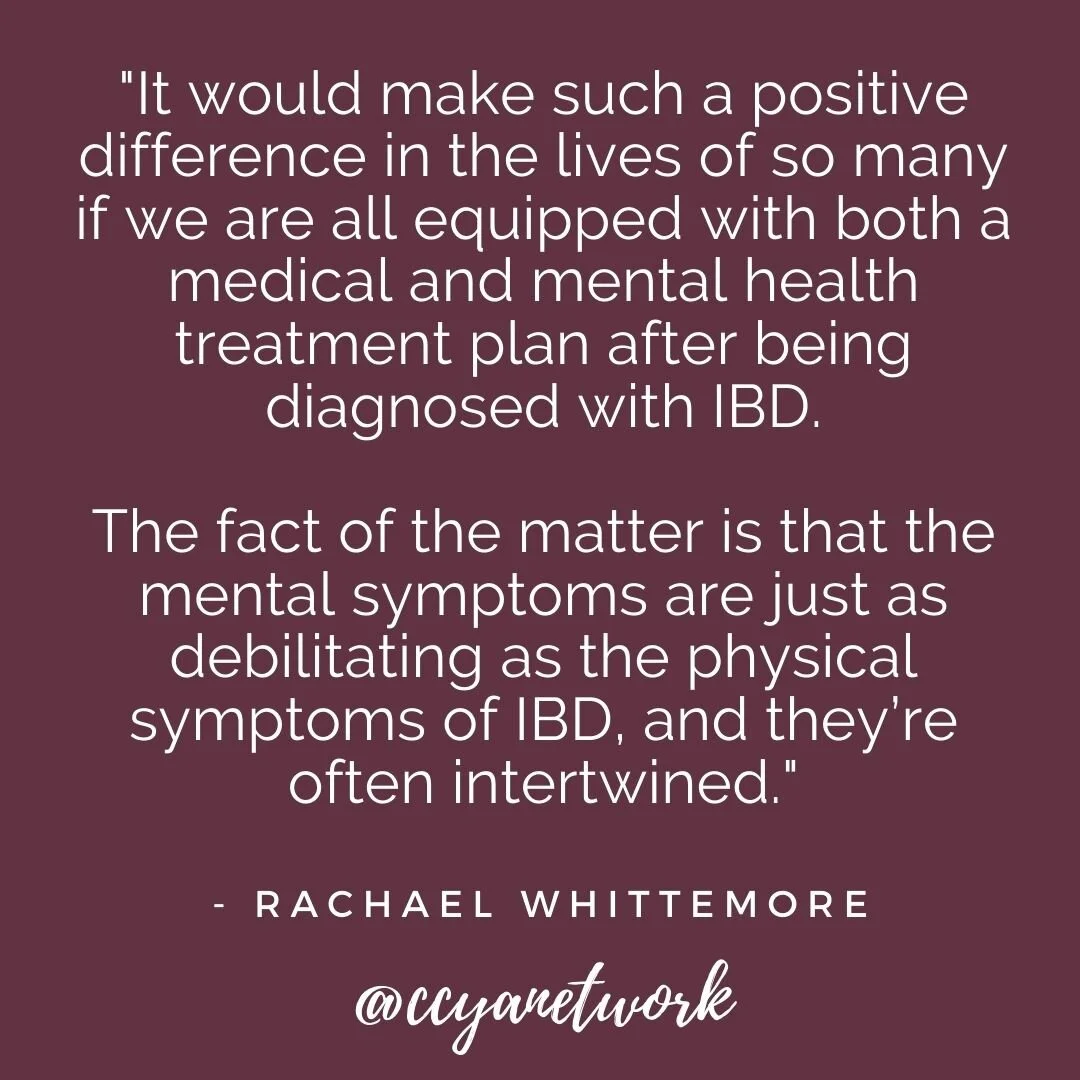
I think it would make such a positive difference in the lives of so many if we are all equipped with a medical and mental health treatment plan after being diagnosed with IBD, because the fact of the matter is that the mental health symptoms are just as debilitating as the physical symptoms of IBD, and they’re often intertwined. We need this kind of support as we manage our diagnosis - which sometimes can land us in the hospital or needing major surgery. I can’t speak to these kinds of experiences, but they can be traumatic in their own ways. How many failed medications or pain does one endure until they receive a potentially life-changing surgery? Thinking of the mental health hurdles that my co-fellows have dealt with and shared so vulnerably leaves me in awe of their strength. When they share what they have lived through, it also makes me sad that there was not adequate mental health services available to some of them when it could have offered an outlet for some of their pain.
Even now, almost 5 years out from my diagnosis, I take medication for my depression/anxiety and have re-established a relationship with a counselor that has experience in treating clients with chronic illnesses. I still go through the peaks and valleys of life and IBD, but, now, I’m better equipped to handle the lows when they hit or when a flare affects my mood and interest in doing things. I want the mental health support that has been so instrumental to some of my healing to be more accessible and affordable for those with IBD in the near future.
I hope speaking candidly about mental health and sharing some of these reflections helps you feel less alone and more validated in what you’ve been going through. The process of untangling all of these emotions is normal when grappling with a chronic illness diagnosis and what that means for you and those you love. Everyone processes major life changes and trauma differently, but don’t be afraid to ask about mental health services when you see your GI or primary care provider. Finding the right mental health support could be the treatment you never knew you needed.

The Acceptance and Struggle of a Childhood IBD Diagnosis
Being a kid is supposed to be a whimsical experience that one treasures and wants to have back. We long for those easier, good old days. But, when you are diagnosed with Inflammatory Bowel Disease at the age of 8, those childhood hopes can get lost.
When I was diagnosed with Crohn’s disease, I did not know what it was. I remember telling my friends and them thinking I kept saying “Crow’s disease” (granted, I did have a speech impediment). Honestly, even I couldn't fully understand what was going on with my body. I felt alone, isolated, and trapped in my body. I felt frustrated because of the lack of support I felt from my peers and the lack of communication that I could provide to the people in my life. I felt confused as to whether I was being too dramatic or if I was really as sick as I thought I was. It becomes hard to trust your body and self when—for so long—your symptoms are not understood. Still today, these emotions can flood my body when I think about my diagnosis or even have to deal with unrelated health procedures. The body has a mysterious memory intact.
In response to these events, I have found that I tend to forget things related to it. To be honest, pretty much everything—specifically during my diagnosis phase of life—is most often a blur. Being diagnosed as a child really made me deeply struggle with the faults of reality and mortality and sickness early on. My body is easily triggered by hospitals or doctors. Whether my response bodily or emotional, I cannot immediately make sense of it all at the time.
I often struggle making sense of my diagnosis. Being diagnosed at such an early age, the disconnect between what was real and fake is hard. How could it have such a constant effect on my life when I forget most details surrounding it? It can be hard when you are surrounded by so many people who have such an understanding of their diagnosis and can write such beautiful lessons they have learned when most days I do not even remember what age I was diagnosed at. It is so easy to compare journeys, thinking your IBD is not as bad as the next, or that you feel alone with it. But what we can hold is that we don't have to be positive all the time. It can be painful and we can hold both the pain and the lessons we have learned. We do not have to make sense of our diagnoses. There does not always have to be a bright side to everything and that does not make you less of anything. Everyone has their bad days, whether you see them or not. Just remember that it is okay to struggle, it's okay if not everything makes sense, and we are so happy to have you here.


My IBD Life - Ode to Despair
I sat down to write this article with the intent of describing some personal experiences with my family and friends during a period of progressing sickness that eventually led to surgery. It’s very hard for me to segregate various aspects of that time. I was struggling on many fronts. Everything seems so intertwined. I probably would have managed better, if the only thing I had to worry about had been my health. Sometimes, I wonder if I could live through that again. The worst parts of that period were the nights. Serially failing medications had brought me to a point where I was living with severe chronic pain and total incontinence. Every night I would go through a sequence of muffled crying, screaming, and dancing, to wither and end up on the floor like a lifeless body. I did that deliberately to tire myself out and fall asleep. Every night it was the same routine. Some nights, the urge to end it all was too strong to resist. I dreaded the nights and took up a night job to cope. I thought if I forced my mind to concentrate on a job, it would help with the pain. I’d suffocate at work, and even had “accidents” at work, despite wearing diapers. Everyone around me in my home or outside was oblivious to what I did to myself in my room in the dark. My coping mechanisms bordered on the psychotic. I would strangulate my body parts to make them numb. I would try to substitute the pain with another kind of pain by using an excessively hot pad. The pain was too much. The blood was too much. The nights were too long. The thing that hurt more than the pain was that every medication would make a mockery of my attempts to live. Early promising results followed by a rapid decline leading to increased symptoms were a pattern. At my core, I’m not a very hopeful person. My life circumstances have molded me into a deeply introverted and pessimist personality. My mind constantly tries to simulate everything that can go wrong and I try my best to put control measures in place. With this disease though, I was helpless. I read vehemently, but I was not a doctor. I forced myself to cultivate hope with every new medication. However, I always ended up dejected. Sometimes, I felt like a bloody soldier struggling to stand straight, kneeling on the ground against his sword, and waiting for all of it to get over.
As I started reminiscing those nights, my intents changed. I wanted to describe that cycle of hope and consequent despair to someone. It resulted in me writing a poem which I’m sharing here.
They tell me the war is over and we won.
They tell me that the night is at last, gone.
They tell me the sun’s rising on the horizon.
They tell me, they tell me it’s a new dawn.
They tell me the same things again and again.
And each time they say it, I believe them.
I hide from my fears, behind a translucent curtain.
Weak ropes of hope bear the weight of my pain.
Soon it all comes crashing down to the ground.
And I see them again. The blood-hungry hounds.
Dread sets into me as they approach and surround.
Every inch of me bleeds. My screams resound.
And when it’s all over, I look down from the edge.
Frail, pale, broken, and defeated, after the rampage.
No antidote to my ailment, my soul feels caged.
Desperate, I am prepared to embrace the only escape.
“Stop! Don’t!” I hear a voice break the silence.
I recognize the voice. It’s them. Once again.
They praise my resilience. Talk about Providence.
Promise me there’s a reason for my existence.
They look to infuse me with hope and faith.
They tell me tales of the fierce and brave.
Why then I don’t believe what they say?
Oh! It’s because, soon after ...
They tell me the war is over and we won.
They tell me that the night is at last, gone.
They tell me the sun’s rising on the horizon.
They tell me, they tell me it’s a new dawn.
There was a time when I tried to capture my pain in words. I was better at writing then. With time, the writing started to feel like a futile exercise. The nights never went away. Instead, I now try to repress those experiences in some corner of my brain as I have done with other traumatic incidents that I have lived through.
My doctor once told me that there were only 2 patients other than me under his care, with a severity of disease that was similar to mine. I felt sad, but then I realized it’s a good thing that more people do not go through such experiences. However, I’m sure there are enough like me in my country which has a population of 1.3 billion, but I’m not sure if everyone is as lucky as me. The mental health of patients with Inflammatory Bowel Disease has never been a priority in the Indian Healthcare system. It’s time that we begin to provide holistic support to young adults with inflammatory bowel diseases to enable them to manage this disease better and come out of the experience with as little residual trauma as possible.
Please stay safe and take care. See you next month. :)

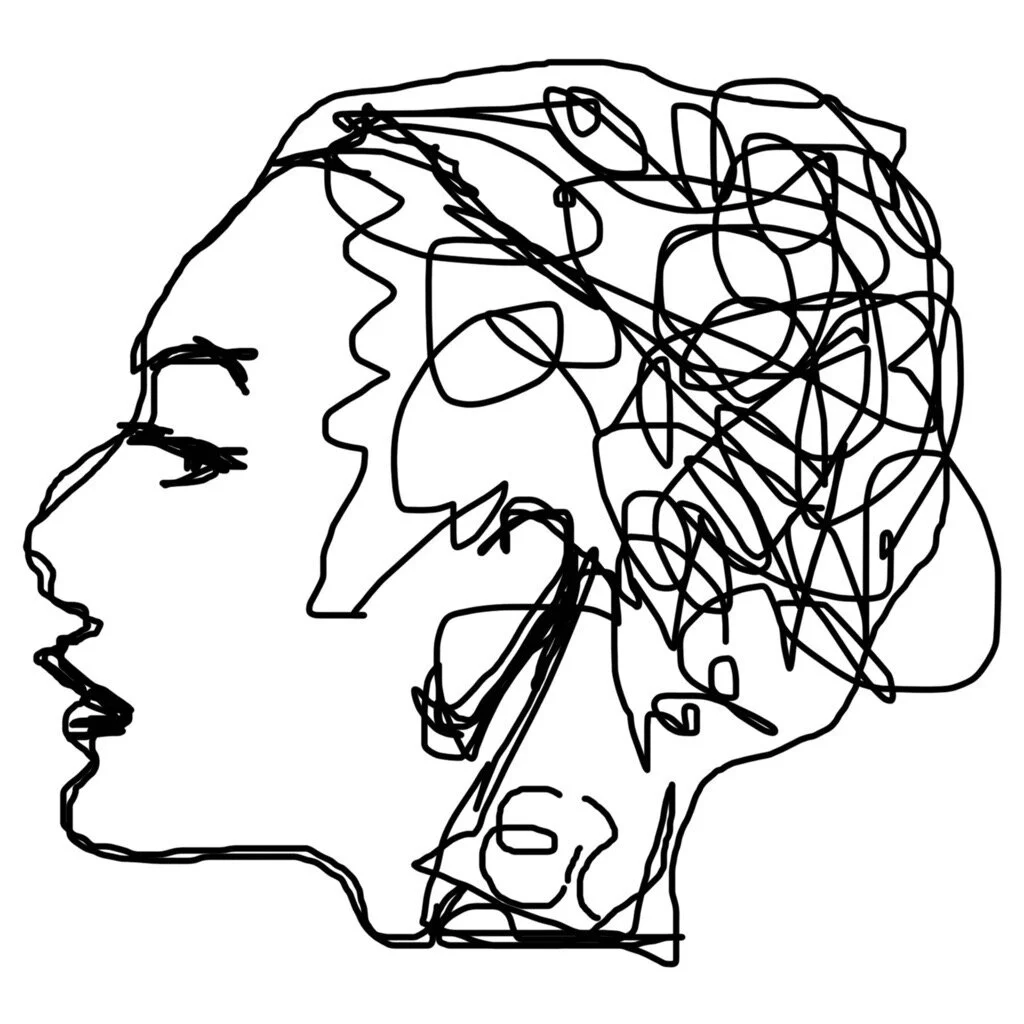
IBD and Anxiety
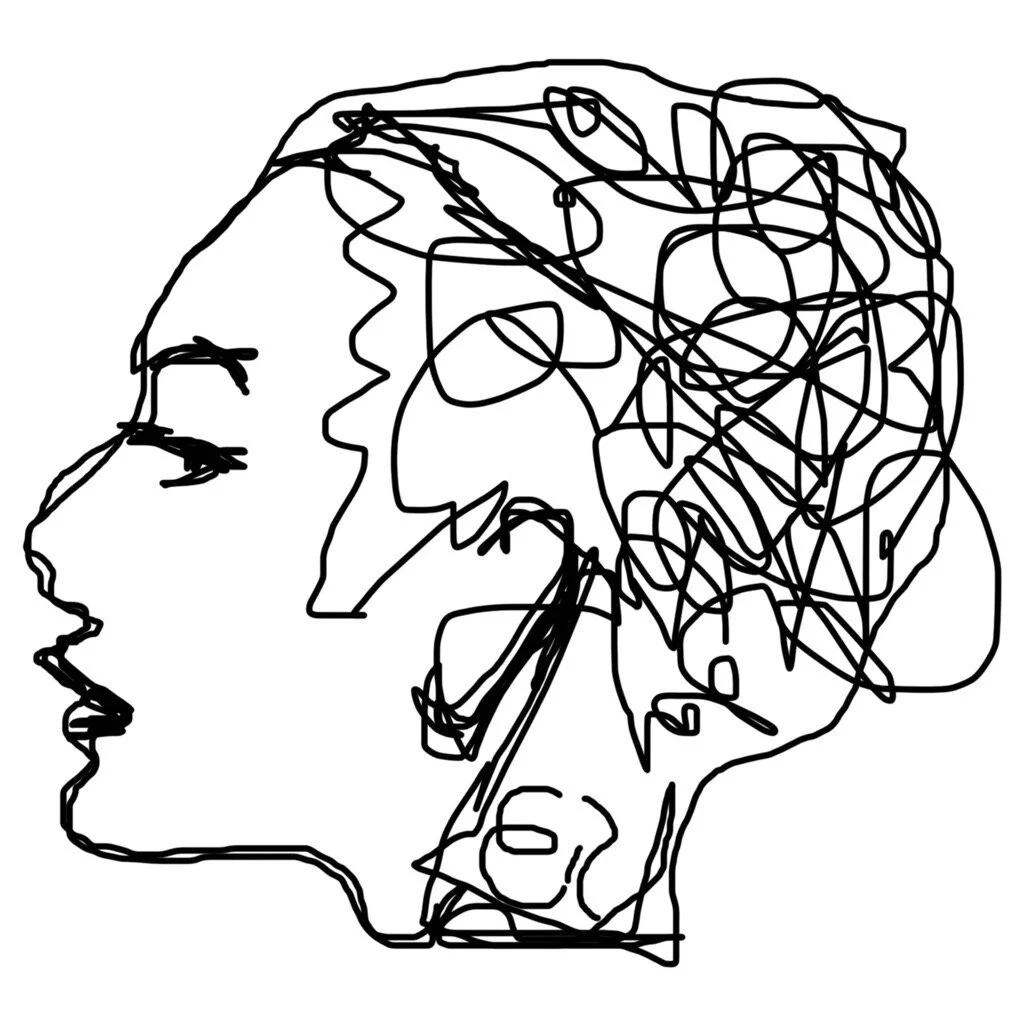
When you are first diagnosed with Inflammatory Bowel Disease you learn quickly that the brain and gut function as one. They are deeply connected. Even if you don’t have IBD, you can look to feelings like butterflies in your stomach when you are nervous, excited, or in love. IBD has given me the superpower of identifying an instinctual trust of my gut. One thing you commonly hear when talking about how to manage your IBD is that you have to manage your stress levels. Since the brain and gut are so connected, the chances that a flare up will occur when you’re stressed are high. Truthfully, being able to manage your stress is a very privileged thing to be able to do and that’s a conversation that needs to be had. Outside forces and systems of oppression exist heavily in our world today. We are not functioning in a world that allows you to thrive and prioritize both your mental and physical health. For most people, there is always a tremendous amount of stressors that you cannot escape. Things like finances, unstable households, going to school, and working all cause a great deal of stress.
Today, I want to specifically talk about how managing stress levels and IBD feels increasingly impossible when you have clinical anxiety and/or PTSD, as these are so often linked with IBD.
I was diagnosed with IBD at a young age. My physical health was always prioritized over my mental health. This was more pronounced, I think, because mental health is not a thing that is necessarily often invested in for young children. As a child, it was very difficult for me to identify what I was feeling and what triggered these feelings. Specifically, with my anxiety, I did not know what a neutral state of mind meant. I didn’t know what my anxiety looked or felt like till around my sophomore year of college. After going on anxiety medication for a bit, I was able to understand what intrusive thoughts were and how they occupied my life.
The baseline for my anxiety is intrusive thoughts, but it can also manifest itself in different ways just based on the things I am doing in my life at the time. For example, my anxiety can manifest itself in ways such as crying in social settings, having an obsession with time (i.e. constantly looking at the clock or leaving hours early for events), and, when things are more extreme, staying in my room for days on end. For me, it is so important to specifically state how my anxiety manifests because for so long I did not know what it meant. I think it is important that we normalize talking about everything that anxiety can bring with it, not just generalizing or downplaying it. So often, I think anxiety is talked about in very loose terms and given very simple fixes for how to “handle it.” This, in return, can oftentimes belittle the situation.
When these more intense and intrusive moments occur, my IBD flares up. So, I often question how I am to manage my stress when I often cannot control my anxieties. In the past, I would become stressed when I experienced my anxieties because I did not know what was wrong. Now, they still stress me out, even though I know that it is anxiety.
For me, and I think many others, anxiety is something that I have to constantly cope with on the daily. If I am not ten steps ahead of it, it will simply swallow me whole.
IBD and anxiety can feel overwhelming and scary, but what has helped me is knowing that I am not alone. Having these two conditions together is not uncommon, and what feels very isolating and full of despair is not the case. Medication has helped me in the past and therapy is a forever process for me. I also keep a bullet journal of coping skills I have used in the past - identifying coping mechanisms that worked and ones that did not. This list gives me a place to turn to when I feel as though nothing could help and it's easily accessible. I have also found solace in being in a community of people who understand. Explaining anxiety or IBD to someone who has not gone through it can be very exhausting and this goes for many other varying identities as well! When I do find the energy, making art is another space for me to process my anxiety, whether that be through a conceptual piece or just painting a canvas with one color over and over again.
What are ways you cope with your anxiety?

Emotions and IBD

There are a lot of emotions that come with the diagnosis of any chronic illness, or even any major life change. But laying on the operating table, under the haze and fading twilight of the anesthesia medication exiting my veins, I felt nothing. The echoing silence of the room was heavy all around me. I expected to feel an overflowing stream of emotions flow over me, but instead the most striking sensation of my diagnosis was emptiness. It could have been the drugs dulling my system and my perception of the world. Yet, over time, I’ve started to think that the cause of the void-like feeling around my diagnosis was something incredibly real, and not artificial. The feeling of change is oftentimes so big that it feels like nothing.
In that hospital room, so much had changed with a simple test. The scale of the moment was beyond comprehension. My parents and I communicated without words, because anything that could have been said would have failed. All the periods, letters, and adjectives in the world would never be enough to frame that point in time. So, somehow and instead, I just knew that I had ulcerative colitis without being told. Shock, and the whole experience, was such a surreal feeling. To know that something has snapped, or broken, or ended, but to be unable to directly confront that realization is off-putting. It was easier to not speak the change aloud, because to speak it into the world would make it extra real.
In the weeks after my diagnosis, it was as if a light switch had been switched back on. All of the fear, grief, and anger I had missed earlier suddenly now surrounded me. The trauma of illness is such a widespread and varied experience, but it can be difficult to describe and discuss. It’s isolating to feel different, and to feel like you’ve lost a piece of yourself. Health is something that most people take for granted or don’t think about. So when it’s taken away from you, its absence becomes the dominant part of your everyday life. The shift in my lifestyle to one focused on health had a significant impact on my mental health. I was in an environment, my freshman year of college, where everyone seems to be testing the limits of their independence. Thus, to feel completely dependent on my unstable day-to-day health felt unfair and tragic.
It’s a challenge to have the energy to battle painful, and draining symptoms on a daily basis. I learned that adjusting to my illness, and all of the treatment that comes with it, was a major part of my healing journey. On top of that, I realized that acknowledging the emotions I was experiencing was an important part of accepting my illness. It’s normal and natural to be angry, to grieve, and even to be nostalgic for your life prior to diagnosis. In fact, for me, it was the first step towards opening up and connecting with others in the chronic illness community. My experiences, feelings, and my relationship towards my health has been full of highs and lows. Most of all, I’ve learned that the negative and positive emotions I’ve encountered from dealing with illness are all valid. They’ve helped me grow, learn, and evolve as an individual. Every journey is different, and that is perfectly okay.
