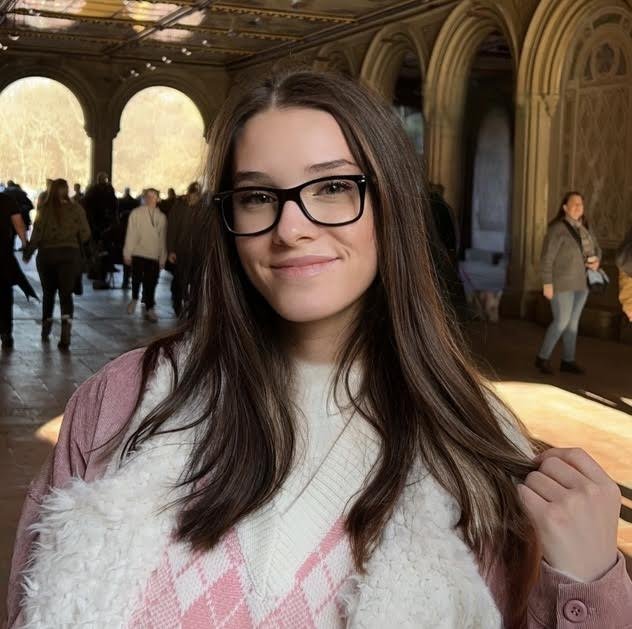
Get to Know the 2025 Fellows: Alexis Gomez (California, U.S.A.)

What’s something you wish more people understood about living with IBD?

The IBD experience isn’t a monolith! While many people with IBD experience similar symptoms, additional comorbidities and complications that are often associated with IBD can look different for everyone. Remission can even be different depending on the individual. Also, while IBD can be difficult on the body physically, the effect it can have on one’s mental health is often the most challenging. People with IBD are constantly having to adapt, cope with their diagnosis, expect the unexpected, and still show up for themselves and their communities every day.


What’s one piece of advice you would give to someone newly diagnosed with IBD?

Look online for IBD spaces and communities that you resonate with. Don’t be afraid to reach out to people who are also going through similar things as you! It can be intimidating at first, but having a community that gets it can make a huge difference in feeling less isolated and alone.


How has your experience with IBD shaped you?

I think my experience with IBD has made me a more empathetic person. IBD is an invisible disease/disability, and living with a condition that people can’t see when they look at me made me even more aware of the fact that you never truly know what somebody might be going through. Also, my experience with IBD has made me more appreciative of the little things in life that bring me joy and peace.


What’s your favorite hobby or fun activity?

I LOVE going to see my favorite artists in concert! Another fun activity that I enjoy and appreciate is having movie nights with my brother.


What is your favorite way to relax or unwind?

Making a nice hot cup of tea and reading a good book… or watching Netflix. Either or, but always with tea!


If you could have any superpower, what would it be?

I would want the power to heal. It’d be really amazing to be able to alleviate people’s pain from any physical or mental ailments.

Get to Know the 2025 Fellows: Michelle Garber (California, U.S.A.)

What’s something you wish more people understood about living with IBD? 

I wish more people understood that living with IBD is like managing a full-time job. It requires constant attention—from attending medical appointments and taking daily medications to carefully managing fatigue, stress, mental health, and diet to prevent flare-ups. When in an active flare, managing the pain and various debilitating symptoms associated with IBD takes up almost all of our energy. The condition’s unpredictability and constant need for management often forces us to cancel plans or limit activities, not because we want to, but because our bodies demand rest. We are NOT lazy. Whether we’re in an active flare or not, IBD is a persistent presence in our lives, affecting us in ways both visible and invisible.

What’s one piece of advice you would give to someone newly diagnosed with IBD?

My biggest advice for someone newly diagnosed with IBD is to find community. This disease can feel incredibly isolating, as few people truly understand its challenges unless they’ve experienced it firsthand. Connecting with others who have IBD creates a sense of belonging and makes the weight of the diagnosis easier to bear. Having a support system that truly gets it is invaluable—lean on those connections, and let them help you navigate this journey.

As someone with IBD, what’s one thing someone (a friend, family member, partner, teacher, doctor, etc.) has said or done that made you feel supported or understood? 

One of the most meaningful gestures of support I’ve received is when someone accompanies me to my doctor’s appointments. Many people with IBD struggle with medical trauma or fear that their symptoms won’t be taken seriously by healthcare providers. Having a trusted friend or family member by my side—whether for a routine check-up, a four-hour infusion, or even an ER visit—helps ease that anxiety. Not only does it provide comfort, but it also ensures that I have an advocate in the room when I’m not being heard. Plus, when loved ones witness the realities of IBD firsthand, they develop a deeper understanding of what I go through, which makes me feel even more supported and understood. 


What’s one way (big or small) you’ve advocated for yourself as an IBD patient that you’re proud of? 

An act of self-advocacy that I’m particularly proud of as an IBD patient is asserting to my doctors that I am the expert on my own body; I know myself and my body better than anyone else. Medical literature may define typical symptoms of a flare-up, but personal experience doesn’t always fit neatly into those definitions. I’ve learned to trust my instincts—if I notice early warning signs of a flare that aren’t medically recognized, I push for tests and treatments based on what I know about my own patterns. Challenging the notion that "textbook cases" define every patient has helped me receive better care, and I’m proud to have stood up for myself in that way.


What’s your favorite hobby or fun activity?

My favorite fun activities include going to stand-up comedy shows and going to concerts/live music events. There’s nothing better than experiencing the energy of a great performance in person! 


What is your favorite way to relax or unwind?

My go-to way to unwind is listening to music and getting lost in Spotify rabbit holes—it’s the perfect way to discover new artists and sounds while calming the mind. 


What’s your favorite song, band, or musical artist? 

Some of my favorite artists and bands are Chase Atlantic, The Neighbourhood, Magdalena Bay, Tame Impala, Mobley, Carpetman, Ashley Sienna, and THEY. 


If you could have any superpower, what would it be? 

If I could have any superpower, I’d choose the ability to heal—it would be incredible to take away pain and suffering, both for myself and for others.

Get to Know the 2025 Fellows: Aiswarya Asokan (South India)

What inspired you to apply for the CCYAN Fellowship?  

I wanted to feel something good/positive come from living with Crohn’s.  

What’s something you wish more people understood about living with IBD?  

Other people feel like I am having an attitude on my face, or as egotistic, or not smiling much, or being too lazy, or too demanding at times, or sleeping in classes at unexpected times. I wish they understood this is because inside I am going through unbearable pain, fatigue, or mental and physical breakdown which is hard to explain to everyone. 

What’s one piece of advice you would give to someone newly diagnosed with IBD? 

It might be very difficult to make peace with yourself and come to an understanding that it is a lifelong journey, but the earlier you can try to find acceptance, the better. Usually everyone has a tendency to hide the diagnosis on the note “how will others take it?,” but it’s our life, and it's only for us it is that we are the center of the show – for others it is just passing news, and not as big a deal as we may think. 

How has your experience with IBD shaped you (personally, professionally, or both!)? 

First of all surviving with IBD is not at all easy, you have to put double or triple efforts  compared to others to reach the same place! But now when I look back, I see:
1) As a doctor, I am more empathetic than others my age. People feel safe with me to share their concerns, and they feel heard and understood when interacting with me.
2) Since there were a lot of extreme lows in life, I know who the genuine people in my life are, and who will stay with me no matter what. Without IBD, I wouldn’t be able to come to this awareness this fast.
3) I was a very ordinary girl, a so-called good girl with a lot of fears inside, blindly following the rules laid down by the society. IBD has forced me to come out of it, break the rules if necessary, and to live my life on my own terms. In that way, IBD has given me a lot of freedom, or taught me what freedom is. 
4) Since IBD puts you through a lot of difficulties, my brain has become wired to get any tasks done in the easiest and simplest manner, so that my healthy friends feel that I am very cool. IBD has improved my patience, resilience, and perseverance.  

What’s one way (big or small) you’ve advocated for yourself as an IBD patient that  you’re proud of? 
I got diagnosed with IBD when I was in my late teens, I was told to keep the diagnosis a  secret by my family. There was a male nurse (who did my first colonoscopy) who told my  father that the diagnosis would turn out to be a serious issue when I get married. After a few years, when I had a lot of flares, I decided to stop keeping it a secret. This decision brought more ease to my life and my parent’s life – it was more like getting liberated. 

As someone with IBD, what’s one thing someone (a friend, family member, partner,  teacher, doctor, etc.) has said or done that made you feel supported or understood? 

My boyfriend is a big support – even when I go through weight fluctuations, he has never once made me feel bad. Instead, he has taken me to different places and taught me to enjoy life and not restrict it because of IBD. When we share our plate at  fancy restaurants, he will usually have all the fiber stuff on the plate so I can have the parts without fiber and will get a chance to try every food I want to. 

A former principal in my ayurveda college was the only person at school who knew about my diagnosis back then. He checked on me from time to time, and inquired if I was feeling tired or low. At the same time, the diagnosis was a safe secret with him, the way I wanted it to be. Once when I was going through a flare, he told me to make a list of people of whom I felt hurt and forgive them, so that I feel less burdened from inside. 

What is your favourite book, movie, or tv series, and why? 

I like the TV series “Friends,” it's fun to watch, because it is inclusive to everyone, feels comforting, connecting, and simple. 


What is your favourite way to relax or unwind? 
Watch a movie, spend time with friends or some family members, go for walks in the early mornings or in the moonlight, eat good food, and go on trips. I also love to stay cosy in my bed. 

What’s your favourite song, band, or musical artist? 

A.R. Rahman 


Do you collect anything? If so, what and why? 

I collect quotes/lines from books that I find interesting, it gives me some strength. 


If you could have any superpower, what would it be? 

Sometimes I wish I could eat whatever I want without having to go through any pain. A few days before my surgery (I used to vomit even when I take water), I asked the surgeon if I would be able to eat a biriyani right after surgery!
Get to Know the 2025 Fellows: Kaitlyn Niznik (New York, U.S.A.)

What’s one piece of advice you would give to someone newly diagnosed with IBD?

To anyone newly diagnosed, please give yourself some grace.  Know that there's going to be hard times ahead and you're going to experience things you never expected to deal with in your life.  It's okay to have bad days. It's okay to ask for help when you need it and be transparent with loved ones about how you're feeling.  Above all, don't forget your online IBD community is here for you!

How has your experience with IBD shaped you (personally, professionally, or both!)?

When I was younger I developed a severe blood/needle phobia.  As a precaution, I was excused from countless science lessons in school.  Since my diagnosis, I've tried to make up for lost time and learn more about the human body.  I read pathology books and IBD research papers in my free time so that I can be a more informed patient. 

What perspectives, topics, stories, or projects are you looking forward to sharing with the CCYAN community this year? 

I'm hoping to bring some art opportunities into my CCYAN Fellowship!  I am very interested in the topics of narrative medicine, biomedical communication, and medical illustration.  One perspective I am excited to share is having an IBD while also battling blood, medical, and needles phobias.  

What is your favorite book, movie, or tv series, and why?

My favorite movie is the Bollywood film Queen (2013) for its messages of independence and finding yourself.  I feel like getting an IBD in my 20s stunted my independence, so I really connect with the main character’s journey.  It also has one of my favorite songs ever - “Kinare”.

What’s your favorite song, band, or musical artist?

My favorite band is Enter the Haggis - a Canadian Celtic rock band with bagpipes and fiddles.  I've been to four of their concerts and own way too many of their t-shirts.  

What is your favorite hobby or fun activity?

I was an Irish step dancer for 11 years through high school and joined a Bollywood dance team for 5 years in college.  This year, I'm hoping to rekindle my love for Indian dancing by starting classical Bharatanatyam.

Get to Know the 2025 Fellows: Beamlak Alebel (Addis Ababa, Ethiopia)

What inspired you to apply for the CCYAN fellowship?

I was inspired to apply for the CCYAN fellowship because it is inspiring to see how people with IBD support each other and live their lives fully despite the challenges. These individuals serve as role models showing that it's possible to thrive with IBD seeing this kind of support can be incredibly empowering to feel less alone.

What is something you wish more people understood about living with IBD?

I wish people understood that living with IBD is a life threatening condition, not caused by malnutrition. Taking medication doesn't mean we are weak or incapable, we can manage our symptoms and still work and study and live lives. Again, sometimes certain foods can trigger our symptoms and while it might seem confusing we choose specific diets, because we understand what's happening behind-the-scenes in our bodies. 

What is one piece of advice you would give to someone newly diagnosed with IBD?

Know that IBD doesn't mean you can't live a full or meaningful life. Embrace it also knowing that you are not alone, embrace the lows with strength and appreciate the highs.

How has your experience with IBD shaped you (personally, professionally, or both)?

My experience with IBD shaped me in many ways. It made me to be empathetic toward others facing invisible illness, it also taught me the importance of self care and faith whenever we face uncertainty. Professionally it has fueled my passion to advocate and be resilient and made me turn my challenges into opportunities to help others.

What perspective, topic, stories, or projects are you looking forward to sharing with  CCYAN community this year?

My goal as a CCYAN advocate is to empower individuals living in IBD by sharing the lessons I learned from my journey. In addition to this, I have a goal to develop an app which is multilingual containing  both Amharic and English to support IBD patients in Ethiopia and globally.

As someone with IBD, what is something someone (a friend, family member, partner, teacher, doctor etc) has said or done that made you feel supported or understood?

One thing that has made me feel supported as someone with IBD was hearing 'you are not alone - you can, we can’ from a Crohns and Colitis Ethiopia member. It gives me hope and reminds me that we are in this together.

What is your favourite hobby or fun activity?

My favourite hobbies are going to church and taking night walks with my brother. Those moments give me peace and faith and time to connect with my family.

What are your favourite books, movies, or TV series and why?

My favourite TV series is Don't mess with an Angel (cuidado con al angel) which is a Mexican telenovela originally in Spanish. I found it interesting because of its emotional story and strong characters. It showed overcoming challenges with love and strength. 

If you could have any superpower what would it be?

If I could have any superpower it would be the ability to cure illness and provide basic needs for every one. I would work to make sure that no one has to suffer from lack of these essentials.

Navigating the "Why Me?" Season of Chronic illness

Yeabsira Taye Gurmu: Addis Ababa, Ethiopia

The "Why Me?" season of my journey with Inflammatory Bowel Disease (IBD) was one of the most challenging times in my life. The onset of symptoms—unrelenting abdominal pain, fatigue, and unpredictable bowel movements—left me feeling lost and overwhelmed. Each doctor's appointment felt like a new hurdle, as I faced uncertainty and often dismissed concerns. The emotional weight of confusion, fear, and frustration was heavy, making it difficult to envision a future where I could manage this condition. It was a time filled with questions but few answers, leaving me grappling with the reality of my health.

For new patients experiencing a similar phase, it’s essential to understand that these feelings are normal and part of the diagnostic journey. Expect to encounter a mix of emotions, from denial to anger, as you seek answers. It’s crucial to advocate for yourself and seek support, whether through online communities or professional help. Keeping track of symptoms and preparing questions for your healthcare provider can empower you during appointments, helping to clarify your condition. Remember, this stage is often a tumultuous path toward understanding, and it’s okay to feel vulnerable as you navigate it.

Transforming the "Why Me?" phase into a positive, lifelong attitude is possible. Embrace the challenges as opportunities for growth and self-discovery. Focus on education about your condition, which can demystify the condition and foster a sense of control. Surround yourself with supportive people who uplift you and understand your journey. By practicing self-care and maintaining a proactive mindset, you can turn this difficult chapter into a foundation for resilience and empowerment. Ultimately, this experience can lead to a fulfilling life with your chronic condition, marked by hope and a renewed sense of purpose.

Featured photo by Disha Sheta from Pexels.

Revolution in Diet Therapy for Inflammatory Bowel Disease: A distilled summary

Disclaimer: This piece is not intended to serve as medical advice, but as a reflection on strategies for patient advocacy. Always talk to your GI provider before making any changes to your diet, medication regimen, or any other aspects of your health care.

This is a review article that compiles several studies which center around how diet interplays with Crohn's disease and colitis. Articles are subcategorized by well known factors that contribute to inflammation including meat, dairy, additives, and fiber. Articles and studies are also graded on academic rigor with the gold standard being a randomized control trial and lower quality studies being observational data.

Exclusive Enteral Nutrition (EEN)

First, the article talks about EEN. What is EEN? EEN stands for Exclusive Enteral Nutrition, which means nutritional resources come from a liquid formula for 6-8 weeks (gross). EEN has been shown to achieve clinical remission similar to corticosteroids in pediatric populations. Adult populations seem to follow a similar trend.

Compared to steroids, using a EEN liquid formula based diet is way better to remove the potential harmful side effects of steroids. More specific data shows that factors such as male sex, younger age, milder disease, and certain microbiome profiles respond better to EEN. One criticism can be the healthy user bias where study participants are naturally going to be healthier people and that the person who can tolerate EEN for 6-8 weeks may just be a more self-disciplined person with less financial or social barriers, and overall healthier person. 


Partial Enteral Nutrition (PEN)

Let’s be real. Would you sign up for a smoothie-only diet for 6-8 weeks? Authors looked into other diet options such as PEN or Partial Enteral Nutrition where only a portion of food intake is liquid formula and the rest is unrestricted food intake. However, studies have not been promising in PEN’s ability to reduce inflammatory markers such as fecal calprotectin or CRP. Whether that's because of poor ability to stay on that diet or whether that's because of the diet itself is hard to say.


Crohn’s Disease Exclusion Diet (CDED)

Crohn’s Disease Exclusion Diet (CDED) uses 50% PEN and permits only certain foods in three phases: 

  • Phase 1 - Chicken breast, fish, lean meats, olive oil, onion, potatoes, rice, tomatoes 

  • Phase 2 - certain legumes, fruits (blueberries, kiwis, and peaches), vegetables (broccoli, cauliflower, sweet potato, and zucchini), oats, whole-grain bread and pasta

  • Phase 3 - can introduce foods such as alcohol, coffee, dairy, grains, and seafood

  • Foods to avoid in ALL phases -  Process meat, artificial sweeteners, seeds, emulsifiers, and preservatives  

CDED has been shown to reduce inflammatory markers but has yet to be validated in a larger scale study.

Find more information about the Crohn’s Disease Exclusion Diet on the Nutrition Therapy for IBD website.


Diets for Ulcerative Colitis

There's exciting new evidence in ulcerative colitis that indicates that high levels of Hydrogen sulfide (H2S) can increase disruption of the microbiome and cause injury to the colon. Fecal transplant has also been shown to be more impressive and impactful in reducing inflammatory markers when paired with a plant based and low protein based diet. The Mediterranean diet has also shown to improve inflammatory markers but it still seems unsure whether the  Mediterranean diet alone is causing this or whether it's the removal of the standard American diet which is known to be high in fats and protein.


I personally want to focus not on any specific diet but the overarching data that seems to indicate that avoiding processed foods, especially processed meats, can help to reduce inflammatory markers. Whether that reduces symptoms from a subjective patient point of view is a little harder to capture in the data. So far, the evidence is clear: There is no evidence that IBD can be treated with diet alone.


Our disease as IBD patients is still a medical disease that requires specific medications and  Hopefully we can continue to see more diet and nutritional studies as we all have personal common-sense-knowledge that diet does impact our flares.


One of the best ways to personalize your own flares is to capture a food journal where you can document certain food triggers that occur with flares. This can be really useful in bringing to your gastroenterologist or other specialist, in order to develop a diet plan that works for you. There’s real hope in using food as part of your treatment plan, and with the right approach, it could help you feel more in control of your IBD.


Featured photo by Dana Tentis from Pexels.

A Few Things I Learned from Advances in Inflammatory Bowel Diseases (AIBD) 2024 As a Patient

By Maria Rouse from NC, USA

Disclaimer: This piece is not intended to serve as medical advice, but as a reflection on strategies for patient advocacy. Always talk to your GI provider before making any changes to your diet, medication regimen, or any other aspects of your health care.

I recently had the amazing opportunity to attend the annual Advances in Inflammatory Bowel Diseases (AIBD) conference in Orlando with CCYAN. Living with ulcerative colitis for 15 years now, I thought that my personal realizations about living with it might be fairly limited moving forward. AIBD helped me realize the power of knowledge and community support in developing new insights about my disease journey and what I hope for my future. Whether this information helps inform your self-advocacy for you or your loved one’s care, or simply is empowering to know as you progress on your IBD journey, I hope that sharing what I learned from AIBD as a patient provides you with another tool in your toolbox for managing the complexities of living with IBD:

#1 Do not assume your voice is automatically less important than your provider’s. The patient-provider relationship should be a partnership. Advocate for your needs the best you can as the best expert on your body.

Do not be afraid to share with your provider if you feel that you are not doing well on a medication they have prescribed you, whether it be because of recurrent symptoms, side effects, or another factor. Your experience matters.

You may have already encountered this reality during your IBD disease journey, but it may be helpful, as it was for me, to hear it concretely said: the way you feel might not always be indicative of your disease activity or whether you are truly in remission. It is possible for you to be feeling well but have your labs and other biological markers show that your disease is active.

This does not mean you shouldn’t trust your own intuition, but that our bodies are complex. As frustrating as this reality is, our providers can help us uncover when things are not going as well as we perceive.

#2 It is important to be aware that IBD can sometimes affect more than your gastrointestinal system.

If you feel that your IBD may be connected to health issues occurring in other parts of your body like your eyes, joints, or skin for example, do not be afraid to share these concerns with your provider even if they do not specifically ask about them. While it can sometimes be difficult to tell if other health issues are related to your IBD, if they are, there may be treatment alternatives that can help address these issues in addition to your IBD.

While everyone’s IBD is different and one person’s experience doesn’t represent everyone’s, I have found it enlightening and often comforting to talk to other people with IBD about less commonly discussed symptoms (e.g., problems with hunger, mobility, and skin issues) I have experienced, to know I am not alone. It has helped me feel more comfortable proactively bringing up such topics with my provider to both ensure my disease is under control and identify ways to potentially alleviate symptoms and improve my daily quality of life. 

#3 Managing your diet and nutrition can sometimes feel like the bane of your existence, but they can be key supportive elements for managing your IBD.

In my opinion, IBD dietary and nutrition advice can feel overwhelming and frustrating, because it’s impossible to identify dietary guidelines that work for everyone with IBD. While diet and nutrition are typically supportive components of an overall treatment approach, they are still important elements for overall health and wellness. 

Do your best to follow guidelines from your provider and nutritionist, if you have one, and listen to your body’s needs. At the same time, however, do not stress too much if you don’t get it just right, or it takes a while. It’s a journey, and sometimes our needs can evolve over time.

#4 If you identify as a woman or as gender non-conforming, the field has a long way to go with prioritizing research and care at the intersection of IBD and reproductive health.

There is a lot of unclear or flat-out misinformation out there, and providers do not always bring up issues such as painful menstruation, fertility concerns, or sexual functioning issues that can be associated with IBD. Do not be afraid to bring up any concerns or questions you have with your provider, whether that be your GI provider or your reproductive health care provider.

There is a lot of emphasis on research and care related to pregnancy and IBD, which, while important, does not represent the whole spectrum of needed reproductive care for people with IBD. 

Some examples of topics that we need to advocate for further attention towards as patients include exploration of potential connections between IBD and endometriosis, management of painful periods, and clearer guidelines on safe and effective contraceptive use.

Fighting, Grieving, and Enduring Entropy

By Zahraa Chorghay, Montréal

Trigger warning: mental health, death

.

.

.

In a universe of entropy, living with a chronic illness has meant surrendering control and expectations of stability to give myself the gift of being more flexible and adaptable, and thus, more resilient. This transition isn’t an easy process, particularly for someone like me: an elder daughter of the diaspora fed on a steady diet of validation for professional accomplishments. Unlearning harmful ableist notions of success and well-being has been a challenging journey spanning years — and one that is and will be ongoing throughout my lifespan.

Crafting this last official piece of content as a fellow for this Young Adults Network for people with IBD (inflammatory bowel disease), I am moved to reflect on my transitions, particularly over this past year as a CCYAN Fellow. When I applied to the CCYAN fellowship a little over a year ago, I knew what I was looking for: a space to connect with others like me, and a platform to advocate about IBD. My tenure with CCYAN certainly fulfilled both of the needs, and more. I engaged with IBD research, attended meetings in the broader health policy and scientific community, facilitated peer support meetings, and became part of a community I hope to continue with for many more years. But the joy and learning from being in the CCYAN community was just a fraction of life. 

In reality, 2024 was a year of great turmoil. Geopolitically, yes, and also, personally.

The beginning of my year was marked with illness. By February, after an incredibly fun winter chalet weekend with some of my closest friends, I found myself in the emergency room of a hospital. Diagnosis: severe anemia. Solution: a blood transfusion. (You can read more about that here.)

The following week, I was slated to fly to California for an interview, so I did. That went well enough that a couple of months later, I left my stable corporate job and packed my bags for a permanent move across the continent. After my PhD, I had taken a protracted hiatus from my passion, neuroscience, so I was thrilled to be returning as a postdoctoral associate (“postdoc”) in a brand new lab in the Golden state. 

The move was tough. Moving to a new country means starting from scratch. Logistically, I had to get all my documents in order, deal with banks, find housing with no credit history, and navigate an entirely different healthcare system. Socially, I had to make friends and deal with the profound sense of missing everyone back home. (You can read more about that here.) But I was there to advance my career, and I obstinately held on to that goal. I had to learn many new things, and under a completely different management style than I had previously encountered. So I dove into the scientific literature, asked for help from my supervisor and colleagues, and practiced my techniques. Everytime something went wrong, I came back to the lab, working even longer and harder to make sure I could improve. I would stay late often enough that one of my favourite colleagues became the night-shift janitorial staff member. (She would often pass by me and say, “Keep working hard, girl!”)

Despite my resolve, I struggled. I wasn’t ready to give up, but the combination of suboptimal conditions affected me deeply. I’d return to my sparsely-furnished apartment at the end of each day too exhausted to do anything but eat a quick dinner and lie down, while having that sinking feeling that I had nonetheless missed the mark at work. I was living in a beautiful city with perfect weather and the vast ocean in the peak of summer, but I scarcely had the energy or capacity to enjoy it. My appetite, sleep, and energy levels were all affected, and I knew my stress could cascade into a Crohn’s flare before I knew it. I was taking everything I had unlearned about ableism and notions of success, and learned about IBD, work-life balance, and myself over the last decade, and tossing it out the window.

And as a result, I was drowning. The more I struggled to keep swimming, the more salty water I was intaking. The only times I came up for air were when visitors from home flew to California to spend time with me, showing me glimpses of the person I once was and could be.

Then, I received a text from my father. Inna lillahi wa inna ilayhi raji'un (To God we belong and to Him we return) — a prayer for the deceased. Unable to believe the words that followed, I called him immediately. 

Baji Ammi had passed away.

In English, Baji Ammi translates to Sister Mother, and that is perhaps a better description than the vague, distant, and altogether inadequate word, “aunt,” that the language would otherwise designate. Her death was sudden, as she had been an otherwise active woman in her early sixties. Her death was devastating, as she was the kind of person who gave unconditional love to whomever was so fortunate as to be in her orbit. 

Everything blurred together in the hours and days after this news. Grief became giant convection currents rippling through the mantle, forever shifting the tectonic plates of my life: I was forced to face myself. Ultimately, I quit my postdoc and returned home to Canada. Now, I am trying to figure out what comes next, while dealing with logistics and processing grief.

A year ago, I couldn’t have imagined that I would move across the continent only to move back, or that I’d pursue a postdoc only to leave it within a few months, or that I would never see my kind, beautiful, witty Baji Ammi ever again. And despite the overwhelming grief of dreams and of life extinguishing, I have also been incredibly fortunate (aA) to have unwavering love and support to move through this grief. I’m glad I also had CCYAN throughout this tumultuous year, getting and giving support to our incredible community. 

In a universe of entropy, of constant turmoil and loss, I suppose life endures.

My Journey of Advocacy as an IBD Patient in Africa: A Medical Student's Perspective

By Yeabsira Taye Gurmu, Addis Ababa, Ethiopia

As an IBD patient living in Africa and a medical student preparing to become a doctor, I have come to deeply appreciate the importance of advocacy. Living with a chronic illness can often feel isolating, especially in a context where awareness about conditions like IBD is still developing. Through my own journey, I’ve realized that advocacy is not just about raising awareness; it’s about creating a sense of community and support that can make a significant difference in the lives of those affected by IBD. However, I’ve also learned that it’s crucial to balance this advocacy with my need for personal peace and maintaining my boundaries.

In my efforts to advocate for IBD awareness, I’ve found that it’s essential to be selective about what I share. While my experiences can help others understand the challenges of living with IBD, I’ve recognized that I don’t have to disclose every detail of my journey. Setting clear personal boundaries allows me to engage in advocacy without compromising my emotional well-being. For example, I choose to focus on the broader message of understanding IBD rather than delving into the more painful aspects of my experience. This approach not only protects my mental health but also helps me stay purposeful and impactful in my advocacy work.

I’ve also learned the importance of self-care while engaging in advocacy. It’s vital for me to participate in discussions and support groups at a pace that feels comfortable. Sometimes, this means stepping back and taking time for myself to recharge. I’ve found that when I prioritize my well-being, I can engage more authentically and passionately in my efforts to raise awareness for IBD. Encouraging others to find their own balance has become a priority for me, as advocacy is most effective when it aligns with our personal values and comfort levels.

By sharing my experiences thoughtfully and prioritizing my well-being, I can contribute meaningfully to the conversation around IBD without losing sight of my own needs. As I continue my medical training, I aspire to inspire my peers to embrace the significance of patient-centered advocacy. Each voice is important, and together we can foster a supportive environment that not only raises awareness but also honors the individual experiences of those living with chronic illnesses like IBD.

Featured photo by Steve Johnson on Unsplash.