
NEWS

Digestive Disease Week: Empowered Crohn’s Disease Care
I would like to thank CCYAN for providing me this opportunity to patriciate in Digestive Disease Week (DDW) 2021. One of the sessions that I attended is “Empowered Crohn’sDisease Care: Targets, Tools and Talking Patients”. From this session, I have learned about the use of treat-to-target approach to treat Crohn’s Disease (CD), the tools that may help risk stratify patients with CD, and about the personalized approach to CD care. The session was split into three presentations, which were presented by Dr. Parambir S Durai, Dr. David T. Rubin and Dr. Corey A. Siegel respectively.
1) Treating to Target: Aiming for Endoscopic and Symptomatic Remission
By Dr. Parambir S Durai
What is the study about?
Dr. Durai presented about the use and benefits of a treat-to-target strategy in CD aimed at deep remission.
Presentation summary:
We need to understand how this treat-to-target approach work. Treat-to-target approach which is also known as a tight control strategy is used to achieve sustained disease control. Target and risk will be set during this time, assessment and continued monitoring have to be done to ensure targeted outcome has been reached. The most important goal in this treat-to-target approach is to achieve endoscopic healing, normalized quality of life and absence of disability.
The different studies mentioned in the presentation aimed to give CD patients early therapy using a treat-to-target approach. Treat-to-Target approach will be able to prevent adverse long-term outcomes. The studies suggest that the non-conventional methodsused at early treatment stage or frequently brings out positive outcomes to patients’remission.
Treat-to-target is treating CD patients until they achieve the desired target for the CD patients like us is healing. Healing can be mucosal healing where we go for endoscopy and the colon looks normal with no inflammation or ulceration. In some cases, there might even be histology healing which means when biopsy has done towards the colon or small bowel there is no inflammatory cells seen. In the case of a patient has fistula, then the target is to have closure of fistula. To achieve this target, the patient needs to be put under full remission.
According to Dr. Durai, patients whose response to the treatment by improvement in biomarkers results shown reduction in CRP and calprotectin. They may go for symptomatic remission. The next target is to achieve deep remission by continuing assessment and monitoring. At this stage, if the response is good, patient will be able to experience the huge improvement in symptoms, better quality of life, decreased in hospitalization and finally free from surgeries and disability and any serious disease- related complications.
Although the opportunities are huge and will provide patients with better quality of life or even achieving the absence of disability, there are some challenges that still exist in this approach. The first challenge is that treat-to-target is a time and commitment needed to follow through this approach as it needs more follow ups and more complexity of individualized process with the already busy clinical team. The other barrier is lack of knowledge of what might happen to patients later. Both patients and clinical team need to understand the limitation and provide active disease control to the patients.
2) Clinical Decision Tools: Assessing Risk and Taking Action
By Dr. Corey A. Siegel
What is the study about?
In his presentation, Dr. Siegel briefed about the importance of clinical decision support tools and suggested using clinical decision support tools to risk stratify patients for individualized CD care.
Presentation summary:
What are clinical decision tools? Dr. Corey explains that the decision-making tools are guidelines for medical providers to follow through different process based on different parameters. The tools can help to enhance medical decisions with provided clinical knowledge, patients information and other related information. And from the data gathered, doctors can formulating a diagnosis, assessing patients level of risk and help practitioner to improve the way they make decision to select medication for their patients from result shown from the tools.
Practitioner can apply several types of clinical decision support tools which has been developed such as AGA Clinical Decision Tool, IBD CDST, or CDPATH.
What can we learn from this presentation?
This tools help practitioner to decide right medication for patients based on the balance of risks and benefits especially at the early stage or before they develop complications.
By using these tools, it may help to reduce practitioners from making any risk of misdiagnoses and medication errors.
The tools improve efficiency and patients’ satisfaction.
. Give more confidence to practitioners to recommending right therapy and apply more aggressive monitoring technics.
3) Shared Decision Making in CD: The Path to Improving Quality of Life
By Dr. David T. Rubin
What is the study about?
Dr. Rubin discussed about the complexity of shared decision making for patient-centered and empowered CD care.
Presentation summary:
Dr. Rubin informed that the shared decision making involves three different parties. They are: -
1. Patient
- Person who suffer with IBD and request treatments.
2. Doctors/ IBD Nurses
- Medical provider who have fundamental knowledge about the disease and therapies which can be used to treat IBD.
3. Payor
- Person/company/agency who pays for the care and treatments for the patient.
To make the relationship between the three parties happen there are several factors that should take to consideration by all the parties. Refer to diagram below:-

He further explains that, for each patient, the provider and payor must consider four variables: efficacy, safety, convenience and access. These variables help to makeprogress and provide better care for the patients. Practitioners can use “Ethical Analysisand Medical Decision Making” framework to make difficult medical decision. This can help to strengthen the doctor-patient relationship.
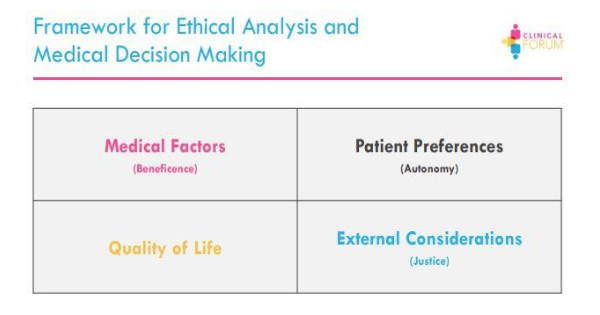
a. Medical Factor (Beneficence)
- This is a value in which the provider takes actions or recommends courses thatare in the patient’s best interest. The principle is based upon the objective assessment of a doctor, and what they feel is best for their patient. The points of concerns are:-
What is the patient’s medical problem? diagnosis? prognosis?
What are the treatment goals?
What are the therapies recommended?
What are the risk factors of the recommended therapies as well as the disease itself?
How are patients benefited by medical and nursing care?
How can harm be avoided?
b. Patient Preferences (Autonomy)
- Refer to the patient’s right to make decisions for themselves according to theirown preferences. They can either agree to take treatment or refuse the treatment. The points of concerns are:-
Patient’s right to accept a treatment.
Reasons for patient’s refusal of treatment.
c. Quality of Life
- A major goal of medical treatment is to restore, maintain, or improve quality of life. Care management in treat-to-target should address the patients’ life goalsand include long term plan for stability and health. Quality of life is important in CD patients and their symptoms are directly proportional to the quality of thepatient’s life. The points of concerns are:-
Perception of quality of life
Normalization of symptoms
d. External Considerations (Justice)
- Involves provider bias or influences, resource allocations and payor decisions which effects the delivery of care for patients. Payors normally balance a budget and distribute their resources which might not be enough for the care the providers think optimum for the patient. There are differences in the providers view of what is needed and the payors view of what could be distributed in term of resources. Payor can look at different solutions to be more cost-effective, be more engaging in disease managements and partner up with experts to identify better support care for patients. The points of concerns are:-
What are the financial and economic factors involved in CD care?
Are there any problems for resource allocation?
Do payors have enough budget to cover the treatment?
Dr. Rubin gave us an overview of how decision in CD are made and the complexity of it involving the three parties. Although decisions are individually based on differing onpriorities and values, the ultimate goal should be the patients’ sustained functionalremission. Therefore, the three parties involved should figure out how to care for CD patients and optimize the quality of life and involve payor more in the CD care.
In summary, treat-to-target could be an effective way of treating CD patients with applying proper decision-making tools and involving all the decision makers (patient, provider and payor) to provide a better care, early treatment and allocate resources optimally.

Young, Nice, and Chronic Patient
Growing up is a process that we will all inevitably go through. We tend to live our lives with a sense that we are immortal. We learn to walk, we fall, we get up, we continue. Yes, life is pretty good. You learn a lot, you see new things, you spend a lot, you enjoy it. It is something that everyone does - living their life. It looks pretty simple until we start growing up.
In adolescence we begin to feel "older.” We go to school, we work for the coming of our adulthood. I looked like an ordinary teenager, I felt like an ordinary teenager - I thought everything was fine.
It was not exactly like that inside me. The reality was a little different. I was always the petite one of the class and I got sick often. The first symptoms of Crohn's disease began, which soon brought the psoriasis, then arthritis, and, recently, adrenal insufficiency.
New and full of life as I was, I was already setting goals for the future and dreaming. Yes, I was sure I would become an artist, I had decided.
Apart from some minor health issues, such as abdominal discomfort and lack of appetite, there was nothing wrong with me. That is, as far as I knew. I did not live in them, I was new. I was full of ambition!
I was about 15 years old when I began to realize that I should not take my health for granted.
I was at home relaxing listening to music when I suddenly collapsed in pain. I could not stand up.
A little later I was in the emergency room of a provincial hospital. Examinations, medications, but it seemed something temporary - it was not, as it turned out later. I was young, nothing could hurt me - or so I thought.
Then, I got some gastroenteritis (!) and it took me over a month to "recover" - obviously, since it was not gastroenteritis. Suddenly I started to get sick quite often. It had become difficult for me to live like an ordinary teenager, yet I was trying to go to school, the conservatory, and the orchestra.
I did not care much then, though. I was probably used to it. That was what I knew. I think my attitude started to change about a year later, when the visits to doctors and hospitals had increased significantly and I started to have more problems.
It was hard for me, as I suddenly had to struggle with things I had never imagined. I could no longer do what normal teens did.
As time went on, the "mysterious" disease then dissolved me more and more.
And life was moving on. I had to make brave decisions - it was not easy at the age I was then - as my health was deteriorating. I had to stop several things I liked or adjust them to the rhythms my body could handle.
I didn't do many things anymore. The only thing that kept me going was the music; it was becoming an increasingly important part of my life. I went to concerts very often because it was one of the few things I could do during that time. This made me face some of the difficulties I was going through.
After several years passed, I was then diagnosed with Crohn's Disease, psoriasis and arthritis. With the treatment I was receiving I was in remission and I had started to do everything. I was in university, I went on many trips, I went out and had fun, I went to concerts , I played in concerts. I no longer had almost any restrictions.
Until I began to feel very tired, nauseous, have a lack of appetite, and dealt with some other symptoms. I spent months looking for what had "broken" and why I felt that way. My examinations did not show any exacerbation of my known diseases. And then the day came when my rheumatologist told me to visit an endocrinologist and get tested for adrenal insufficiency, as the symptoms I mentioned made her believe that this diagnosis was very likely.
I could not make it to visit an endocrinologist because it was in the first wave of the pandemic, when everything was frozen around us, until I ended up in the hospital. A little later we had the results of my exams. My cortisol was very low, marginally detectable. My rheumatologist was right.
I was -again- newly diagnosed with something I knew absolutely nothing about and with a prescription for drugs I had never taken before.
In the following weeks I made the mental and physical adjustments to live with this new diagnosis that had just been added to my list of diagnoses.

Self-Care and IBD: Tips for a Healthy Post-Surgery Routine
Just this past June, I was rushed into the emergency room for examination under anesthesia (EUA) to address internal fistula and abscess formation. As life would have it, this was the same week that I was to start my D.C. internship in the Senate; with the new intern orientation ticking around the corner, I found myself drowning in anxiety just sitting in the emergency room.
In a short amount of time, I had to manage my stress levels while planning for what my new summer life would look like post-surgery. With that being said, here are three tips to handle your post-surgery:
1. It is your choice on how you tell your immediate circles about your surgery.
Sharing news about going into the operating room, especially under short notice, can be harrowing. In today’s age of social media, it often begs the question of how much is appropriate to share with our followers or our close friends. Remember that it is ultimately your decision as to when and how you tell your friends and close relations about your situation.
Do not feel pressured in any way, especially regarding confidential medical details. With that being said, it can be comforting to know that caretakers and family will be there for you after your operation -- make sure you have the support you need to the extent to which you feel comfortable.
2. Treat your energy and capacity as if they were spoons.
Allow me to explain. One mentality that has radically changed the way I approached self care was the spoon theory: if one were to imagine their energy supply as a finite number of clean spoons they had to use throughout the day, then it is a matter of strategy on how one should distribute their spoons for the day.
This tip can be applied to all aspects of life with a chronic illness, but especially after surgery. Don’t be afraid to prioritize yourself and your health during your postoperative recovery period. Those of us with IBD and chronic illnesses already have fewer ‘spoons’ to last throughout the day; as a result, we must be more mindful with our energy supply. Especially after surgery, we should focus on physical recovery and pain management above all.
3. Be kind to yourself.
Sometimes, getting out of bed is the most you can do. Or, you might not even have the energy to sit up. What I’ve learned this past month is: you’re doing your best, and that’s enough. Every IBD patient is different; there truly is no one-size-fits-all answer. What I’ve learned is that living with Crohn’s disease looks drastically different from one patient to the next, creating what can be a very isolating and lonely experience.
Nevertheless, with all these tips in mind, I would be remiss not to highlight how fortunate I feel to even have access to surgery and healthcare in the midst of the pandemic. I must also note that many of these tips are contingent upon the assumptions of having caretakers and a flexible routine, luxuries not afforded to many patients in more stringent economic conditions. As patient advocates, we should all be aware of the varying circumstances in which we all receive treatment.
Undergoing surgery never gets easier, no matter how many times one heads into the operating room. However, I hope these tips can make your post-surgery transition a bit easier! Let me know what your self-care routine is like below!

Disability Pride: Educating Myself on IBD and Chronic Illness
July marks the start of Disability Pride Month! Crohn’s disease, and Inflammatory Bowel Disease overall, is covered by the Americans with Disabilities Act (ADA), a landmark civil rights legislation that was passed in 1990. The ADA effectively prohibited discrimination against those with disabilities by law, and although it has not completely eliminated obstacles for the disability community (far from it, in fact), significant strides have still been made towards progress for the disabled community.
While I’m thankful to live in a post-ADA world each and every day, I certainly faced my own struggles with embracing Crohn’s as part of my new life. One part of accepting my IBD diagnosis that blindsided me was the simple yet powerful act of accepting my disability -- I had anticipated the physical challenges that accompanied the surgeries and the colonoscopies, but I was not as prepared to tackle the internalized ableism that I had been raised with.
In particular, I found a great deal of comfort in reading more about those who came before me with chronic illness and disability. Just under a year ago, John Altmann and Bryan W. Van Norden wrote a piece for the New York Times on disability philosophy and the ancient Taoist philosopher, Zhuangzi. They proposed that Zhuangzi was the first to challenge the notion that being disabled was immediately a misfortune, instead questioning the assumptions behind what qualifies as merit or value in society.
Far too often, those with chronic illnesses are not at the forefront of disability pride -- after all, it is not always easy to express solidarity with a community when one has an invisible disability such as IBD. However, this may actually be one of the most compelling reasons to celebrate Disability Pride month! For me, I found that reading more about the history of disability theory and activism allowed me to gain a greater appreciation for the often underreported legacy of such advocacy. Although I may be a bit biased as a current university student, I’m a firm believer that education is the key to equipping ourselves for the uncertain future that lies ahead.
Take a second to check out the several articles penned by our CCYAN Fellows this year, particularly those from Digestive Disease Week! Furthermore, as you celebrate your own IBD journey during this Disability Pride Month, here are some books on disability and chronic illness that you may find helpful!
Disability Visibility by Alice Wong
Part 1, “I’m Tired of Chasing a Cure” by Liz Moore
Haben by Haben Girma
The Disabled God: Toward a Liberatory Theology of Disability by Nancy Eiesland
Sitting Pretty: The View from My Ordinary Resilient Disabled Body by Rebekah Tausig
Being Heumann: An Unrepentant Memoir of a Disability Rights Activist by Judith Heumann
Crip Theory by Robert McRuer
Let us know what your favorite reads are!

Digestive Disease Week: Positive Gluten Sensitivity Seriologies and the Impact of Gluten Free Diet in Patients with IBD
There are a lot of strong opinions surrounding gluten free diets. Some view them as a fad diet, popularized by media and celebrities. Others report real improvements in their GI symptoms when going gluten free. And of course there are those with Celiac Disease, for whom a gluten free diet is a life changing therapy. Throughout my time as an undergrad studying dietetics, I have learned about the gluten free diet from all angles. I think a lot of the confusion surrounding the gluten free diet in IBD comes from two sources. First, there appears to be a difference between what patients report and what the limited research has shown. Second, this limited research and lack of conclusive evidence has created a difference of opinions among healthcare professionals themselves. It is a difficult situation where providers using their clinical judgement can recommend for or against IBD patients going on a gluten free diet, and both recommendations would be completely justifiable.
In this article, I plan to give some background on the gluten free diet, and the current evidence for and against its use for patients with IBD. Then, I will summarize the wonderful study I learned about during DDW 2021 presented by Dr. Maria Moomal Dahar titled: Positive Gluten Sensitivity Seriologies and the Impact of Gluten Free Diet in Patients with IBD.
What is a Gluten Free Diet?
Gluten free diets are designed to eliminate the protein gluten from one's diet. Gluten is a storage protein found in some grains, including wheat, barley, and rye. Gluten is an important protein for baked goods, as it forms a sticky network that gives dough its characteristic stretch and elasticity. I don’t want to go too much in depth, as there is already an amazing article on the CCYAN website written by Leah Clark that describes the gluten free diet. If you desire to learn more about the specifics, her article can be found here.
The Gluten Free Diet and IBD
The main reasons to follow a gluten free diet are Celiac Disease, non celiac gluten sensitivity, and wheat allergy.
Previously, there had been conflicting data regarding whether IBD patients are at a higher risk of developing Celiac Disease than healthy people. Some older, smaller studies have found increased risk, while others have found no increased risk or even decreased likelihood of having Celiac Disease.1 A recent, larger study has shown that IBD patients have an increased risk of having celiac disease.
Non celiac gluten sensitivity is characterized by abdominal pain, discomfort, bloating, changes in bowel habits, fatigue, or depression after consuming gluten. The prevalence of non-celiac gluten sensitivity in IBD patients surveyed is reported to be between 5-28%.1 Those IBD patients who reported non-celiac gluten sensitivity were more likely to be following a gluten free diet. One thing I found interesting was that IBD patients were more likely to report gluten sensitivity if they also had a flare in the past 60 days. This points to the possibility that gluten sensitivity might be worsened in patients who are currently flaring or who have recently had a flare up of their IBD.
Most research on the gluten free diet in IBD patients has been done through survey based studies. Unfortunately, these types of studies can only provide weak evidence at best. The surveys did find that of IBD patients who had tried a gluten free diet, about 2/3 reported an improvement in one of abdominal pain, bloating, diarrhea, nausea, or fatigue. About 40% of patients following a gluten free diet reported less severe or less frequent flares. Contrary to those positive results, a different survey study found that there were no significant differences in disease activity, hospitalization, or rate of surgery in IBD patients following a gluten free diet versus those who were not.
A few different organizations and guidelines have weighed in on the gluten free diet and IBD:
The International Organization for Inflammatory Bowel Diseases currently states that in IBD “there is insufficient evidence to recommend restriction of wheat and gluten.”
The Crohns and Colitis Foundation states that “some IBD patients have found that a gluten-free diet reduces their symptoms, but researchers have not proven that it reduces IBD inflammation.”
The Asain Working Group guidelines on diet and inflammatory bowel disease state that “a gluten-free diet is not of a proven value in patients with inflammatory bowel disease.”
There are also some confounding factors when discussing gluten free diets. Gluten is often paired with fructans in foods, which are a type of fermentable carbohydrate that is associated with gastrointestinal symptoms. One study showed that 80% of patients with suspected non-celiac gluten sensitivity couldn’t be diagnosed after a gluten challenge.2 This points to the possibility that something found alongside gluten might be the culprit. Fructans offer a convincing alternative cause for why some might experience GI symptoms while eating gluten containing foods. Indeed, research has shown that in patients with suspected non-celiac gluten sensitivity, eating fructans was associated with more gastrointestinal symptoms when compared to eating gluten.3
Positive Gluten Sensitivity Seriologies and the Impact of Gluten Free Diet in Patients with IBD
When I first noticed this study as a part of DDW I was excited. I think that the study design is well thought out. The term “Celiac serologies” means that antibodies to proteins associated with consuming gluten were found in patients’ blood. These patients have immune systems that have already falsely identified these specific proteins as foreign invaders. By studying patients with positive celiac serology, the researchers were able to look at the effect of a gluten free diet in the patients that were likely to experience the greatest benefit from going gluten free.
The goal of this study presented by Dr. Maria Moomal Dahar was to determine if there were any differences in clinical outcomes between IBD patients with positive celiac serologies following a gluten free diet compared to those who were not following a gluten free diet. Out of the 1537 patients IBD patients looked at, only 89 had positive celiac serologies. Of these 89 patients, 29 reported adhering to a gluten free diet.

One interesting finding was that of the 89 patients with positive celiac serologies, those who were not on a gluten free diet were more likely to have a high ESR (measure of inflammation) and eosinophilia (associated with inflammation and infection).
Based on this study, the authors recommend testing for celiac serologies in patients with IBD. They also suggest a trial of a gluten free diet in IBD patients with confirmed celiac serologies.
My Closing Thoughts
It is so important that research is being done to evaluate the gluten free diet in IBD. Any time where a large majority of patients report improvement following a dietary trend, that should at least warrant some investigation into whether or not those improvements can be replicated in a randomized controlled trial. I am thankful for researchers like Dr. Dahar and her colleagues who are making efforts to further our knowledge in regards to the gluten free diet and its use in IBD.
One thing I also want to note is that the majority of therapeutic diets studied in IBD (IBD-AID, CDED, EEN, and SCD) all exclude gluten containing grains. Some of these diets show real promise in treating inflammation or alleviating symptoms of patients with IBD, and it is a trend worth noting. On the contrary, the mediterranean diet has also shown similar promising results, and includes gluten containing grains.
In my opinion, current literature is frustratingly inconclusive. Like many nutrition topics, there isn’t enough evidence to be able to make any strong recommendations one way or another. In light of that, I think that the best approach is the same one I echo all the time: Find out what works for you individually. You know your own body better than any study, scientist, or doctor ever will. So if you notice feeling better on a gluten free diet, maybe that is something you decide you want to continue even if the evidence isn’t quite there yet to show benefit in IBD patients.

"You Don't Look Disabled"
“ You don’t look disabled.
“You don’t look disabled” but some days I couldn’t go to school because I couldn’t leave my bathroom.
“You don’t look disabled” but I have to go to the hospital every two months for the rest of my life.
“You don’t look disabled” but I have tried seven different medications for the same disability within three years.
“You don’t look disabled” but some days my joint pain was so bad I couldn’t even pick up a pencil.
“You don’t look disabled” but every time I walk into a hospital I am comforted and terrified at the same time.
“You don’t look disabled” but I used to sleep only three hours every single day for weeks because my steroids made it impossible to sleep.
“You don’t look disabled” but some days I can feel my throat close up from suppressing my anxiety.
“You don’t look disabled” but I have sat on my bathroom floor feeling like I couldn’t breathe because the nausea from my medications was so overwhelming.
“You don’t look disabled” but I am. ”
I have never understood why people tell me I don’t look disabled or that I don’t look sick. What is disability supposed to look like? Disability is not singular. Disability does not look one way. Disability is diverse.
I do not want to prove I am disabled to strangers or people I know.
Though the intention behind this phrase may be to compliment me, I never feel complimented. I feel small. I feel like a fraud. I feel like I am faking my disability in some way. I feel like I do not know my identity.
It is time for people with invisible disabilities to stop being doubted for being disabled. It is time for everyone to change their perspective of what disability looks like. We must listen to others’ stories. We must stop being bystanders when people with disabilities are doubted.
Disability is not a bad word. It is not offensive. We should not be afraid of it.
I am disabled and I am proud.

This article is sponsored by Lyfebulb.
Lyfebulb is a patient empowerment platform, which centers around improving the lives of those impacted by chronic disease.

Communicating IBD
“‘Inflammatory bowel disease’ (IBD) sounds like a straightforward term — a disease of inflammation in the bowel. However, the history of IBD reveals a story of a nefariously complex set of idiopathic conditions. IBD defies definition, in part because its pathophysiology is not completely understood. For the same reason and despite substantial advances in research, IBD also defies cure. At best, IBD can be defined as a disease of disruption — disrupted physiology, microbiology, immunology and genetics.”1
Repeatedly, one of the challenges I face in having IBD is being able to effectively communicate the severity and uniqueness of the disease to my friends, broader society, and, at times, even myself. The quoted part above from the paper ‘A tale of two diseases: The history of inflammatory bowel disease’ articulates the complexity and vagueness perfectly.
I distinctly remember a time at school when my understanding of the world shifted from ‘adults know everything and humans have control over everything in this universe,’ to teachers starting to draw lines around exactly what is known to us. What’s left out were things even the biggest scientists who got us to the moon couldn’t decipher. During this mind shift, we learned about the limitless scope of space, the depths of the oceans, the uncertainty of what causes psychopaths, and having no cure for cancerous cells, among other things. I remember the fear but also a naïve invincibility that while these uncertainties exist, they will not be applicable to me or my loved ones. But IBD is unpredictable; it can hit almost anyone, at any age. And all the videos I saw on Facebook celebrating the new reaches of technology in healthcare – like that one video of a microcamera in a dissolvable pill helping doctors to see inside the digestive tract without invasive procedures – were just that, videos of research trials. The reality was always so much more ~simple~ with burdensome invasive procedures, like colonoscopies.
Medications to “manage,” not cure, IBD, are also primitive in the domain of medication, not outstanding. They always come with trade-offs – like ‘Get your colon back, but lose your bones!’ or ‘Stop bleeding, but eat like a garden rabbit for the rest of your life!’ or my personal fav, ‘Manage your illness in the gut, but leave with debilitating fatigue, brain fog, anxiety and depression! Bonus: It’s all in your head, even your doc won’t believe you.’
Living with IBD can be especially difficult due to you having to explain yourself and your situation so much. People may think you have a variant of food poisoning, or you somehow brought it on to yourself with unhealthy eating habits. The stigma about the ways in which IBD exists gives little leeway to understand the severity of it. IBD is both a hidden blessing (maybe blessing is reaching too far) and a curse, as it forces you to learn to be compassionate with yourself (that’s a big part of the closest thing we have to a cure), but shows you the irresponsibility, ignorance and pure apathy of the society around you. With cancer, for example, the pain and trauma are duly acknowledged by society. There is a sense of responsibility the society (whether that’s friends, school, work, strangers) feels to stand in solidarity and be helpful in those moments. In having a chronic illness, granted it is not cancer but still a very traumatic on-going experience, there is no assumed empathy-net provided in those dark moments.
For people like me, with social anxiety and people-pleasing tendencies, explaining the gravity of what you’re going through can be an impossibly difficult task. As I’m nearing my 5th year of having IBD, I confess I still go back and forth between playing it down to not take away from anyone or carrying resentment for people who could not understand in the past. On my best days – enjoying my iced coffee and spicy Indian food - I invalidate myself and ponder, did I really have it that bad or was it all in my head? On my worst days - on my knees, clutching my abdomen or sweating with AC at full blast at 3AM at night - I bitterly revisit the hurtful comments I’ve received over the years. Life has to go on, and in going forward, IBD patients need to build a society that holds space for them.
Here are short notes on how I hold space for myself, and ask people around me to do the same:
1. On Badtameezi
In South Asian families, roles in a family are decided according to the age and relation. For example, a younger person, even if more experienced in a certain field, is not allowed to voice his/her opinion on some subjects; it's called badtameezi.
Badtameezi is the South Asian society’s way of manipulating you to exist in a way they deem fit. Practicing privacy, setting boundaries, cutting off from anxiety-inducing family members, and decision autonomy are just a few examples of being a “bad” person. All of the above are obviously necessary for a person with a chronic, stress-related illness, so it becomes important to choose whether you want the badtameez label and health, or tameezdar label and continuously deteriorating health.
2. On Comparison
In the South Asian diaspora, the competitive spirit is a prominent aspect of life. India is the second most populated country on Earth, soon to be first, and resources are low, perhaps that’s why competition is high. While healthy competition is important in bringing out qualities like hard work and ambition, competition about health crosses lines over to absurdity. Yet, this is quite common. A simple “No, it’s not the same,” or “No, I feel like you’re not understanding what I am dealing with,” or “I’m very sorry you had to go through that. My illness however is very different because…” can suffice. If they’re open to it, you can open up about it more.
3. On Self-Invalidation,
It’s useful to journal during flares, not only for the benefit of your mental health, but also to keep track of your feelings on the worst days. To check in with yourself during those times makes it easier to not invalidate your experiences later on. I don’t have the discipline to keep journaling daily, but every time I am in physical pain, I do grab a pen and notebook to jot down my mental state and thoughts, and I refer back to it in times I forget what my experiences have been like. It’s also helpful to engage with a support group; the conversations around other’s experiences with triggers, symptoms, tests, doctor’s visits, work, friends and family can help you understand and navigate your own. Disclaimer though, everyone’s experiences are different in all the dimensions of the disease; your lived experiences will always be unique. Lastly, I like talking to someone who’s seen me at my worst to remind me how it really was, and that it was not all in my head. This could be a close friend or family member.
4. On Unsolicited Comments,
Just call them out on these. It’s 2021, people need to stop commenting on your weight gain/weight loss and any other changes they see in you, irrespective of whether it's due to your illness. A simple but firm statement like “If I need your opinion, I’ll ask for it,” or “I like it this way,” can help establish a boundary.

Digestive Disease Week: New Concepts in Optimizing Bowel Prep for Colonoscopy
Needless to say, attending Digestive Disease Week (DDW) was a phenomenal and educational experience. Getting the opportunity to sit in on sessions led by medical professionals was an invaluable experience that will forever frame my way of thinking about IBD. DDW allowed me to expand my knowledge in a safe and inclusive space; some topics can be taboo, which can be a barrier to learning, but DDW truly allowed me to feel comfortable being able to synthesize, understand, and communicate complex medical information. I am forever grateful for this amazing experience! Dr. David Johnson, Dr. Douglas Rex, and Dr. Jack Di Palma were all amazing moderators and they helped expand my understanding of how we can modernize the almost universally hated colonoscopy prep experience. In this session, they discussed important aspects of bowel preparation in colonoscopy, including the efficacy, safety, and patient preferences of different prep options, overcoming barriers to bowel prep, and patient engagement and education.
As people who live with IBD, colonoscopies are routine to us, but as explained in the session, there haven’t been many advances in making the colonoscopy prep process more tolerable. As explained, “bowel preparation is often suboptimal, resulting in poor outcomes.” Speaking from personal experience, I have always felt like I’ve been prescribed too much prep, which has always made the experience even more daunting and unpleasant. Colonoscopy preparation should not be seen as one size fits all. This is where communication with your medical team is extremely important. During the presentation, the doctors gave a number of specific points related to modernizing colonoscopy prep. Some of these points include:
Involve nurses and pharmacists in the process
Having an interdisciplinary team can reinforce prep success. For example, having your pharmacist or nurse review all steps, discuss different prep options, as well as give you tips and tricks can lead to a more successful prep.
Increasing engagement and education
This section was particularly interesting for me as the doctors discussed different methods to increase patient engagement and education. One way was establishing a system where patients can opt in to receive reminder and educational texts during the prep process to ensure a higher prep success, understanding, and quality.
Moving toward a Low-Residue Diet as opposed to a clear liquid diet
The rigidity of the traditionally prescribed clear liquid diet can actually reduce the quality of prep. Having more leeway during colonoscopy prep and switching to a low residue diet can increase success and patient satisfaction. For example, instead of exclusively doing broth, gatorade, and jello we can slowly switch to a more tolerable diet that consists of whole foods like soft scrambled eggs, toast, bananas, and mashed potatoes, etc.
In conclusion, this session highlighted many ways that colonoscopy prep can be modernized and more successfully tolerated. We are all familiar with the prep process, the long nights, extreme hunger, and discomfort are just a few of the many feelings and symptoms we experience. It’s important to note that how well each person tolerates the prep is very individualistic; there is no universal remedy, which is why staying communicative with your medical team is extremely important.
I am especially excited to see further research over this topic so we all can have better colonoscopy prep. One of the overall goals, as stated by the doctors, is reducing the stigma of the terrible prep experience. We all deserve to have as smooth of an experience as possible, and there is so much hope and innovation waiting! Now, let’s hope a flavor-less prep is on the horizon, too.
This article is sponsored by Connecting to Cure.
Connecting to Cure Crohn’s and Colitis is a grassroots, volunteer organization that brings together the IBD community with a focus on caregivers and families. Connecting to Cure Crohn’s & Colitis provides community and support for those coping with these chronic illnesses, while raising awareness and funds for research as well.
Friendship and IBD
“Friendship is the hardest thing in the world to explain. It’s not something you learn in school. But if you haven’t learned the meaning of friendship, you really haven’t learned anything.” – Muhammad Ali
I started with this beautiful friendship quote because I’m going to talk about Friendship in this article. Friendship is a very unique relationship. Friends are not related to us by blood, even though they won’t have any expectation in the relationship they are always with us to support, to help, and to find purpose and meaning in our life. For me, they’re one of my major pillars in my life. The emotional bond between my friends and I helped me to recover back my strength, especially during pre and post-surgery. In this article, I would like to share how my friends helped me to build back my strength during my early days of being diagnosed with Crohn’s.
My friends have been good listeners. Whenever I have problems, the first group of people that I look for are my friends, not even my family, because my friends are willing spend their time to listen to my problems and my feelings. They’re fully present when I start to talk. There are no distraction such as phones, people, or work, and they give their 100% focus to what I’m saying. I was in campus during the time I was officially diagnosed with Crohn’s. I was depressed, and they were the ones l looked for to talk to and to share of my health condition with. Once I uttered everything I wanted to say, they kept silent for a moment and then they started to give their suggestions. The point is, they listened and digested my problem before giving their best solution. I think this is the best part of friendship because they didn’t jump to conclusions. Instead, they listened to me first.
They cheer me up with great humor. My friends do understand laughter is one of best medicines to keep me healthy. My friends, unlike myself, are funny and their sense of humor always bring me happiness. In our conversations, there are always some funny jokes that make me laugh. Even when I’m in a bad mood, they are able to make me laugh and refresh my mood and cheer me up. In fact, friends with a good sense of humor can make our world feel good. Whenever I spend time with them, I never have a thought of pains, depression, or that I have Crohn’s.
Another great quality of my friends is that they care about my daily activities. This is an important quality that my friends show toward me that I really appreciate in them. Caring friends take a lot of dedication and love to keep the relationship always warm. My friends often call me to ensure I’m doing fine. They accompany me for my endoscopy appointment every year. They take extra caution on my food intake whenever we go out to eat. There are many more things that they do for me. And, most importantly, they also like to use positive words to keep encouraging me. They’re say encouraging words such as “you can do it Sara”, “you must be strong” to motivate me so that I can keep moving on in my life. Their words give me more confidence and strength whenever I need it. Their words lead my thoughts and emotions to positive ways.
Friends provides a place for us to share and to discuss our feelings. In fact, friends are the best emotional medicine for people like us to overcome from depression and lift us up and encourage us to take a leap of faith to change our life into something better.

Digestive Disease Week: Efforts to Understand Disease and Improve Management of Inflammatory Bowel Disease
DDW is one of those experiences I don’t think I will ever forget. Whenever I used to think about how researchers are out there studying Crohn’s Disease, it always felt detached. Like they are faceless people in labs hundreds of miles away. That changed with DDW. I could see the men and women working enthusiastically towards the betterment of my life. I could see their faces, I could hear their excitement, and suddenly research wasn’t this abstract idea any more. Research is now Ashwin Ananthakrishnan, Pabitra Sahu, and the countless other researchers who spend their time and resources in pursuit of a better life for people with IBD.
I could probably write about each and every IBD session at DDW, but I have chosen to focus on the session titled Efforts to Understand Disease and Improve Management of Inflammatory Bowel Disease. This was one of the first sessions I attended at DDW, and it covered a wide variety of topics. Within this session, two presentations stood out: Higher Resource Utilization and Economic Burden Associated With Fatigue in Inflammatory Bowel Disease and Randomized Clinical Trial: Exclusive Enteral Nutrition Versus SOC for Acute Severe Ulcerative Colitis.
Higher Resource Utilization and Economic Burden Associated With Fatigue in Inflammatory Bowel Disease
Fatigue can be one of the most debilitating parts of having IBD. Most of us have had days where everything we have planned becomes derailed because our bodies are exhausted. There is this idea that fatigue is a normal part of life for people with chronic diseases. Like it is expected, and therefore it isn’t worth addressing. I certainly know that fatigue gets put on the backburner at most GI offices. I’m not even sure if in my 5 years as an IBD patient that I have ever had a discussion about fatigue with my doctor.
I think that most IBD patients would agree that fatigue has not only a large impact on their disease, but on their life in general. This disconnect between how providers and patients view the importance of fatigue is challenged by the research presented by Dr. Ashwin Ananthakrishnan. He discusses the findings from his study focused on determining the economic burden of fatigue in IBD patients. Before we get into his findings, it is important to set the stage. The study presented was a Retrospective Nested Case Controlled Study.
Retrospective - looks at the past.
Nested - The case control was taken from a specified group of people
Case Controlled - IBD patients with fatigue were matched with IBD patients without fatigue.
The study looked at patients with both CD and UC who were newly diagnosed (<12 months). There were 21321(!) patients in the fatigue and non fatigue groups. Outcomes compared include rate of:
IBD surgery
Hospitalization
ED visits
Outpatient Visits
Total, medical, and pharmacy costs
The researchers looked at the above outcomes from all causes and from IBD specific causes. That is just to say that they wanted to determine if the hospitalizations, ED visits, and outpatient visits were because of the patient's IBD or some other outside factor.
So what did they find?

That is a significant difference in every. Single. Outcome. IBD patients with fatigue are more likely to be hospitalized, visit the emergency department, and have outpatient visits than those without fatigue. What did that mean for the costs? The researchers also found that IBD patients with fatigue had higher direct costs than those without fatigue. This was true in both mild and moderate/severe disease, showing that even in patients with mild disease fatigue increases healthcare costs.
This is huge. A lot of the time, in America at least, healthcare is focused on cost-benefit analysis. That is to say: if the insurance company spends the money, is the benefit great enough to justify that expense. This study shows that leaving fatigue untreated in IBD patients results in significantly greater expense, which in turn means that there is a huge benefit in making sure that fatigue is treated in IBD.
Overall, the study presented here reinforces the importance of treating fatigue in IBD patients. Fatigue appears to be a source of economic burden that warrants an increased attention and interventions. For IBD patients, hopefully this means that our providers have increased awareness of how fatigue impacts our day to day lives. Now that there is an understanding that fatigue is a problem, the logical next step in my mind is for research to determine how best to address fatigue in IBD. For now, frequent naps and an unholy amount of coffee will have to do.
Randomized Clinical Trial: Exclusive Enteral Nutrition Versus SOC for Acute Severe Ulcerative Colitis
The next study from this session I wanted to hone in on discussed exclusive enteral nutrition (EEN) in severe ulcerative colitis. EEN is when patients are fed enteral formula either by mouth or through a feeding tube for a period of time. It has been shown to promote mucosal healing, correct dysbiosis, modulate the immune system, and improve nutritional status. Currently, the best research for its use is in the pediatric Crohn’s Disease population, where it is considered a first line therapy. I am a huge proponent of the need for more research in EEN, which is why this study is so exciting.
The goal of this study presented by Dr. Pabitra Sahu was to evaluate + EEN vs standard of care for acute severe ulcerative colitis. Both groups received steroids treatment, so the main difference between groups was diet: EEN vs a normal diet in the standard of care group. EEN consists of peptamen, which is a semi elemental (partially broken down, easier to digest) formula. The study evaluated 62 patients, 32 in the EEN group and 30 in the standard of care group. The authors primarily wanted to know if EEN had a significant effect on corticosteroid failure, with a few secondary outcomes including measuring markers of inflammation and fecal microbiome analysis.
As far as the primary result, this study found that there was no significant difference between the EEN group and standard of care group when comparing the rate of steroid failure. This doesn’t take into account that 5 patients in the EEN group were found to be intolerant to EEN, and thus had to stop therapy early. When the authors compared the EEN group without these patients to the standard of care group, a significant difference in steroid failure rate was observed.
As far as secondary outcomes, there are a few worth mentioning. The EEN group had a significantly shorter duration of hospitalization when compared with the standard of care group. The EEN group also had greater reduction in CRP (measure of total inflammation) from day 1 to day 5 than the standard of care group.

Analysis of the fecal microbiome showed that there was a significant difference in the distribution of four bacterial genera. One bacteria, Erysipelotrichaceae (who thought that name was a good idea?), was increased in EEN. Erysipelotrichaceae has been linked with increased inflammation and disease activity in pediatric IBD, so it appears to be beneficial that the EEN group had an increased number of this genus.
To conclude, this study showed that there is a possible benefit to a short course of EEN alongside steroid treatment to improve steroid response rate, decrease duration of hospitalization, decrease inflammation, and modify the microbiome. While this study might not be strong enough to warrant using EEN for each and every severe UC patient, it at least provides another option to discuss with motivated patients looking to improve their chances responding to therapy. I know that if I were to be hospitalized I would want to do everything possible to increase my chances!