
NEWS
One Who Suffers
By Nikhil Jayswal
Disclaimer: The views presented in this article are entirely my own.
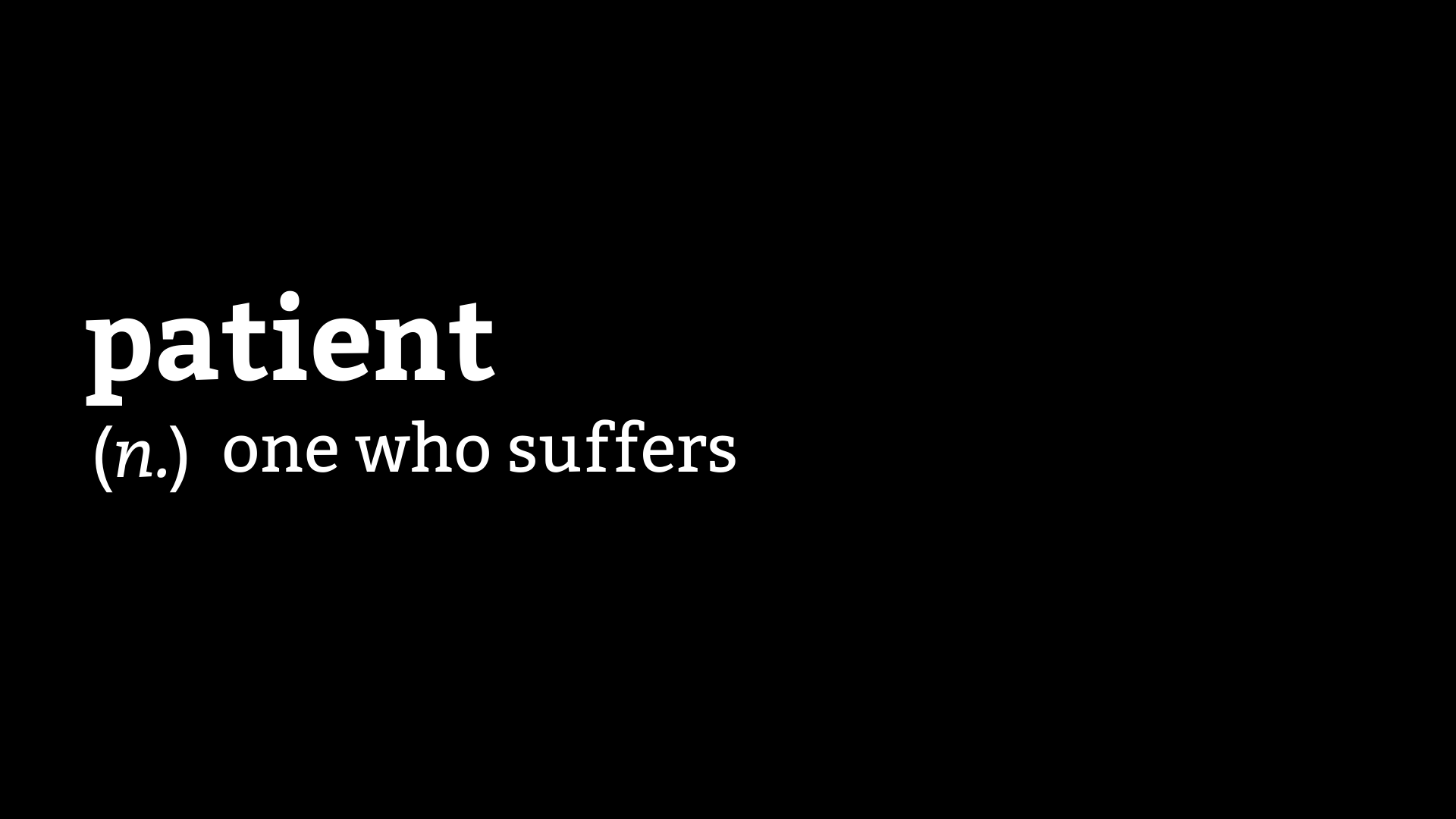
A couple of years ago, I stumbled upon the original definition of a patient - “one who suffers”. The word comes from the Latin word patiens, which is the present participle of the deponent verb, patior, which means “I am suffering.”
This definition, for some reason, is stuck in my mind, and I can’t help but ponder over it in many different ways whenever I come across it. Everything that I have ever experienced while navigating the healthcare system, makes me realize that I’m a patient because I’m patient. My virtue is now my label. The very characteristic that can garner someone praise is now a label for an ill person. To me, this contrast feels poetic, ironic, and cruel, all at the same time.
I tend to be very patient unless I’m in pain. I never knew though, that my patience, in essence, is my capacity for suffering. My patience has often been tested to the limits, by the healthcare system in my country. I can understand that the public healthcare system is not equipped to handle the volume of patients that it receives, which leads to delays and substandard care, but the private healthcare system has not been very kind to me either. The private healthcare system unfairly treats patients with weaker socio-economic backgrounds and highly favors the affluent ones. People with affluence and influence rarely respect any rules and often indulge in corrupt, immoral, and unethical practices to hijack the system and get the treatment that they want. This has often caused me much pain. I have struggled to find a hospital bed or a doctor on time, and I have been treated badly by the system because of my inability to afford the treatment I needed to stay alive.
It seems almost futile to me, to speak of these issues, because of a lack of support and the fact that people have accepted these issues. Breaking the rules to deny someone else the care that they might need more urgently is not a matter of concern for most people. In such an environment, only two kinds of people survive - the affluent or the patient. The word “patient”, hence, should be reserved for those who ultimately pay the price of a broken system, being abused further by egocentric people. This system has often made me and my mother weep as we struggled and oftentimes, begged for aid. Be it drugs, insurance, hospital admissions, diagnostics, or appointments, the entire ecosystem feels like one huge paywall.
People struggling with similar conditions are competing against one another to get care. Instead of standing together as a community, we are competing with each other, and the game is of patience. How early can you come to queue up at the OPD (outpatient department) window? How many hours are you willing to wait to see the doctor? However, the ones who win are those who do not play this game and the only thing you can do as you watch them get ahead of you is feel sorry for yourself and be ... patient.
Every time I write a part of my story, I relive a lot of trauma, caused not only by my illness but also by the healthcare system. Aiming to be an advocate amidst such an environment seems to be a foolish undertaking. In this system, money, power, and influence are advocates. I was incredibly lucky to survive. There are some who are trying to do their jobs as rightly as possible in this atmosphere, and it is these people, to whom I owe my life.
Privilege and patience have an inverse relationship. The more privilege you have, the less is the patience you can get away with. I have the privilege of education. I have the privilege of being able to obtain and absorb information on my own. I have the privilege of graduating from one of the best institutes in India. Without all these privileges, I would not be where I am today. These privileges though, are not of much use if you are not a person of importance, or a person of wealth, and are suffering from a severe form of some chronic illness.
These days I stare a lot out of my house to see people taking a walk, some with their pets, kids playing on the street, etc. When I look at them, I feel the same hollowness in my heart that I felt a few years ago, when I looked out of the hospital windows, at the outside world. My home feels like a prison to me now. I cannot step out of my house because people are not wearing masks, even after the fact that three COVID cases have been detected in the neighborhood. The lockdown may be over for other people, but it continues for me. The reason is simple. Even though wearing a mask and social distancing rules are not laws, breaking these rules to deny someone else (in this case, the vulnerable population) the simple pleasure of walking outdoors is not a matter of concern for most people. They’re not patients. I am. I haven’t been able to follow-up with my doctor in six months. I’m buying my ostomy supplies at higher rates than usual. Why? Because I’m a patient, and thus it is my destiny to suffer. Thankfully, I am not in a flare, but many of my friends are, and they are unable to step outside to buy medicines. Why? Because they’re patients too.
Now anytime, someone tells me that I’m a patient man, the irony and cruelty of it dawns upon me. This word often rings and echoes around in my head, and it has been doing so much more these days as I feel trapped and helpless, and at the mercy of the non-patient population. Advocacy, currently in India, has many different dimensions, that are neither pretty nor easy. Similar to the ecosystem that thrives on the patience of the under-privileged, we need an ecosystem of advocates, working in different ways, that can help the actual patients get the care they require and deserve without having to suffer as much as they do currently.
Until that happens, for me, and others like me, even though dictionaries define a patient differently now, the experience of being one still echoes, very loudly, the original definition - “one who suffers”.
Relaxing with Crohn’s
By Simon Stones

R&R… rest and relaxation – a concept I have long struggled to grasp, but one which I have learned to embrace, and enjoy over the last few months while being in lockdown.
Life in lockdown, because of COVID-19, has been a new and uncomfortable experience for many. Though for many people, like me, who have experienced isolation because of ill health, there has been a sense of familiarisation with what it’s like to be in isolation. Having your freedom taken away from you… being told what you can and cannot do… feeling cut-off from friends and family… worrying that your life is at risk. These are all experiences which so many with chronic conditions like inflammatory bowel disease (IBD) can understand, though in 2020, the wider population have had a glimpse of what that life is like, and how unpleasant and distressing it can be.
Having been unable to do so much because of ill health during my lifetime, it will come as no surprise that if I am well and able to do something, I certainly will do – even if I have to suffer the day after, because I overdid it on a ‘good’ day. I’m pretty sure that most people with chronic conditions have been there! We are told to overcome this pattern of activity by ‘pacing’. To some degree, I try to pace my life, but in reality, it’s not so easy! When you’re feeling unwell, you rest… when you’re feeling better, you try to cram as much in as possible. Life is so busy, and it’s difficult, especially after periods when you had no choice but to feel disengaged from the world, to not want to squeeze in as much as possible. After all, with conditions like IBD, you never quite know when the next flare up may happen. I have been entirely guilty of this – and hold my hands up! Over the last few years, my health has generally been okay. I have daily struggles, and have to manage pain, fatigue and other limitations, but I am generally able to function. This has meant that I’ve been working full time on my PhD, working part-time in a freelance capacity and volunteering tens and tens of hours per week, on top of caring for my late mum, housework and socialising. It’s safe to say that I was driving through life at 100 miles per hour, not necessarily realising the impact of trying to squeeze everything in.
I started to re-prioritise commitments in 2019 as I started to care for mum on a full-time basis during what would be her final few months. While caring for mum full-time, I was still trying to balance a full-time PhD, part-time freelance work, and volunteering – mostly because I didn’t want to let people down, and also because I struggled to say ‘no’. I decided enough was enough in July 2019, when I found myself sat up working in the middle of the night, every night. I felt totally drained. Despite loving what I do, there was no time needed to decide on my number one priority – mum. I suspended my PhD and stepped away temporarily from some voluntary work, keeping some freelance work ongoing to help me pay the bills. Sadly, mum passed away in November 2019, and I didn’t return to my PhD until February 2020, just as COVID-19 escalated. That’s when I really was forced to slow down. All of the conferences, meetings and events in my diary were cancelled, and from March 23rd, the United Kingdom went into ‘lockdown’. I was initially on the ‘shielding’ list and was told not to leave the house for a minimum of 12 weeks. As time went on, guidance from the British Society of Gastroenterology downgraded my level of risk to ‘high risk’, given that I was on biologics but not experiencing a flare, so technically I didn’t need to shield, but should try to do so where possible… which I did.
“Slow down and enjoy every day. Life goes by way too fast.”
I decided that I would be staying at home, full stop. It was the right decision for my own health, my dad’s health (who lives with me), and others in the community. The hardest part of course was not seeing family and friends, but we’ve all been in the same boat.
However, it was during the weeks and months that followed that I really slowed down. Surprisingly, lockdown enabled me to prioritise myself – something which I seldom do. I was now able to do things, just for me, without feeling guilty. It prompted me to stop, think, and remember that it’s not always a good idea to burn yourself out! During lockdown, I have learned to change my pace of life, and I have found surprising benefits on my physical and mental health. It has been nice to be more flexible each day. Don’t get me wrong, I do like to have some structure to the day, otherwise it’s very easy to get nothing done. However, it’s nice to be able to more or less shape my day around what I want to do. Although I have been working on writing up my PhD and doing other pieces of work, I have made more time for myself. Here’s a little flavour of some of those activities…
Yoga
I took up yoga a couple of years ago, but I never kept it up… until lockdown. Admittedly, my activity levels decreased quite a bit during lockdown, especially during the start when I didn’t even go outside for a walk. I felt as though I was seizing up, and so I decided to pick up from where I left off with yoga. I had the mat and the rest of the gear at home, so all I needed was an app. I came across the ‘Down Dog’ app, which was offering free access to all of its content during lockdown. I decided that I would try to do yoga for at least three mornings each week, though I found myself doing it every morning! It quickly became a way for me to ease myself into the day, stretch and loosen up my aching body, focus on my breathing, and ‘be’ here in the present. If you haven’t tried yoga, then I would seriously recommend it; though you may prefer pilates, or something completely different. The most important point is to find something you enjoy and have a go. I’ve noticed the benefits on both my physical and mental well-being, especially over time.

Gardening
I never thought that gardening would be on my list of hobbies that I would enjoy, but there we have it – you can even surprise yourself! We’ve had some beautiful weather during lockdown, and I was fed up of my lacklustre garden, so off I went to transform it! The fences and sheds have been painted, the lawns have been cut, borders and edges have been added, and there are flowers left, right and centre! What a difference. There’s definitely a sense of pride when you see a transformation happen before your eyes – especially one which you have influenced. It was also just a joy to be outdoors, in the fresh air, after being cooked up inside the house. I found it relaxing to be amongst nature – as well as topping up my vitamin D!

Getting outdoors
Once I felt it was safe to do so, I took myself to one of my favourite places, just 15 minutes away from where I live. The views are spectacular over my hometown of Bolton, Manchester and beyond. It’s all so quiet and peaceful – which is just what you need amidst the chaos and misery felt during this horrendous crisis. I realise that I’m incredibly lucky to live in a beautiful part of the country like this – something which others don’t have, though I hope others can find a little haven – whether that be the garden, a local park, or balcony.

Getting crafty
I used to love arts and crafts as a child, so taking this up again was nostalgic, and resurfaced lots of lovely memories of times spent with mum. My favourite card shop closed during the lockdown, so I decided to make my own! I dug out my craft box of ‘bits and bobs’, searched for some ideas online, and had a go at making a few different cards. As you can see, they were simple but effective (or at least I thought so!) I also really enjoyed just doing something, which required my focus and attention, but distracted me completely for everything else going on around me. After all, isn’t that the whole point!?
Totally chilling out
I’m not going to make out that I’ve been super productive throughout lockdown, because I really haven’t! For the first time in ages, I’ve read for pleasure – instead of reading textbooks and research articles. I’ve also gone through lots of films and TV programmes – who doesn’t love a good box set? Having total chill out days, or ‘duvet days’ as I like to call them, are the perfect tonic when you don’t have the impetus to do anything productive.
Sometimes, it takes certain situations to make us re-think the way in which we live, and I know the last twelve months have certainly prompted that for me. I am looking forward to spending time with loved ones, and eventually getting back to doing what I love to do, when it is safe and sensible to do so; but until then, I will carry on as I am doing. I will, however, be trying to continue a slower, more paced way of life, making sure it is filled with the people, experiences and opportunities that I love the most. I hope you can do the same too.

How to Support Your Friends with IBD

By Amy Weider
Growing up with Crohn’s Disease you tend to miss a lot of the action: birthday parties, hanging out with friends, and even going to school. It was either I was sick or stuck at another pediatric GI appointment that was 2 hours from my house. And to be honest, for most of my childhood I didn't really have friends. Because of my Crohns, anxiety, and depression, all of which were connected, maintaining friendships was not something I could do. The beginning of high school was just as rough and I lost a lot of friends over my unhealthy coping mechanisms for my depression and, while painful, it taught me a lot. Around my junior year of high school I got the help I needed and my Crohns began to go into remission. I was able to find friends and learn just what it means to have them. I have always been a bit of a weirdo and to find a solid pack of reliable folks that embraced me for my unapologetic behavior and I theirs was a lot more important than I had realized. My now chosen family (LGBTQ way of saying best friends) from college met me when my Crohns was very stable and I had to explain my disease to them. From this, I put together a few ways I found was a good way for them to show me their support and that made me feel their love and commitment.
1. Do your research!!
When a friend opens up to you about their experience it is smart to do a little more investigating to have a medical understanding of the disease. Read some CCYAN articles or follow content creators who have IBD. Also, allowing for space for your friends to open up about their experience with it and understand no two persons have the same lived experience or symptoms.
2. Be flexible
IBD can be VERY unpredictable so if you are one of those friends who shame folks for needing to cancel plans or change them (or shame folks in general) reconsider why you do this! A friend’s health, mental or physical, should be your first priority! Be flexible and allow for change.
3. Think about where the group is going to eat before hand
Simple things like this can really make a difference in a friends restaurant experience a lot easier. Ask your friends their dietary restrictions and do not assume that someone who has IBD also has dietary restrictions. Dietary restrictions can really make folks feel like a burden so be transparent and pick a spot for everyone!
4. Support them on good and bad days
It can be rough some days and not pretty. If you haven’t heard from a friend with IBD in a while, reach out. Flares can cause a lack of energy but that does not mean we don’t still need love and community!
5. Make room for correction and connection
Learning about IBD can be complex and everyone with it has very different experiences so create room for feedback and empathy if you say something wrong or hurtful. Allow for a bonding experience when someone shares their experience with you and love them more for it! I genuinely love when people ask me about my IBD and that allows me to feel whole.
IBD in the time of COVID-19
By Rachael Whittemore

Since COVID-19 has preoccupied much of 2020 and is likely here to stay, we continue to try to do our part in mitigating its spread and keep ourselves healthy at the same time. Being part of a “high risk group” is scary, regardless of whether or not we are on immunosuppressant medication. We’re also trying to continue work, school or salvage some of our normal routine before social distancing and wearing masks in public became the new normal. I thought I would share part of my experience during the pandemic - back in April, in the midst of trying to do everything right, take care of myself, and be responsible, I found out that I’d had multiple exposures to someone who tested positive for COVID-19.
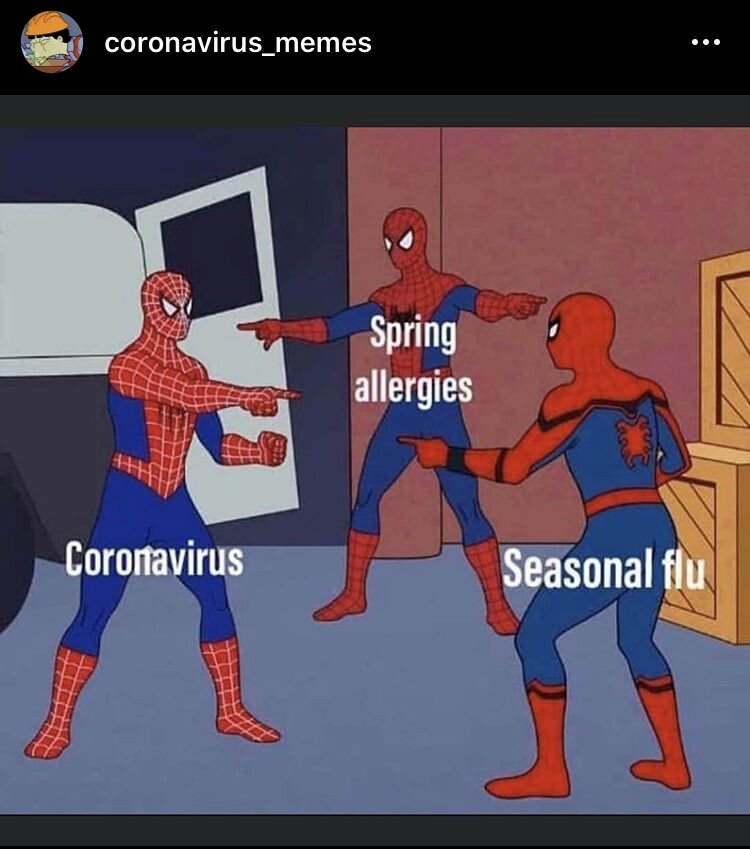
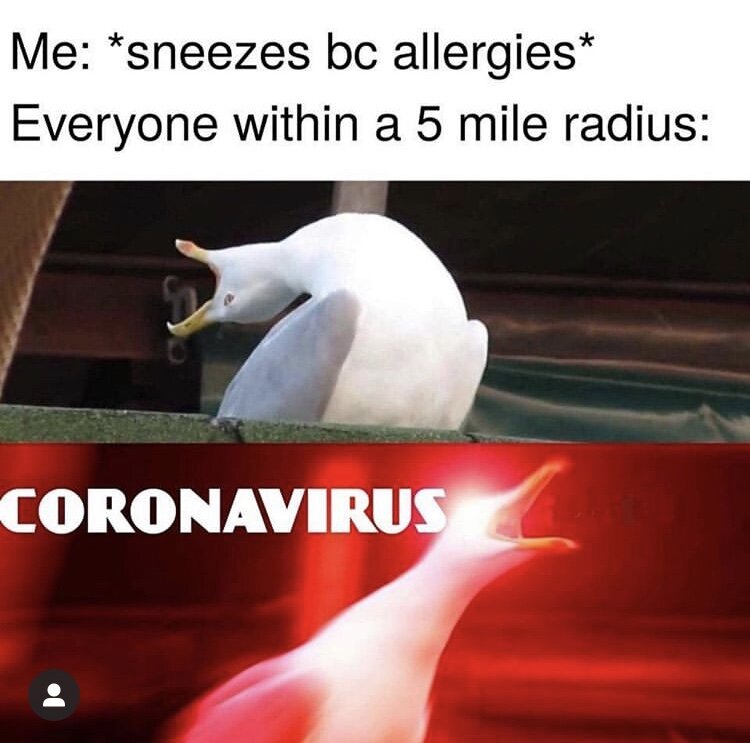
My heart sank a little bit and I became much more aware of the tiniest changes in how I felt. Was the tightness in my chest a sign of COVID-19 working its way into my lungs or just anxiety spiking? Was my terrible nasal congestion just worsening allergies with springtime in bloom or a sign of something more? You’ve probably seen plenty of funny memes circulating online that poke fun at moments when we need to sneeze or cough one time for something and then people within earshot of you give you death stares. They’re pretty funny, but when you know there’s a chance you could be infected or become infected, it hits you a little bit differently.
I was contacted by Virginia’s Department of Health and informed to stay where I was and self-isolate for 14 days. I had to take my temperature twice daily and record any symptoms on an online form. If I developed worrying symptoms, I had a number to call to determine if I qualified for testing. I was with my boyfriend, who had the same exposures I had, so it made me feel a little better; however, we were advised to largely avoid sharing spaces and each other as much as possible. It’s weird trying to keep distance from someone you’re staying with. What if your day has been rough and you just want a hug? In the time of COVID-19 isolation, you can’t do that. Being deprived of the comfort and connection we share with family members, friends and significant others is unsettling, especially for me. I’m a hugger, and I echo the sentiment that I won’t take another hug for granted once we get this thing under control.
So what did I do to prepare myself in case I got sick? I poured time into reading evidence-based resources about COVID-19. What we knew, what we didn’t. I was part of a Facebook group of medical providers from across the country that sought to share studies, experience, innovations and anecdotal evidence gained from treating COVID-19 patients. I looked at studies coming from elsewhere in the world about what treatments, if any, showed promise. A small part of me, thanks to my interests in medicine and public health, was wholly invested in how everything was unfolding. But most of me was trying to be as proactive as possible to keep my immune system up, avoid a flare and to stay above the rising waters of anxiety and dread in my mind.
I hydrated better than I had in weeks. I started taking a supplement with high dose Vitamin C and zinc every day in addition to my normal meds. I cooked (mostly) healthy meals and prioritized my diet and medication regimen so I could avoid any flares in case I got sick. I tried to prioritize sleep, but this was hard for me without my usual busy schedule and ability to run outside to have me feeling sleepy by the end of the day. I took Benadryl and, on my worst nights, one of my anti-anxiety medications that I usually save for days when I feel really out of control. Although I felt guilty about it, I tried to be gentle with myself and search for ways to set up a better sleep routine.
Fast forward a week: we were doing well and decided to go for a car ride since the weather was sunny and beautiful. We drove out on one my favorite country roads and marveled at the blossoming farms and apple orchards with the windows down. For some reason, I had started to feel nauseous and sweaty, sort of like when you might pass out. I don’t really get carsick, I thought. It didn’t smell the greatest since farmers were planting, but I usually didn’t react to bad smells either. We turned around, my boyfriend teasing me about being carsick but soon realizing I truly felt terrible. I laid down at home and hoped this “episode” would pass, yet I didn’t feel any better. For the next several days, I had waves of nausea, diarrhea, little appetite, dizzy episodes, chills, photophobia and some pretty intense migraine-type headaches. No to mention fatigue that prompted me to call for possible testing. I hadn’t had any fevers but knew something wasn’t right. My ulcerative colitis (UC) flares were never like this – I’d never had “dizzy spells” or felt so off. Even when my UC tired me out, I rarely would spend hours on the couch on a heating pad in one position, content to do nothing.
It was decided that I did need testing due to my symptoms and positive exposure. I felt lucky in this regard, because I know it hasn’t been easy for some in the US to get tested. Most are instructed to self-isolate and monitor symptoms and only seek treatment if they’re having trouble breathing. I also had had little to no respiratory symptoms. My nasal congestion had been worse, but I didn’t think much of it since my allergies were bad this time of year anyway. I had attributed some chest tightness to anxiety more than anything else. As I had been closely following developments at that time, I learned that COVID-19 could present with nausea, vomiting, diarrhea, loss of smell/taste, headaches, severe fatigue and other symptoms (1). Did I have COVID-19? It certainly seemed like a high possibility. My boyfriend, thankfully, was fine. I went to get tested at a drive-thru site nearby. After I got the not-so-fun, but necessary, long swab inserted into my nose and a sample taken from my nasopharynx, I was told to head home and to continue to self-isolate. I would have my results in 7-10 days.

How you get tested. Not fun!
A couple of days later, I finally had some appetite and felt like maybe it was a day I could get off the couch a little more. I got a call from my primary care provider: I was negative! I have to admit, I was relieved, surprised and also a little skeptical at the same time. As you may have heard, the testing methodology we have is not perfect and appears to have higher than desired false negative rates that can be attributed to various causes (1,2). RT-PCR (more about that here) may be the best widely-available testing we have, but many clinicians are relying on testing along with the clinical picture of the patient in front of them to determine how to proceed. Because of this, I acted like I had the virus, continuing to wear a mask once I completed quarantine and was allowed to go out (this was before mandatory masking inside was required in Virginia and North Carolina). I went out earlier or later, kept my distance from others and thoroughly washed my hands several times daily.
Thankfully, after 4 to 5 days, I finally started feeling like myself again. I felt like cooking and eating more than soup and applesauce. I wasn’t exhausted after taking a walk to the mailbox and back (with no one else around, of course). I still had some lingering loose stools for several days, but that finally improved too. I felt lucky that I didn’t flare on top of being sick, but made sure to be careful and ease back into my regular diet. I still worry about the possibility that my test could have been a false negative and I unknowingly infected someone else. Whatever I had, though, I made it through. Being sick during a global pandemic is hard. Trying to digest changing news and guidelines every week is hard. Hearing about exponentially rising cases and deaths is scary. Realizing that our world will never be the same after this is weird and scary.
Though I’ve been working through anxious thoughts during this time, I took time to slow down and be thankful. I wasn’t that sick. I had family and friends checking up on me. One of our friends brought us groceries. My boyfriend told me funny stories outside the bathroom while I was trying not to have diarrhea and throw up everywhere at the same time. I also was reminded to give my body time to heal. I’m used to being busy and balancing multiple things in my life at any given time. I have my normal life I’m used to living, even with the ups and downs of UC. I, like many others, probably don’t pause enough during the day to take a deep breath and remind myself of what I should truly be thankful for. If strict self-isolation has taught me one thing, it’s to stop and check in with yourself and on those you care about. While acknowledging that we are trying to navigate the storm that is a global pandemic, celebrate the little victories, even if you have to do it virtually.
IBD Resources in the time of COVID-19 - as always, discuss any questions with your GI provider*:
COVID-19 (Coronavirus): What IBD Patients Should Know
Coping with the stress and anxiety of coronavirus
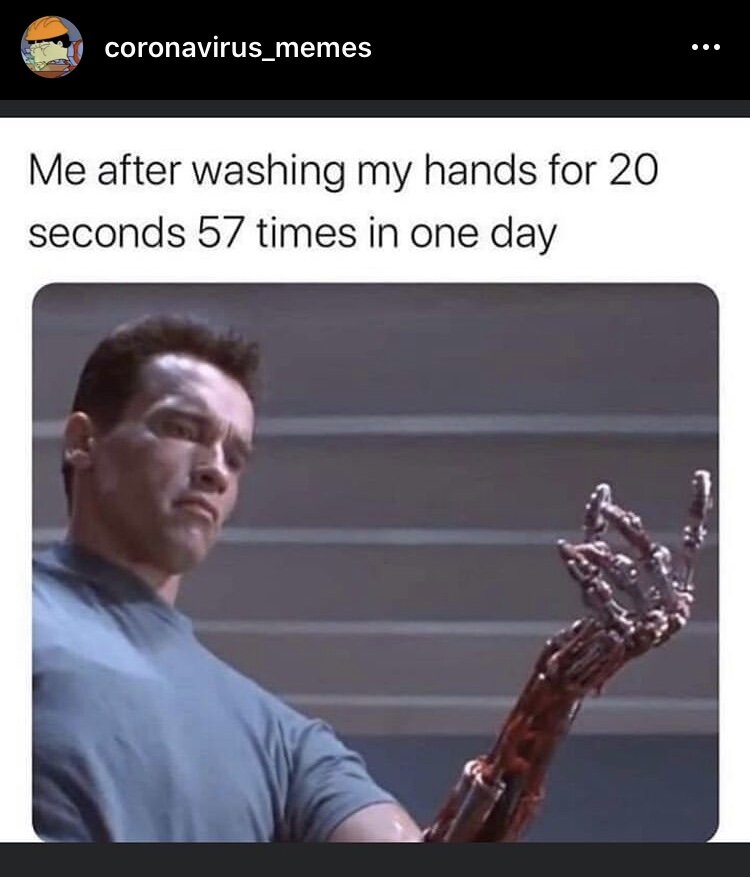
Now, enjoy a few more COVID-19 memes that helped me laugh a little:
My IBD Life: Some College Experiences
By Nikhil Jayswal

Hey everyone! I hope everyone is well and safe.
I am currently a graduate research student in the Department of Aerospace Engineering at the Indian Institute of Science in Bangalore, India. I got my undergraduate degree in Mechanical Engineering from the Delhi College of Engineering in Delhi, India. Both of these institutes are among India’s best of the best, and I worked hard to get into these institutions. The concept of empathy though can be alien to even the best minds, as I learned through multiple unpleasant experiences.
I was diagnosed in 2013, at the beginning of my seventh semester. I could not go to college for 2 months and I missed my mid-semester exams. After 2 months and still not fully recovered, I stepped into my first lecture of the semester. The moment I entered the class, the professor inquired about me. I told him that I got sick and could not come to college. I was standing at the door telling him my tale, and in return, he advised me to drop the semester. I did not feel good about that. I told him that I had submitted a medical certificate detailing my condition, but he told me (rightly) that a medical certificate can be submitted to compensate for a maximum of one month of absence only, as per university policy. I had no words to say to him. I did not want to drop the semester. I knew I could still catch up, but I did not hear any encouraging words. In the end, he did let me attend his class reluctantly. That week I got to know that a classmate of mine had also missed the midterm exams because of some acute illness. I was told that his father met the head of the department and that he was consequently having oral exams to compensate for his missed evaluation. My father, unfortunately, could not come to meet the HOD, but I assumed that since I had submitted the medical certificate and since my illness was a severe one, I would be extended the same courtesy. I wrote an application and submitted it to the department for consideration. I never got to meet the HOD and I was sent with my application to the office that dealt with examinations. I gave my application to a person in that office and verbally told him about my condition and that I had missed my exams. I still remember the derogatory tone in which he replied to me - “What do you want from us?” I told him that I wanted make-up exams in some form so I did not lose out on marks that I could have gotten had I not fallen sick (which was written in my application). My application was thrown among a pile of papers and I was sent away. I never heard from anyone again and I never asked anyone for anything again. I gave my semester finals and did as much I could. I had a score of 82% in my sixth semester and that semester I scored 63%. It hurt back then, it hurts now and it’ll hurt me in the future too. I worked very hard in my final semester and scored 85% which enabled me to get a First Class with Distinction degree in the end, but it still hurts. I’m glad I was diagnosed late in the course of my study. If it had been any sooner, I probably would have graduated with a second class degree.
Now, I don’t understand why I was not accommodated, when all it took for another student was a meeting between his father and the HOD. I submitted an application and the required certificates. I went through the proper channels. Yet, I had to suffer. The sad thing is there is no official policy to help students in such scenarios. Parents of students with “strong” backgrounds have the confidence to come and meet the concerned officials and they are accommodated, but it’s not the same for a student with a “weak” background. This was not the first time I had experienced something like this. Students are made to run from office to office because of a lack of policies to handle uncommon scenarios. Socio-economic background plays an indirect but major role here. As income inequality widens, not many students with underprivileged backgrounds can afford quality education, even at the primary levels, which leads to under-representation at higher levels of education. The stigma attached to illness has a similar effect. A lack of accommodations for students with chronic illnesses discourages them and can often be detrimental to their mental health. It can also lead to students pushing themselves too hard to keep up with healthy students, which can lead to flare-ups and deterioration of their health condition.
Let’s fast forward a few years now. In 2019, I qualified for admission into graduate programs in both the schools I had applied to. One of them was the Indian Institute of Technology in Delhi (IIT-D) and the other was the Indian Institute of Science in Bangalore (IISc). Delhi is my home city. I get my treatment and medical supplies from the All India Institute of Medical Sciences in Delhi (AIIMS). My entire medical support system is here. Bangalore was an unknown city. I would have to set up a system of care from the ground up, but IISc is also the best institute for research. However, if I wanted to join any institute, first and foremost I would have to be deemed “fit” for graduate studies by the medical personnel at the institute. This was a bummer. I did not know that a medical fitness certificate would be required to pursue graduate studies. After all, the very reason I applied to grad school was that I would not be limited by any medical requirements that prevented me from getting a job suited to my qualification. I went to IIT-D with a colleague from work who studied in the department I had applied to and met the HOD. The crux of the meeting was that if I could get a fitness certificate from my doctors at AIIMS, I would probably be cleared by the institute medical staff for study because AIIMS is the best hospital in our country. I figured the same would work for IISc too. My doctors at AIIMS were delighted to know about my admission offers and they gave me the required fitness certificate, but they did express concern on the probability of its acceptance by the institute-appointed doctors. They also told me that in case of any issues, I should fight for a fair evaluation by a qualified gastroenterologist who would very likely support me because my GI at AIIMS is a renowned doctor. I can’t ever express enough gratitude to my doctors for supporting me in every possible way. With the issues of fitness dealt with, I had to now find out if I could get a private room with a personal toilet. I’ve never used a public toilet and I could not use the common hostel toilets. One of my brother’s friends had been provided such accommodation for him and his mother at IIT-D. So I didn’t inquire about it. For IISc, I emailed the concerned hostel authorities explaining to them my situation and asked them if I could be provided such accommodation. They assured me that I’d be provided the required accommodation. This assurance gave me enough courage to move out of Delhi and accept the admission offer from IISc.
Things however did not go right when I arrived at IISc. I was assigned a room shared between 3 people. I was heart-broken and booked a hotel room for a few days until I got the proper accommodation. My request was not received very well though. Nobody was willing to listen to me and understand my situation and I was being sent from one office to another. I gave up after 3 days, and I remember calling my mom and telling her in tears that I don’t want to study and I’d be coming back. The next day I went to the Dean to try one last time, and while he acknowledged that he could not help me, he connected me with the hostel warden who was kind and patient and listened to my woes and directed the authorities to help me. It was only then that I was listened to, and I was assigned a room with an attached toilet, rather unhappily by the person in charge. I was given a room that had not been occupied for a long time. Its balcony is painted with bird poop and it is the only room in the seven-floor hostel with such a balcony. The toilet flush doesn’t work and I have no hot water. I didn’t protest though. I shifted to that room. It’s a filthy room, but I have no other option. The room next to the one assigned to me is similar. A few months after my admission, a completely healthy student was assigned that room, and it is completely functional. I wonder why I was assigned a dirty, non-functional room when better accommodation was available. I was also told that such rooms are assigned to physically handicapped students only, yet I saw a perfectly healthy student get the room.
Such events hurt and sting. The sad thing is I can’t say anything. It feels like I have no rights and I’m completely at the mercy of the administration. I cannot advocate for myself and there is no forum for me to discuss my issues. I have made myself content with everything and I focus on my studies. I do not discuss my condition with most of my professors or classmates. I do not go to classes and have very few friends. I had presumed that the best minds of the country would respond with kindness towards me, but I was wrong. I do not ask for any accommodations for exams. I keep myself starved before exams to eliminate any possible mishaps during exams. I am happy at good grades and silently accept bad grades, even though I know they were bad because I give exams in a fatigued and starved state. I have been giving exams and interviews while starved ever since I became incontinent and experienced chronic pain. There is no consideration for students with such conditions for public exams. I have always been evaluated as a normal healthy student, which is unfair and unjust, but there is no other way. If I want a degree, I have to adapt to the current system which is inflexible and inconsiderate.
Let’s discuss finances now. I can’t work while going to grad school as per the law, and I get a government stipend of INR 12400 (USD 165) every month, 80% of which is spent on ostomy supplies and my meds. The remaining 20% is in no way enough to support my other expenses. I also paid the tuition and hostel room fees with credit cards, and hence, I have a significant amount of debt. So I work illegally, during the night, which affects my academic performance and also leads to extra fatigue because of which I skip classes to sleep. The funny thing is when I had visited the health center at IISc to get the fitness certificate, I was asked to explain my condition, both my IBD and my ostomy (clearly the doctors did not understand my illness) and even after all that, I was told to not use my illness as an excuse to skip classes. Coming back to finances, I wrote an email to some authorities inquiring if there was any possibility of financial aid for me. I was sent to the same doctors who did not understand my condition for evaluation of my needs. They claimed that I was demanding money and that my ostomy supplies (which are my lifeline) were “consumables” which could not be reimbursed for. I was told that I’m arguing and that I should submit an application and a decision would be taken after the application was reviewed by a committee (that rarely met as per another doctor from the health center). I did not apply. I simply emailed the authorities that I did not need any help and that I would find a way to make it on my own. I told them about how I was not happy by the way the institute medical staff treated me. I was then contacted by one of the Deans who was kind and assured me that I would be helped. My file went around from one person to another until it finally reached the Director who sent it back to the medical officers at the institute health center. A one-time lump-sum aid was recommended. The aid amount covers my medical expenses for a semester only. Again, I had to quietly accept whatever “aid” I was getting. But here’s the funny part. When I went to receive my aid, I got to know that nobody knew where my file was. The Director’s Office claimed that it was sent to the Finance Office but the staff there cannot find it. It has been 9 months since I had written that first email, and I’m still running from office to office to get this relief amount. The institute spent crores of money on a logo that was eventually rejected by the students and thousands of ID cards had to be printed twice. But the “Student Medical Relief Fund” does not have enough money to support a student with a chronic illness and an ostomy for a year.
I want to say a lot more, but then I think, how does it matter? I might personally feel a bit better, but what does it accomplish? Are systems going to change? Is anybody listening? I feel that until and unless we create an inclusive environment where students and children from all kinds of backgrounds can get to know each other, things will never change. The collective voices of people who are suffering are not enough. Things will change only when the general population and society support advocacy initiatives. The healthy population needs to empathize with those who are suffering. Right now, it is important for the IBD student population in India to be vocal and to not be afraid of speaking up, but it’s equally necessary (although disheartening) to be aware, accept the fact that things may not always work in your favor, and not let rejections affect your mental health. The process of change is going to be very slow and sharing your stories publicly is the first step. Advocacy in India is not a right, it’s a privilege, and right now it’s necessary for those with that privilege to share it with others. This is also why I love the CCYAN fellowship and am grateful for it. In the end, as a chronically ill student in India, I just want to tell the IBD kids and teens of my country that it is going to be hard, but it’s doable, and I promise that I’ll do everything in my capacity to make it easier for you so that you get what you deserve.
“Everything you have ever wanted is on the other side of fear” ~ George Addair
Denial and Acceptance
Photo by Nadine Wuchenauer from Pexels
This article is sponsored by Gali Health.

By Rachel Straining
Playing Pretend.
For a really, really long time, I hid who I was and what I was going through. I hoped that playing pretend could somehow just make it all go away.
I loved playing pretend when I was little. In my mind, I could be anything I wanted - a school teacher, a Broadway star, a scientist, a doctor. I would immerse myself in the roles as if they were my reality, creating whatever self and life I wanted that day.
For a while, after I received my diagnosis, I thought I could do the same.
I thought that if I played pretend, if I pretended it wasn’t true, that I wasn’t chronically ill, then it would all go away. If I pretended to be someone I was not - if I tried hard enough - then, maybe, just maybe, the self and life I wanted would become my reality instead.
The older, manifestation-like version of dress up, if you will.
Except chronic illness doesn’t work that way. Sure, you can manifest the life of your dreams in other ways, but that doesn’t mean you can wish away being chronically ill. It doesn’t work. I tried.
In the months after being told, “you have Crohn’s disease,” I thought of it like this: the more I ignored its existence, the more I wouldn’t have to deal with. Now I know what people mean when they say hindsight is 20/20, because boy was I wrong. In fact, the complete opposite happened. I had the belief that denying it all would be more freeing. In reality though, the more you try to suppress something rather than acknowledge and work through it, the more intensely and more continuously the feelings you’re trying to escape will show up. Then, the worse it gets. That’s exactly what happened to me.
I would try to drink or eat or exercise the pain away. I would welcome people into my life whom I knew would never truly love me as a means to build this persona that was a facade to cover my heart.
Eventually, it took spiraling down towards rock bottom to finally realize that acceptance is more freeing than denial ever was. I realized that acceptance held the door open towards self-love whereas denial kept it shut.
I wish I could look back and say that there was one day, one instance, one stand-still moment in time when I looked at myself in the mirror and knew I had to come to terms with what I had worked so hard to ignore. I wish I could remember a specific point when the denial became too much to bear and I immediately knew I had to face the truth. But, just like everything else in my life, and just like healing, that path was far from linear. In fact, the path was kind of one that is so rocky that you best be wearing a seatbelt and holding on for dear life.
With time, age, the right people in my corner, and a whole lot of therapy and introspective soul-searching, that rocky path from denial to acceptance led me to discover that the most vulnerable parts of ourselves, the parts that we once tried so hard to keep hidden in the shadows, are actually the most liberating. The most powerful. The most life changing.
The people I choose to surround myself with and the intimate, intense self-work I’ve done and continue to do have helped me to see myself in the light as a human who is lovable and worthy and deserving. I am not a burden who has to dull her shine and her truth. And neither are you. Not only do people like my fellows, my family, my therapist (of course), and my Instagram-friends-turned-real life-friends motivate me to be better, but they also inspire me to be more of who I am at my core. To accept myself, to own both my pain and my power, and to use it to help those who are still too scared to embrace who they are.
If I told my younger self that she’d be talking about poop, bloating, mental health, and the ins and outs of colonoscopies for everyone to hear, I think she’d probably crawl into a hole and not want to come out. When I first started sharing my story and first started getting involved in advocacy work, I felt a dual sense of nervousness and freedom. Every time I would post something and reveal a part of myself that, for the longest time, I so desperately wanted to lock up and throw away, I would physically start shaking when I hit that share button or go run around the house in panic because I couldn’t believe I put it out there. I couldn’t believe I put myself, my true self, out there. Sometimes, I still can’t believe it.
But, if it doesn’t challenge you, it doesn’t change you. And change only comes when you face the truth, not when you run from it.
I’ve been there, and I can promise you this - hiding in the darkness of denial and playing pretend won’t make your problems go away. I learned the hard way.
Trust me when I tell you that you don’t have to hide like I once did.

This article is sponsored by Gali Health.
Gali Health is an AI-based personal health assistant app helping people with inflammatory bowel diseases (IBD) proactively manage their condition. Gali gathers knowledge from daily interactions and health monitors to tailor support and information to your specific IBD experience.
Navigating an IBD Diagnosis
By Samantha Rzany

When I was a diagnosed with ulcerative colitis, I was in college 4/5 hours away from home. While my parents were able to drive out for my initial colonoscopy and the important follow up appointments, a majority of my ER and doctor visits I had to do alone. It is always nice to have a friend or family member go with you to appointments as a second set of ears. You often are tired or may not feel well, and it is easy to miss things the doctor may be saying.
Because of having to do a lot of appointments and ER visits alone, I have come to find some very helpful things in preparing for and going to a doctor visit by myself.
I have found that I am often on a lot of medications. And I have taken many, many more in the past. It can be very hard to remember all the medication names and dosages, as well as who prescribed them and what for. Every time I go to get an infusion, I have to provide an updated list of medications. Each new doctor I visit, I have to give a full list of current and past medications. Every ER visit, they ask what I am on and what I have been on previously. In addition to the numerous different medications, I also have quite a few doctors for various things. I also have all the doctors I had seen back in Indiana where I was initially diagnosed. So in order to get any medical records, I have to be able to quickly provide those doctors’ names and numbers.
One thing I have found to be very helpful to keep track of all of this information is an app called MediSafe. It is on my phone and allows me to put in all current and past medications, what dosage and how often I take those medications, and when I started/stopped them. It also allows me to check any drug interactions with current meds and other future ones I may be prescribed. I can also input all of my doctors and their information, as well as upcoming appointments. This app helps me keep all my information in one spot where I can easily access it when I need to. I definitely recommend finding some kind of app similar to this where you have all your information easily accessible whenever you need it.
Another thing I have found is that I often end up having to get multiple kinds of specialists. I get prescribed medication A to treat my ulcerative colitis. That causes certain side effects. I am then told to see a specialist, who prescribes medication B. But mediation B causes side effects too. So then I have to take medication C to treat those side effects. But mediation C can cause certain issues so I have to take supplements D, E, and F to keep everything balanced. And suddenly I am on 6 medications and seeing 3 different specialists because of mediation A to treat my initial problem.
With all these new specialists and medications, I am often going to new doctors and explaining my symptoms and issues I am having. Especially due to the recent COVID-19 pandemic, most doctors offices are only allowing the patients back into the room. That means I have to have all the questions to ask the doctor and pay very close attention to everything they are saying in case I have follow up questions. I have found it very helpful to have a prepared list of questions ready to go for any specialist I see. I make sure to get a clear and concise list of symptoms ready ahead of time, as well as when they started and if there were any changes in medications or anything else around that time. Below are the typical questions I ask at nearly every new appointment, especially when discussing new medications.
Will this medication interact with any of the medications I am currently on? (List all medications, including ones not for IBD)
What are the main side effects of this medication?
How is this medication typically tolerated in patients with IBD?
How long will I be on this medication?
What are some severe side effects to look out for?
How quickly should I notice a change?
Are there other options of medications to treat this issue in case I do not tolerate this medication well?
What time of day is best to take this medication and should I take it on a full or empty stomach?
Is there anything else I need to know about this medication?
Obviously, these questions may not include everything you need to know and you may not be able to ask all of these. But these are some of the things I try to ask either at my appointment or in follow up messages to the doctor. Anytime I see a doctor that is not my GI if they prescribe me a new medication, I send a message to my GI to clear that with him. Since my primary condition is my IBD, I want to make sure that nothing I take to treat other conditions will have a major impact on that. My GI has been really good at getting back to me with which medications would be find to take and which may cause problems for me.
Navigating new doctors, medications, and conditions on your own can be stressful and intimidating. But preparing your questions and information ahead of time can make it much easier to tackle. If you have questions or need help to try to get your information together, please reach out to me! I’d love to help! If there is anything else you have found helpful in navigating appointments on your own, let us know!!
How to Communicate Relationship Boundaries While Living With IBD: Texting Templates
By Amy Weider

I have been a sex educator going on two years now and a commonality you find between all progressive sex educator work is that there is a stress of the importance of communication. We advocate for having open and honest conversations around consent, boundaries, STI testing and much more. communicating boundaries can be intimidating and often times it makes you feel like you are coming off as needy and fear one might lose interest in you because of your needs. We must navigate the disclosure of our lives and our level of comfortability regarding different types of relationships for example, hookups, friendships, dates, and long term relationships. communication is the key we say but many times we aren’t taught how to truly communicate our boundaries or limitations. In order to achieve successful relationships it is good to practice what we feel comfortable sharing with a person and how we want to do so. There is an Instagram sex educator @whatswrongwithmollymargaret who makes text templates for hard or nervewracking conversations. She touches on how to address being ghosted, how to ask someone on a date, and even asking a date about their accessibility needs!
I was so inspired by these posts and actions and it further made me acknowledge that communicating needs and boundaries becomes even more important when you are someone with a chronic illness. As a person with inflammatory bowel disease (IBD) my general energy levels can vary dramatically depending on the day. Because of this and my sex education work I wanted to share some of my tips and text templates for how to communicate boundaries around relationships and talking about IBD. These are all really individualized for me, a Crohn’s kid in remission who hasn't had any surgery. They obviously can be used and modified. If you have any of your favorite ways please share in the comments below.
Spoon theory
I like to introduce spoon theory very early on in my interaction with folks and continue to incorporate spoon check ins with every how are you what's up text. Spoon theory is an easy way to explain what's up with yourself without disclosing too much information about your disability/illness. It also gives me more room for an explanation of why I am canceling hook ups or dates without the interrogation of intentions or rudeness.
“I have a chronic illness, which means my energy levels are different from those who do not have one. I start the day off with say 12 spoons when you may have an unlimited amount of spoons. So it is harder for me to do all the things that are easy for you!”
“Hey!! I just woke up and I am not feeling so hot oof. Have you heard of the spoon theory? For me, it means that I am unable to be as “productive” as others because of my chronic illness. So I like to measure my energy in spoons. Long story short I am low on them today. Anyway that we could change our date to something cute and low exposure maybe a movie and some snacks :-)”
“SPOONS LOW rip can't text you as much today as I must sleep for 10 hours lol. I will dream of you and text you when I wake up!”
Disclosing Disease
I tend to be light talking about my disease and progress towards deeper conversations around it with folks the longer I know them! Here are a few ways I have disclosed my boundaries around talking about my disease before.
“I have Crohn’s Disease, which means my intestines and digestion can be unhappy a lot. I am in remission however though so it does not directly affect my daily life now and I don't love talking about it but hopefully one day we can get to the point where I could open up about it!!!”
“I have IBD which is inflammatory bowel disease, meaning basically because of all the inflammation I really can't digest anything. It has really affected my life and is an important topic I'm passionate about. Honestly, I'd love to talk deeper with you about it if you're down.”
“My health hasn't always been the best. I have IBD which affects my colon and I was diagnosed at a young age which affected my life. I am in remission now!! I get an IV every six weeks for a couple hours or so. I always say you know it's real when I take you to meet my nurses at the IV therapy appointments lol.
Asking for support
A big one for me is setting a boundary of disclosure transparency around when someone who I am going to see in person isn't feeling well so I do not risk my own health. I thought this was selfish for so long but I know it is not!!
“Having IBD and being on immunosuppressant drugs means that I can easily catch a virus cold, maybe even a good lord. So if we are gonna see each other i'd honestly love it if you can just be honest with me if you aren't feeling well before we meet up. I can do the same for you if you liked!!”

Dating and IBD
By Rachael Whittemore
*I am writing from the point of view of a heterosexual, cis-gender woman.
Dating, romance, intimacy, relationships…All of these things can sound intimidating to anyone and even more so to someone living with IBD. There are the physical and emotional challenges we deal with every day to try to get to a positive place for ourselves. We get nervous before dates too, but instead of nervous butterflies, it feels like nervous knives wrenching your stomach. Worrying about not having a bathroom nearby or not making it to the bathroom is commonly in the forefront of our minds. Sometimes, we wonder, where does that leave any room for the thought of romance? As humans, many of us like to be in control of who we choose to interact with and count on this control to extend how we present ourselves to a potential partner, both physically and emotionally. When some of that control is lost as we navigate life with IBD, dating and romance may not seem attractive (pun intended).
Though everyone’s experience with romance and dating is different, I think there are some great things to keep in mind when approaching it as someone who lives with a chronic illness. There can be a lot of pressure from friends and family to get out there and try to meet someone...I know I’ve felt it before. And sometimes we want connection and intimacy but not the label of a serious relationship - that’s ok too. In my experience, one of the most important things I’ve learned is that if you don’t feel ready to pursue dating/romance, you’re probably not ready. Sometimes something great comes out of the blue, but I have to feel comfortable with myself and my body to allow myself to be open to another person getting to know me on a more intimate level.
“I have to feel comfortable with myself and my body to allow myself to be open to another person..”

Right after my diagnosis at 23. I had lost weight, but felt disconnected from my body and was in no way ready to date.
A big challenge for me when I finally *felt comfortable* was anxiety about if or when I should disclose that I have IBD with a guy I’m seeing. I felt this pressure because meeting someone usually involves going out to eat or drink, and this requires more preparation for us than the average person. Would they question why I can’t go to certain restaurants? Will they think I’m weird if I don’t want to drink? Will they make fun of why I can’t eat dairy or avoid other foods? Using food and drink as a backdrop for conversation and as a way to meet someone suddenly becomes another thing to worry about. A few days before a date, I try to have a few restaurants in mind that work for my needs but are usually well-liked by others as well. Having options gives you power to have choices for yourself and also give your date some fun options! I don’t have a magic formula for how you approach every date, but I usually try to be up front and open about any dietary restrictions or just say “I’m not drinking tonight” and leave it at that. If the guy I’m with seems genuine and wants to know more, sometimes this has opened up conversation to the “why.” I’ve definitely said: “It stinks I can’t try that awesome-sounding beer, but I have GI issues I deal with so am skipping that tonight.” Most are respectful and don’t question it. One time, I was even able to share about my IBD with a guy after we had spent hours talking. We just connected really well, I was in a safe space and he genuinely wanted to know more. I would say that was a rare instance, but this helped educate someone about real issues of living with IBD and having a social life. Even if guys I went on dates with didn’t really get it, I appreciated their willingness to hear me out and not make me feel guilty or like an outsider for needing accommodations. If someone does make you feel guilty, they probably aren’t worth your time.
I’ve also been very lucky to feel secure and understood in my current relationship. An added plus is that my boyfriend works in the medical field and knew about my ulcerative colitis (UC) diagnosis prior to dating when we were friends. He was respectful whenever he asked questions about how I was feeling or about how I was diagnosed and being treated. He knows about my diet, what I have to avoid and doesn’t hold that against me. Bonus: he’s been a great partner in terms of helping me give up cheese and milk because he’s lactose intolerant too! Having open communication lets me feel comfortable sharing how I feel. If I’m flaring, he knows and understands when I have to shift my diet to bland food and stay away from alcohol and eating out. He checks in on how I’m doing mentally/physically in regards to IBD, but always in a supportive way. He also makes me feel beautiful and special inside and out, which is important to me since our bodies undergo lots of changes with IBD, from weight gain and loss to feelings of body disconnect and failure.
And in terms of going through periods of disconnect and acceptance with your body, it’s so important to have someone who respects your wishes and your body. If you aren’t ready to be physically intimate with someone, that’s ok. The complex pathophysiological way that IBD affects us can cause sexual dysfunction as well (1). Not to mention things like medication side effects, surgery, living with an ostomy, pain, coexisting anxiety/depression, fatigue, other medical conditions or being in the middle of a flare. All of these things can have an impact on our sexual health and you should never be discounted for not wanting or being ready for physical intimacy. Personally, when I’m flaring, I feel gross, dirty and don’t want to be physically intimate. I usually just want to focus on getting out of my flare, resting and maybe getting a backscratch here and there from my boyfriend. Discuss with your partner any expectations, worries and what you know works for you in terms of physical intimacy. It can take time and patience to figure out what feels good for you and when, and doesn’t cause pain or anxiety.
“...you should never be discounted for not wanting or being ready for physical intimacy.”

27 and trying to live my best life! Happy and feeling so supported in my current relationship.
That being said, there’s so much you could talk about in the topic of dating and intimacy. Feeling ready and connecting with someone who is respectful of you as a person - not just a person with IBD - is so important. Your value is not diminished because you have a chronic illness. Sure, it brings challenges, but we all deserve partners who care about, support us and cherish us, IBD and all. The ability to be vulnerable and communicate openly with someone about the physical and emotional challenges of living with IBD is important, and a vital part of any relationship, regardless if it’s casual or serious. When you do feel ready though, dating and healthy relationships takes time and work, but it can be a beautiful way to connect with someone else, share adventures, enjoy intimacy and even learn about yourself.
My IBD Life: The Road Not Taken

Hello everyone. I hope you had a wonderful World IBD Day!
The month of May is special to me because May 17 happens to be my stomaversary! Three years ago, on May 17, I received my ileostomy. It was a decision that I made after Infliximab a.k.a Remicade gave up on me. My doctors wanted me to try some more meds, but I insisted on the surgery. I wanted a permanent ileostomy, which was quite a surprise for the surgeons. I remember them coming up to my hospital bed and asking me questions about my education and background. I smiled and assured them that I did want my ostomy to be permanent. In a country like India, where stigma and taboo exist even with the state of being ill, it is rare for a 24-year-old person to ask for something like an ileostomy, additionally, a permanent one.
I actually wanted an ileostomy back in 2015. I would have had a temporary ileostomy then. I had already failed most meds and immunosuppressants with the exception of MTX (methotrexate) and biologics. I could not afford biologics and the doctor I consulted then had already told me that only biologics or surgery could help me get better. Soon thereafter, I started visiting the outpatient department of the All India Institute of Medical Sciences (AIIMS) in New Delhi, which is considered to be the best hospital in the country and it is a government-run hospital, so consultations are free. However, owing to the massive burden of patients that it bears, not every patient gets the same level of care. The doctors try their best, but they are humans after all.
When I went there, I begged the doctors to give me an ostomy. I had already watched countless videos on YouTube about young people living their lives with a stoma, and I figured a surgery would buy me some time and my intestine would heal, and I could get it reversed later. I was 22 then, and the doctors told me that a stoma at 22 would make my life very hard in India. I was thus advised to try the same medicines once again that I had already failed along with some new antibiotics and brands of aminosalicylates. I did not do any better on them. My condition was deteriorating and my scans were not good, but it was still not bad enough to get me into a bed at AIIMS. Meanwhile, in addition to my symptoms of constant bloody diarrhea and weight loss, I was beginning to experience some pain in my pelvic regions whose intensity and duration were growing day by day.
In December 2015, I went to the GI OPD at AIIMS and cried straight for 4 hours in pain. It was then that a senior doctor saw me and I got to consult with him. I begged him to operate on me. He consoled me and assured me that I would be treated better and I was then admitted to the GI ward. I stayed there for a month amid more courses of steroids, antibiotics and scans. On January 2nd, 2016, my 23rd birthday, I was given my first dose of Exemptia (a biosimilar of Adalimumab a.ka.a Humira) which was cheaper than Remicade, and patients at AIIMS were provided with some assistance by the firm that manufactured the drug to lower the financial burden. I went home with some hope which lasted for only 2 weeks. After 2 weeks, I lay 24/7 in pain in my bed, 10 steps away from the toilet. I managed to pass some firm stools, but that made the pain even worse which was now affecting both my hips and lower back and my thighs. It felt like a thousand hot steel knives carving into the flesh inside my intestines and my pelvis. I frequently visited the ER in the middle of the night, screaming in pain to get a dose of IV Tramadol.
As I write this, it almost makes me want to stop writing further. I remember taking sleeping pills, antidepressants, and tramadol pills to sleep and kill the pain. I remember trying to end my life for 2 nights. I remember trying to hang myself. I remember giving up. My younger brother had received an offer of admission from Imperial College London, but he was working instead, to run the house and afford my treatment. My parents had separated. I figured it would be better for everyone if I killed myself. I really didn’t want to die though. I just wanted the pain to end. I eventually ended up admitting myself again in the hospital in February. An MRI of my spine did not find anything. Psychiatrists thought I was exaggerating my pain because of past emotional trauma. The SR (Senior Resident) who oversaw me in the ward did not believe me when I told him that Adalimumab was not working anymore and my symptoms were worsening. After a month, I ended up faking wellness (I told my doctor I wasn’t feeling any pain on Clonazepam, when in fact, I stayed up all night in pain and additionally did not ask for a pain shot) to get out of the hospital.
Back home, I started taking more pain pills and anti-anxiety drugs. The biologic was not doing its job anymore and after another month at home, I was back in a bed at the hospital. This was my worst. I was totally incontinent, bedridden, and weighed 80 lbs. I passed blood and mucus incessantly even when I was ordered not to eat/drink anything. Doctors had given up on me, and Infliximab was just too costly. There was no way I could afford it. One night, the SR came in and told my mother to take me back home. That night, once again, I found myself thinking about death. I was not afraid of it, but I regretted that I could not do anything significant. My ambitions and dreams were dying with me. The next day, I and my friends started a crowdfunding campaign to gather money for Remicade, which was very successful owing to the kind generosity of my college batchmates, and I gained some more time on Remicade. But the pain never went away. It was constant and Remicade had minimal effect on it. I was still incontinent. All that any drug could do for me was to decrease the number of my visits to the toilet. Incontinence and pain were chronic. I depended on diapers, a cocktail of many pain meds, and many unhealthy, unsafe, and drastic measures to get through the day and night. I was getting Remicade infusions every month instead of the usual 8-week frequency because there were signs that Remicade too was not working. I found myself in the hospital every other month.
When Remicade finally gave up on me, and I had lost 2½ years, I decided it was time to get rid of my colon once and for all. My GI tried to persuade me to try some more treatments like FMT, but I aggressively denied. While I was being taken into the operating room, my surgeons once again asked me to permit them to retain my colon. I told them that if they found anything worth retaining, they could. When they opened me up, they found - “Hepatic flexure, transverse colon and up to upper rectum thickened. Descending colon and sigmoid colon densely stuck to parietal wall, mesentery shortened and thickened”. These are the intraoperative findings as written on the operation note from the day of surgery. The surgeons could not save any part of my colon except for the lower rectum and anus. When they told me after the surgery that they could not save anything, I was not sad. I was relieved. My pain was gone. I had a chance to re-build my life now. I would not have to stare at the outside world from the window grills of the hospital hallway anymore. I don’t know if that operation note explains my pain, but I firmly believe that I was never insane or exaggerating my pain because I never needed IV Tramadol after the surgery. Earlier, I had been labeled an addict and treated like a liar. All my self-doubt disappeared after my surgery.
Getting back on my feet with my ostomy was not easy. I suffered from ileus immediately after the surgery and I could not keep anything down. I was sent home prematurely because that is how things work in a hospital with too many critical patients and too little beds. I was dejected and did not want to go to the hospital. I was scared because this surgery was supposed to work. I was vomiting furiously. Reluctantly, I admitted myself back after 3 days of discharge and finally after 15 days, my stoma ejected out gallons of intestinal juice like a fountain, and when it stopped, I could eat again. I went back home. After 6 weeks, I was back to work and I never went back to the hospital again, not even for a follow-up or to get my discharge papers. I had lost a lot. Now I had to get everything back. Finally after 2 years, in August 2019, I found myself in the best graduate school in India - the Indian Institute of Science.
I never want to tell my story to people, because I’m not sure what kind of message it sends out. When I go to the annual meeting of ostomates at AIIMS, I find nobody in my age group. I feel alone and wonder if I made the right decision. I wonder if I would encourage another 24-year-old in India to get the surgery. I often did many things that bordered on insanity to get through the intense pain I felt for over 2 years. I often ask myself if I could have done anything else. What do you think? What would you have done if it were you instead of me? What would you choose? When I told other patients that I was getting an ostomy, I received many messages urging me not to go for it. They told me it would destroy my life. Here I am though, living with minimal pain and no meds, in the best graduate school in my country studying Aerospace Engineering, which was my childhood dream. However, I have a very limited social life. I might never be able to work for an industrial organization. I don’t even know if I can make a career in academia. My future is still uncertain. With every passing year, statistically, my chances of falling into a relapse increase. My rectal stump still passes out mucus and blood frequently, and my stoma health is not so good. In a hurry to make up for lost time, I also haven’t given myself time to process everything that has happened to me.
I guess in the end, it’s a journey of self-discovery where you find out who you really are, what matters to you the most and what you are capable of. I am content with the choices I made, good or bad. Things could have gone more wrong because of my choices and I might not have survived. I was prepared to take that risk though. I had dreamed a dream, and when that dream was lost from me, I wanted it back so desperately, that I was ready to sacrifice anything to get a chance to work on those dreams again. That’s who I am. I never knew if it would work out, but I sure did believe. And I hope you believe it too. No matter how bad it gets, I want you to believe that things can work out well in the end. And I want you to hold on to that belief firmly.
I share my story in the hope that you don’t give up like the many times I did in despair. I hope that whatever road you choose for yourself ends in a brighter place than where you began. I hope that your story becomes a greater force of hope than mine. I hope.