

NEWS
Postpartum Anxiety & IBD
By Dr. Fasika Teferra (Ethiopia)

Did you know that women with IBD are at a higher risk of developing new-onset mental health disorders in the perinatal period? [1] Not every pregnancy, birth, and postpartum experience is all happy and bright. One of the most neglected topics that should take the spotlight during pregnancy follow-up is postpartum depression and anxiety.

There is a whole spectrum of mental illness and mental health, and that holds true for postpartum depression and anxiety. I do not attribute my late recognition of postpartum anxiety to a lack of knowledge because I am a medical doctor, but rather, it is due to ignorance. I didn’t think that having some of the symptoms I had was that big of a deal. I was told as a first-time mom, I would worry about everything, but I didn’t stop and think to what extent that was normal. Thankfully, I had a very subtle experience and found some things I could do to catch myself when I am worrying too much. Meditation and breathing techniques had been quite successful.
Although I was able to finally recognize it, it was already months after my delivery. As a first time mom, I read through all the blogs I could find and all the youtube videos I could discover. They taught me about how to pack my hospital bags, what kinds of cloths to wear and things to bring for your baby to list a few. But there were none that I came across that prepared me for what would happen after we leave the hospital and start our lives with our newest family member. It never even crossed my mind to watch out for something like this or even discuss it with my husband. It just isn’t being talked about enough yet.

There are so many mothers who struggled with this behind closed doors and some who have passed away because of this. I want to do my part by raising awareness to this critical issue of motherhood. There is still more that needs to be done. It is not shameful to be experiencing it, and it is certainly okay to ask for help!
1. Vigod SN, Kurdyak P, Brown HK, Nguyen GC, Targownik L, Seow C, Benchimol EI. A5 FIRST-ONSET PSYCHIATRIC DISORDERS IN PREGNANT AND POST-PARTUM WOMEN WITH INFLAMMATORY BOWEL DISEASE IN ONTARIO, CANADA: A POPULATION-BASED STUDY. Journal of the Canadian Association of Gastroenterology. 2018 Feb;1(suppl_2):7-8.
Grief with IBD: Remember to Turn on the Light
By Maalvika Bhuvansunder

Grief is a term generally associated with the loss of a loved one. In this scenario, the loved one is me. Grief for me was losing the person I used to be before my Crohn’s. I was always a happy and vibrant kid who would just never stop talking, never one to make plans beforehand, and was very flexible. I used to take life easy and would never overthink any scenario. I became a completely different person, to be precise, the exact opposite of who I was before. I’m always overthinking, moody, and can not function without a plan. It felt that instead of being a part of my life, Crohn's became my life. Activities that used to bring me happiness like dancing and reading, were no longer of interest to me. I used to love going out with family and friends, but the thought of going out scared me. I felt the safest inside my house, having minimum interaction with the outside world. This “safety”, however, did not bring me any happiness. I was constantly miserable even when I was not in a flare. My mood started reflecting on my behavior with others. I was constantly snapping at my family and getting angry for no reason. I became this person that I could not recognize. I remember distancing myself from my friends and internally blaming them for the distance.
After a struggle of three years, I reached a short-term remission in 2019. The timing could not have been any better, as I was relocating to Manchester to pursue my Master's. For my Master's thesis, I was researching grief and suicide bereavement. That is when I had my eureka moment! The themes that emerged from the research were isolation, anger, guilt, and loss of interest in activities that once used to bring them happiness. During this research I realized these were the exact emotions I had felt. Upon self-reflection, it made sense that, in a way, what I experienced was a type of grief. Grieving the girl that used to get happy at the smallest of things, the one who used to take life as a beautiful journey, and the girl who never used to get angry. I was using unhealthy coping strategies to make up for the grief I felt from losing the person I was before. Along with grieving the past me, I was grieving the future. All these questions of will I be able to work, find someone who accepts my condition, and a lot of other things. I remembered one of my research participants expressing how much she lost in the present day by worrying about her past and future; it was completely futile. This type of grief is something I am sure many individuals with a life-long illness might feel but would not have realized what it meant.
““Happiness can be found, even in the darkest of times, if one only remembers to turn on the light.””
At that particular moment, this quote from Harry Potter resonated with me: “Happiness can be found, even in the darkest of times, if one only remembers to turn on the light.” I was so focused on hating my situation that I forgot to switch on the light in my life, to appreciate those that stuck by me. Crohn's may have played a part in this internalized grief of mine, but it was me that refused to see the good things. Yes, I am no longer the girl I used to be; however, Crohn's made me a much more resilient and empathetic individual. It instilled in me the sense of being nonjudgemental and understanding others struggles. I started to appreciate my body for working its best to survive despite the condition. I was grateful for my family and friends that stuck by me despite my infuriating behavior. It was an eye-opening moment for me.
I made a promise to myself to start doing the things that once bought me happiness, no matter how small they are. We cannot change the past, nor can we predict the future. Why waste away our present amidst this?! It is very natural to grieve the things we lost due to our illness and what we think we might miss out in the future. At such times, I stand in my balcony and remember to switch on the lights in my present life and find happiness in the smallest moments. When we have an illness that takes a huge toll on our body, we must make sure that on the days we do feel okay to make the most of it.
Keeping Up with Your Care
By Isabela Hernandez (Florida, U.S.A.)

Having a chronic condition isn’t easy. It’s something that needs constant upkeep, monitoring, and attentiveness. For me, a sometimes lazy 22-year-old college student, keeping up with my care is at times the last thing I want to do. I’ve neglected to refill my prescriptions, get my labs done, and reschedule my appointments. It is not something I am trying to recommend to anyone, but the difficultly of taking care of yourself is sometimes just plain irritating and difficult.
The way I’ve justified this behavior is: if I am going to have my ulcerative colitis forever, then I can take care of this later.
It creates this toxic cycle of neglect that can lead to dangerous outcomes. Once I let this neglect and annoyance take over, it’s difficult to pull myself out of it. Sometimes my wakeup call is even a mini flare. This would happen to me because I would view my disease as this burden that I could never escape. Something that only I had to constantly maintain day in and day out, and no one else. With this mentality, there was no way I was going to stay on top of my care. I would ignore things and push appointments off as much as possible. However, after my neglect facilitated the progression of an intense flare, I realized I needed to incorporate my disease into my life in a positive way.
What helped me the most was just treating my ulcerative colitis as a class that I needed to do assignments for and keep up with.
I started to schedule things into my day and treat it as task, rather than a pestering duty that if I didn’t do it, my health would suffer. Sometimes I would even write things into my planner so I could visually see that at this hour I absolutely needed to take my medication and at that hour I needed to call my physician for follow up labs. These were small changes that helped me stay as present as possible while trying to take care of my Ulcerative Colitis. It is something easier said than done but it is okay if you sometimes feel like taking care of yourself is too much and it is too hard. It’s because it is. It’s hard, its draining, and sometimes laziness takes over.
IBD patients are fundamentally built in a way that our health is the one thing always consuming our thoughts, and at some points this mentality overwhelms the mind.
And it is ok, too, at times get angry at our disease and wonder what life would be like without it, but this does no one any good. If you’re anything like me, finding ways to schedule health tasks into your day rather than just “getting around to it” really changed how I take care of myself. It relieved stressors that would follow if I didn’t do certain things for my care and allowed me to just do the task and move on. Just remember that even on days when we don’t feel like taking care of ourselves, we are still doing the best that we can do.
This article is sponsored by Trellus
Trellus envisions a world where every person with a chronic condition has hope and thrives. Their mission is to elevate the quality and delivery of expert-driven personalized care for people with chronic conditions by fostering resilience, cultivating learning, and connecting all partners in care.
The Unknown with IBD: My Journey of THE DIAGNOSIS
By Maalvika Bhuvansunder

Crohn's, is a term I am familiar with now, to the extent it feels that I am synonymous with it. In medical terms, Crohn's is defined as an inflammation in the gastrointestinal tract, which manifests in symptoms such as abdominal pain, unexpected weight loss, and many more (Baumgart & Sandborn, 2012). However, all I could understand was that I am in for a journey filled with lots of pain.
It was in 2016, that my health started to get worse. I lost a lot of weight, was not able to eat properly, and was moody all the time. My family and I initially thought that maybe it was the flu or food poisoning. However, my health never seemed to improve. Deciding to go to the doctor, I had made up my mind to expect the worst. To my pleasant surprise, I was diagnosed with anaemia. I say pleasant because my mind had made up that I had cancer, and in comparison to cancer, anaemia was a piece of cake. Despite getting treated for anaemia, my health remained the same, with no improvement whatsoever. Later, I was diagnosed with amebiasis (Pritt & Clark, 2008). I was relieved thinking finally, I have a proper diagnosis. Things seemed to improve for a while; however, it started to get worse. At the suggestion of my GP, we met a gastroenterologist. Now, before this, I was completely unaware of such a discipline in medicine, so my family and I went in completely blank, not knowing what to expect.
“All I could understand was that I am in for a journey filled with lots of pain. ”
The first thing my gastro told me, based on my previous reports, was there seemed to be some sort of inflammation in my abdominal area. I was told to get a colonoscopy done, only after which the doctor could confirm a diagnosis.
On the way home, I started to research the entire colonoscopy procedure. I was stressed out reading the process and was hoping to find a way out of undergoing the procedure. Thinking back to it, I am not sure what I dreaded more, the prep process of having to drink that awful colon cleanse, or the actual colonoscopy itself. Had I known before what colonoscopy was, I might have been less skeptical about it. The day of the colonoscopy went pretty smoothly, and I was drowsy for most of the day. We were not told anything that day and had to return a few days later for the official diagnosis. We again went in completely blank, not knowing what to expect. That is when I got THE diagnosis, CROHN’S. Now, I had never heard such a term and neither had my parents. The doctor’s explanation regarding my treatment plan just sounded gibberish to me. The one thing that I could not take my mind off was, this condition does not have a cure; it will be with me for the duration of my entire life.
We always hear how an early diagnosis can solve half the problems; however, with any gastro-intestinal condition, the dilemma is that the symptoms are very similar, and getting an early diagnosis may not always be possible. From personal experience though, I feel with IBD it doesn't really matter when we get the diagnosis as it is not a curable illness.
“ This condition does not have a cure; it will be with me for the duration of my entire life. ”
The scariest part about IBD for me was the unknown. Not knowing when a symptom will hit you, how severe it will be, not knowing if you can make it to plans and outings, and not knowing if it's an IBD flare or the flu, always having to be afraid, fearing the unpredictable. I had never met anyone else with my condition, and I did not have anyone to ask questions about this. I was unable to comprehend why I got this and was really unsure about how I will get through it. Accepting this condition took me a long time. I realised something through this process, the importance of support. If we have the right kind of support and care team, slowly but steadily we will see improvements. Above all, we will be able to accept our condition, and it makes the predicament of the unknown a little less scary.
References:
Baumgart, D., & Sandborn, W. (2012). Crohn's disease. The Lancet, 380(9853), 1590-1605. https://doi.org/10.1016/s0140-6736(12)60026-9
Pritt, B., & Clark, C. (2008). Amebiasis. Mayo Clinic Proceedings, 83(10), 1154-1160. https://doi.org/10.4065/83.10.1154
Body Neutrality > Body Positivity
By Carina Diaz (Texas, U.S.A.)

My body has been through many shapes and sizes since the diagnosis of my Crohn’s disease in 2012. The combination of medications and inflammation has altered my weight, the shape of my face (thanks Prednisone), and effected my ability to exercise. After many years of weight fluctuations, I now see three people within myself: the person I picture in my mind, the one I see in the mirror, and the one I see in photos.
Halfway through 2017, I came back home from a four month internship in Florida in very bad shape. I had lost a lot of weight, had little appetite, was under constant fatigue, and went to the bathroom almost 20 times a day. I didn’t deal with many IBD symptoms in college outside of bloating and cramps, so this was new territory for me. I was bed bound for several years and shrunk down to skin and bone. I avoided my reflection every time I went to the bathroom. I felt like a shell of a person. My body felt like an itchy, uncomfortable sweater that I couldn’t take off.

“I still have days where I’m mad at my body, but being able to take a step back and shift my thoughts away from the frustration has brought back some peace.”
As my health slowly began to improve and my mind became more clear, I noticed how often my thoughts centered around the way I looked. I felt detached from my body and even more so after getting ileostomy surgery in May of 2021. I’ve had to relearn my body over and over again because of the constant changes IBD has put it through. It’s very easy to feel disconnected from your body when you have IBD. I’ve often felt that my body and I are two different entities at war with each other, and neither side wants to wave the white flag.
There’s so much content online about self-love and loving your body. “Start the day by looking in the mirror and say three things you like about yourself out loud.” “Love the skin you’re in.” “You’re beautiful just the way you are.” I’ve found that it’s not possible to feel good about yourself everyday. Our bodies change, even for people without health conditions. We’re constantly shown images of what we should aspire to look like and the products to buy to help us attain it.
A concept that has helped me reframe my thoughts around body image is body neutrality. It encourages you to accept your body for what it is and puts more emphasis on what you’re capable of instead of what you look like. To me, this means to meet my body in the day I’m in. For example, on days when I have low energy, I’m going to take care of myself by working from my bed, ordering takeout, having snacks and water within reach, and not worrying about the state of my apartment. I’m not going to expect myself to cook, clean, and run errands on a day that I’m not feeling well.
I know that this might not be a helpful concept to everyone, but it is a practice that has helped my mental health and self image. I still have days where I’m mad at my body, but being able to take a step back and shift my thoughts away from the frustration has brought back some peace. Instead of viewing IBD as a punishment from my body, I’m trying to remind myself that my body is going through this with me. Neither of us are to blame; it’s just our reality. We’re both doing the best we can.

"You Don't Look Disabled"
“ You don’t look disabled.
“You don’t look disabled” but some days I couldn’t go to school because I couldn’t leave my bathroom.
“You don’t look disabled” but I have to go to the hospital every two months for the rest of my life.
“You don’t look disabled” but I have tried seven different medications for the same disability within three years.
“You don’t look disabled” but some days my joint pain was so bad I couldn’t even pick up a pencil.
“You don’t look disabled” but every time I walk into a hospital I am comforted and terrified at the same time.
“You don’t look disabled” but I used to sleep only three hours every single day for weeks because my steroids made it impossible to sleep.
“You don’t look disabled” but some days I can feel my throat close up from suppressing my anxiety.
“You don’t look disabled” but I have sat on my bathroom floor feeling like I couldn’t breathe because the nausea from my medications was so overwhelming.
“You don’t look disabled” but I am. ”
I have never understood why people tell me I don’t look disabled or that I don’t look sick. What is disability supposed to look like? Disability is not singular. Disability does not look one way. Disability is diverse.
I do not want to prove I am disabled to strangers or people I know.
Though the intention behind this phrase may be to compliment me, I never feel complimented. I feel small. I feel like a fraud. I feel like I am faking my disability in some way. I feel like I do not know my identity.
It is time for people with invisible disabilities to stop being doubted for being disabled. It is time for everyone to change their perspective of what disability looks like. We must listen to others’ stories. We must stop being bystanders when people with disabilities are doubted.
Disability is not a bad word. It is not offensive. We should not be afraid of it.
I am disabled and I am proud.

This article is sponsored by Lyfebulb.
Lyfebulb is a patient empowerment platform, which centers around improving the lives of those impacted by chronic disease.
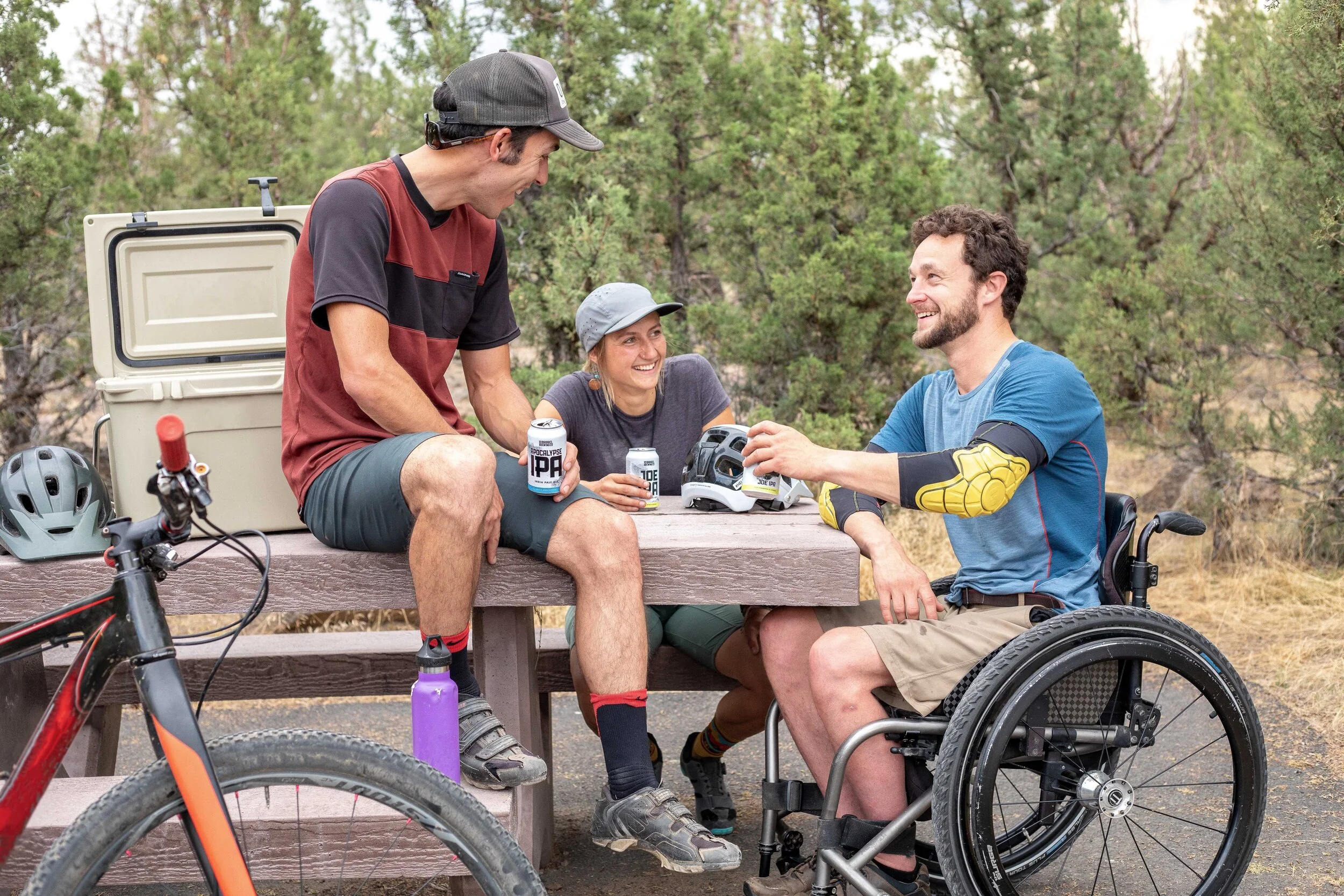
Friendship and IBD
“Friendship is the hardest thing in the world to explain. It’s not something you learn in school. But if you haven’t learned the meaning of friendship, you really haven’t learned anything.” – Muhammad Ali
I started with this beautiful friendship quote because I’m going to talk about Friendship in this article. Friendship is a very unique relationship. Friends are not related to us by blood, even though they won’t have any expectation in the relationship they are always with us to support, to help, and to find purpose and meaning in our life. For me, they’re one of my major pillars in my life. The emotional bond between my friends and I helped me to recover back my strength, especially during pre and post-surgery. In this article, I would like to share how my friends helped me to build back my strength during my early days of being diagnosed with Crohn’s.
My friends have been good listeners. Whenever I have problems, the first group of people that I look for are my friends, not even my family, because my friends are willing spend their time to listen to my problems and my feelings. They’re fully present when I start to talk. There are no distraction such as phones, people, or work, and they give their 100% focus to what I’m saying. I was in campus during the time I was officially diagnosed with Crohn’s. I was depressed, and they were the ones l looked for to talk to and to share of my health condition with. Once I uttered everything I wanted to say, they kept silent for a moment and then they started to give their suggestions. The point is, they listened and digested my problem before giving their best solution. I think this is the best part of friendship because they didn’t jump to conclusions. Instead, they listened to me first.
They cheer me up with great humor. My friends do understand laughter is one of best medicines to keep me healthy. My friends, unlike myself, are funny and their sense of humor always bring me happiness. In our conversations, there are always some funny jokes that make me laugh. Even when I’m in a bad mood, they are able to make me laugh and refresh my mood and cheer me up. In fact, friends with a good sense of humor can make our world feel good. Whenever I spend time with them, I never have a thought of pains, depression, or that I have Crohn’s.
Another great quality of my friends is that they care about my daily activities. This is an important quality that my friends show toward me that I really appreciate in them. Caring friends take a lot of dedication and love to keep the relationship always warm. My friends often call me to ensure I’m doing fine. They accompany me for my endoscopy appointment every year. They take extra caution on my food intake whenever we go out to eat. There are many more things that they do for me. And, most importantly, they also like to use positive words to keep encouraging me. They’re say encouraging words such as “you can do it Sara”, “you must be strong” to motivate me so that I can keep moving on in my life. Their words give me more confidence and strength whenever I need it. Their words lead my thoughts and emotions to positive ways.
Friends provides a place for us to share and to discuss our feelings. In fact, friends are the best emotional medicine for people like us to overcome from depression and lift us up and encourage us to take a leap of faith to change our life into something better.

Disability Makes Me Feel Colorful
When I was first diagnosed with Crohn’s disease, I remember hating myself. For so long, I was so angry at the world. I was angry because I couldn’t run anymore. I was angry because I was in pain. I was angry because I felt like I wasn’t capable of anything.
The stigma of disability is often composed of beliefs that people with disabilities are too sick to do anything, are not capable, and weak.
Years later I realized the only reason I hated myself and hated my disability was because society made me believe that having a disability was the worst thing that could have ever happened to me.
People would frequently tell me things like I should reconsider what I wanted to do with my life because of how my illness would impact me. I have been told that it was surprising I could even do what I have done in my life. I have been told that I would be in pain forever.
I have had doctors not believe in me. I have been blamed for my illness. I have been shamed for my weight, for not eating enough, for not trying hard enough, for being too tired, for eating too much “fast food” and an endless stream of hateful and hurtful words.
Sometimes even members of my own family would shame me and suggest I caused my own illness. I think that hurt the most.
But they could not have been any more wrong.
Living with a disability allowed me to see my black and white world in color for the very first time.
My disability gave me inspiration for my future career. It allowed me to realize what my true passions and dreams were. It allowed me to appreciate the smallest, tiniest things that no non-disabled person would ever be able to notice. It opened up the door for new hobbies. It empowered me to focus on my mental health. More than anything, it gave me a second chance at life.
I live for myself now.
I started painting which is weird because I used to only be able to draw little doodles on the bottom of my notebooks.
I do yoga when before I would over-exercise and tire out my body.
I found out about Trader Joe’s vegan chocolate chip oatmeal cookies with coconut (only after the very serious hunt to find snacks that were IBD friendly for me).
The air tastes better. Songs are not even songs anymore; they are seven different melodies and sounds happening at the same time and I can appreciate every bit of it. Every time I take a step without pain, it makes me feel like I am walking on clouds. The sun feels warmer.
I feel colorful.
Personally, my disability was the best thing that could have ever happened to me. It is difficult. It is painful. It is exhausting.
But it does not make me weaker than anybody else, less capable than anybody else, and I do the same things anybody else does, and I do it while I’m sick too.
This article is sponsored by Lyfebulb.
Lyfebulb is a patient empowerment platform, which centers around improving the lives of those impacted by chronic disease.

Overcoming Medical Trauma with IBD
I have anxiety.
I am afraid to speak up, almost all the time.
I press my nails hard into my palms when I think about why I said “How are you?” too quietly.
I bring this up because about one year ago, I had an allergic reaction to an infusion. I had been on this infusion for several months, almost a year at the time. At first, I stayed quiet about the symptoms I had been feeling for a couple of weeks leading up to it.
I think a part of me genuinely thought it was in my head. When people around you are constantly telling you your illness is your fault or that you look fine or that your symptoms are just your anxiety, you start to believe it.
It started with red, blotchy spots all over my skin. Some days were worse than others and eventually, I went to see a dermatologist who prescribed me a topical medication and I didn’t think anything of it except for the occasional feeling of shame when the spots became more visible.
At the infusion before my reaction, I remember just thirty minutes into it, I felt so sick. I could hear my heartbeat in my ears and everything felt slow. I remember trying to explain that I wasn’t feeling well and then downplayed it for just being tired because I’m used to doing that.
At my next appointment, the same thing happened. I started to cough and my lungs and throat felt itchy. I felt little ants all over me, starting at my feet all the way up to my chest. I stayed quiet still because I thought I was just making it up in my head until my nurse pointed out that I looked a little flushed.
When I got up to go to the bathroom to check it out, with the IV machine trailing behind me, I stared at the mirror in absolute shock when I saw welts the size of quarters flooding my skin and hives spreading quickly across my chest and neck. My mother who was with me became panicked and called the nurse who immediately notified the doctor.
I remember I started laughing hysterically because I was so afraid. The nurse quickly started Benadryl through my IV and I was just shaking because I felt so cold. The doctor was asking clarifying questions but they just sounded like echoes in my head. Eventually, the reaction subsided and I just layed there, stiff, with anxiety.
What I didn’t know was that ever since that day, anytime I go to an infusion or take one of my medications I am so afraid of it happening again. I got lucky that my nurse noticed something was wrong before it was too late, but I can’t help but wonder if I had just spoken up earlier I could have avoided all of this in the first place.
But I want to stress that it is not your fault for not speaking up. Sometimes it can feel like anxiety is taking control over your life but every day you struggle with anxiety and still choose life, you are the one taking control of your life.
I don’t feel guilty anymore for not speaking up then but now I understand that I deserve to speak up for myself now. I deserve to be heard. When it comes to your health, it is never just in your head. What I mean by that is whatever symptom you are feeling-- whether it be a physical manifestation of anxiety, racing thoughts, pain, discomfort-- those are all valid and not imaginative.
The next time you feel too anxious to speak up, just remember that you deserve to be heard.
This article is sponsored by Lyfebulb.
Lyfebulb is a patient empowerment platform, which centers around improving the lives of those impacted by chronic disease.

10 Things to Know If You're Recently Diagnosed with IBD
Newly diagnosed with IBD? I wish you knew these first.
Growing up as a teenager, I was a perfectly healthy child. I ate regularly; I was active and a bright kid who never had any particular routine or lifestyle that I used to follow. But everything started turning upside down once I started seeing symptoms. An bigger tragedy was when I almost felt like the game had ended after being diagnosed. No! Not at all. The actual game starts only after the diagnosis. Our bodies are always changing with IBD. From one day to the next, we don’t know how we are going to feel or what is going to happen. So it is of the upmost importance to know yourself and your body first. Ignorance certainly isn’t bliss here. If you feel like IBD is ruling your life, it’s time to take back the control. Here are the 10 things which I would like to share with all those who are newly diagnosed with IBD:
Educate yourself: Knowledge is power. Understanding IBD leaves you better equipped and empowered to manage it. There are many patients out there without enough knowledge about their IBD. It’s our responsibility to know everything we can about our disease and also our bodies. Take the time to learn everything you can. Read and discuss as much as possible with your doctors.
Track your symptoms and triggers: Learn about your own symptoms and triggers. Many doctors suggest maintaining a food diary so that your doctor may be able to use the data you gathered to help guide your treatment plan. We can understand our daily life and limit what happens to us by doing this.
Never miss your regular follow ups: After reaching my first remission, I assumed I was completely cured and had stopped my regular check-ups and follow ups with my doctor. The penalty for being so ignorant came with a cost of having the next severe flare up within the next few months which completely drained me and pulled me back to square one. IBD is a disease which needs to be managed and if you feel symptom free, you are not cured, it’s just that your medicines are working and controlling your symptoms. So it is important to have regular consultations with your doctor and monitor the functioning of your systems.
Make every appointment count: Be well prepared as to what you need to discuss with your doctor before hand as most of the appointments will be limited to 10-15 minutes and you tend to lose out on discussing important stuff. You can even jot down pointers on paper before entering the doctor's cabin.
Don't be afraid to ask for more information: The time slot allotted for each appointment may be limited. That doesn't mean you need to limit your queries and clarifications. Make the best of that limited time. For instance, if you’re being treated with steroids, ask for detailed information about how this medication could influence how you feel, the side effects, mood swings, weight gain, and such.
Know your treatment: First, know what kind of treatment the doctor has put you on. Whether it is the traditional treatment or biologics or allopathy or any other alternative therapies. Understanding your treatment can help you know what is happening to your body and analyse your recovery rate to attain symptom free life by choosing the best that suits your body as what suits others may not you and vice versa.
Emotional health is equally important as your physical health: There could be days when your entire body hurts and there is nothing you can do. There could even be days when you don’t even want to move because you are so exhausted. During those days it’s not easy to control your emotions as you tend to feel more low and helpless. But you can still fight back by choosing to feel “it's OK”. Don’t let your IBD control you.
Coping with Stress: Stress doesn’t cause IBD, but it can sometimes make symptoms worse. Stress relief is crucial if stress provokes your flare-ups. Learning how to cope with stress and anxiety isn’t always easy. But it’s really important for us to keep stress under control. Yoga, meditation and music could be a few tools that may be helpful in this.
Reach out for help when needed: IBD can be an embarrassing disease. It’s normal to feel alone sometimes. At a young age, we are taught not to discuss what happens behind a bathroom door. This can leave those of us with IBD, feeling extremely isolated and even hopeless. This can impact our self-esteem and quality of life. It's utmost important to have some go to people who understand these challenges and support us in every step of our journey.
Nutrition matters: Understand how your system works and choose what goes into it rightly. When the intestine is under attack, it has a hard time absorbing nutrients. Therefore it's important for us to be aware of what we eat. Follow a low residue diet to relieve abdominal pain and diarrhea. If you have strictures, it is especially important to avoid nuts, seeds, beans and kernels.
These are few of the things which I feel we need to keep in mind and plan our lifestyle when newly diagnosed. Knowing these pointers at the initial stages makes our lives much easier.