

NEWS
My Journey with Exercise and IBD
By Isabela Hernandez (Florida, U.S.A.)
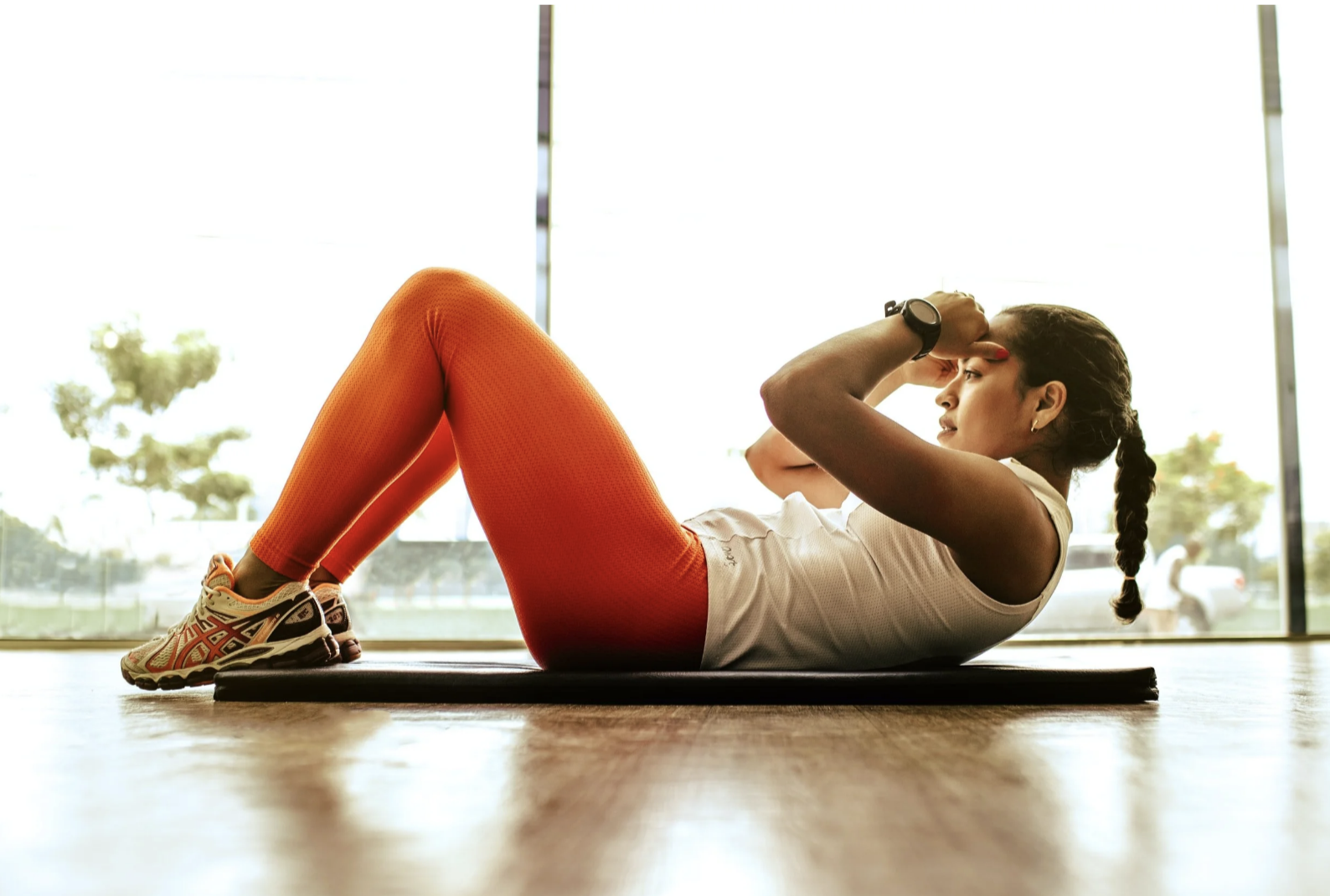
Exercise can be a sensitive topic for people with IBD. For me, diagnosed with ulcerative colitis early on in my childhood, I never consistently played a sport growing up due to flares and frequent hospital visits. Little did I know that this inexperience would shape my relationship for years to come. People subconsciously implement exercise as a basic part of their everyday life throughout childhood. Because of this, as adults, they’ve developed a sense of comfortability with the idea of exercise. But for those with IBD, Saturday soccer games or just a run around the block is not a top priority. Getting into remission is always the goal and once it happens, the need to exercise is one of the many things that follows. This often leads to frustration on what to do and how to feel comfortable in the gym or at home trying to better your physical health. I never realized how dysfunctional my relationship with exercise was until I got to college.

College was the first time I began to exercise consistently without quitting. I was not forced to deal with severe sickness or constant hospitalizations, which led me to explore my ability to exercise. Gradually, I was able to learn exactly what I enjoyed doing to get my heart rate up. The journey of finding a relationship with exercise is an individual process. It is different for everyone and takes time. Personally, my life changed when I discovered strength training.
I’m sure many with IBD can understand what it is like to feel the relentlessness of feeling physically weak. I never once felt strong, and especially while flaring, the physical weakness I sometimes experienced was debilitating. I was hesitant at first to enter the gym, since I had no idea what I was doing. I was numb at the thought of embarrassing myself trying to exercise. This is a common fear that many have and it’s something that an individual must push through. In living with a chronic condition, there will always be times when we feel weak, but it is our responsibility to power through and uncover moments within exercising that make us stronger. As time progressed, my level of comfort in the gym grew, and my idea of what strength was began to shift. Not only was I physically feeling stronger than I ever had in my life, but more so, I mentally grew stronger. I really do believe that working on my physical health catapulted me on a journey to finding strength everywhere, not just in the gym. However, not every journey is perfect.

The more time I spent strength training, the more I began to get frustrated trying to build muscle. An uncommonly known fact about IBD for some is that individuals with UC or Crohn’s typically have a harder time putting on muscle. Sarcopenia is the reduction of muscle mass/strength and it exists in roughly 52% of Crohn’s patients and 37% of UC patients. [1] This is still an ongoing and evolving area of research, but it explains why for some IBD patients, it is extremely difficult to put on muscle. Many things drive sarcopenia in IBD patients, including chronic inflammation, vitamin D deficiency, adiposity, malabsorption and the dysregulation of the muscle microbiome axis. [1] Protein intake/absorption is usually reduced in IBD patients, so it is typically recommended that higher protein intake could serve as a solid attempt to prevent muscle loss. [1] This could result in a lot of frustration for IBD patients, and it needs to be recognized that it is not you; it is the IBD.
The science behind this phenomenon is very complicated and ever evolving. The reason I highlight this fact is that if you are like me and are on your journey with exercise, the frustrating roadblocks you are experiencing specific to exercise are not uncommon. Keep going and find what makes you feel good physically. For me personally, it was strength training, and my roadblock was the struggle to build muscle. Nevertheless, I will continue to do what makes me feel good while trusting the process and recognizing that IBD will always affect every area of my life. Whether we realize it or not, our IBD will always be there and try to prevent us from progressing in certain areas that we didn’t even realize it would affect. We must accept this and move on without letting it stop us. It is extremely important to talk to your doctor about the role of exercise in your life and what your body is capable of doing in the moment, taking into consideration disease activity. I hope that every person with IBD finds their own form of exercise that makes them feel happy, at peace, and above all, strong!
References:
1. Dhaliwal A, Quinlan JI, Overthrow K, et al. Sarcopenia in Inflammatory Bowel Disease: A Narrative Overview. Nutrients. 2021;13(2):656. doi:10.3390/nu13020656
This article is sponsored by Trellus
Trellus envisions a world where every person with a chronic condition has hope and thrives. Their mission is to elevate the quality and delivery of expert-driven personalized care for people with chronic conditions by fostering resilience, cultivating learning, and connecting all partners in care.
The Impact Patient Advocacy has had on my Life
By Varada Srivastava (India)
“Patient advocacy has helped me feel a part of a community as well as cope with my illness.”
Patient advocacy is something I was first introduced to thanks to the blog of Natalie Hayden. She's a former news anchor and author of the blog, “Lights Camera Crohn’s”. A person who suffers from chronic illness has to constantly face challenges since the time of diagnosis, which is excruciating, to say the least. Overcoming challenges faced throughout our journey, from diagnosis to daily life, is something many of us experience. In fact, it seems like I would break down every time I read her blogs. I spent the entire day reading her blog and crying.
Many people don't realize the severe impact that chronic illness occupies in the lives of patients. How much chronic illness impacts our daily lives. Fighting an invisible illness is often isolating and heartbreaking. I discovered Natalie Hayden’s blog probably 5 years after my diagnosis and that was the first time I did not feel alone with my disease. I acknowledged the importance of patient advocacy when I realized that if I had this support when I was diagnosed, perhaps I would not have felt so lost until coming to terms with my illness.
India faces a lot of misdiagnoses because of health illiteracy, lack of medical facilities, and expensive medications. The feedback IBD patients may get is also typically insensitive.
Having a system of people who help you and encourage you during difficult times is crucial. It's easy to feel alone when you're struggling on the sidelines. And when people don't reach out, it can be difficult to stay optimistic. When it comes to Crohn's disease, it is often referred to as debilitating. And that it is. However, I’d also argue that what's really debilitating is constantly worrying about the unexpected.
It is common for Crohn's disease and ulcerative colitis patients to have what is known as "psychophysical vulnerability." 1 Stress, emotional distress, and inadequate coping skills can all have a negative impact on how the disease progresses and decreases quality of life. 1 There are always two types of reactions you receive from people. Friends who support us and people who give unwanted advice.
For several years following an initial diagnosis, the number of procedures and medications can be overwhelming. Determining trigger foods and finding medications that work, are also among the significant challenges. Having a network of individuals who have gone through the same process is helpful to a great extent. It has been an invaluable experience for me to connect with young adults from around the world who face similar challenges.
Patient advocacy has helped me feel a part of a community as well as cope with my illness. If you can find a friend who understands, even if you've never met in person, you can gain comfort. It may be something you didn't know you needed it until it was offered to you. I have accepted that rather than being afraid to reveal my disease, it is more helpful to be vocal about it and get advice on how to cope with it.
As a result of this, starting a support group at my university and applying for the Crohn’s and Colitis Young Adult Network fellowship has been two of the most rewarding personal experiences in my life. Being able to help others with things I have struggled with, is an incredible opportunity for me. I'm very grateful to patient advocates for this reason. The awareness of autoimmune disorders is constantly growing all over the world and I feel blessed to be a part of it.
Featured photo by Polina Kovaleva on Pexels.
Resource: (1) Bonaz BL, Bernstein CN. Brain-gut interactions in inflammatory bowel disease. Gastroenterology. 2013; 144(1):36-49.
Body Neutrality > Body Positivity
By Carina Diaz (Texas, U.S.A.)

My body has been through many shapes and sizes since the diagnosis of my Crohn’s disease in 2012. The combination of medications and inflammation has altered my weight, the shape of my face (thanks Prednisone), and effected my ability to exercise. After many years of weight fluctuations, I now see three people within myself: the person I picture in my mind, the one I see in the mirror, and the one I see in photos.
Halfway through 2017, I came back home from a four month internship in Florida in very bad shape. I had lost a lot of weight, had little appetite, was under constant fatigue, and went to the bathroom almost 20 times a day. I didn’t deal with many IBD symptoms in college outside of bloating and cramps, so this was new territory for me. I was bed bound for several years and shrunk down to skin and bone. I avoided my reflection every time I went to the bathroom. I felt like a shell of a person. My body felt like an itchy, uncomfortable sweater that I couldn’t take off.

“I still have days where I’m mad at my body, but being able to take a step back and shift my thoughts away from the frustration has brought back some peace.”
As my health slowly began to improve and my mind became more clear, I noticed how often my thoughts centered around the way I looked. I felt detached from my body and even more so after getting ileostomy surgery in May of 2021. I’ve had to relearn my body over and over again because of the constant changes IBD has put it through. It’s very easy to feel disconnected from your body when you have IBD. I’ve often felt that my body and I are two different entities at war with each other, and neither side wants to wave the white flag.
There’s so much content online about self-love and loving your body. “Start the day by looking in the mirror and say three things you like about yourself out loud.” “Love the skin you’re in.” “You’re beautiful just the way you are.” I’ve found that it’s not possible to feel good about yourself everyday. Our bodies change, even for people without health conditions. We’re constantly shown images of what we should aspire to look like and the products to buy to help us attain it.
A concept that has helped me reframe my thoughts around body image is body neutrality. It encourages you to accept your body for what it is and puts more emphasis on what you’re capable of instead of what you look like. To me, this means to meet my body in the day I’m in. For example, on days when I have low energy, I’m going to take care of myself by working from my bed, ordering takeout, having snacks and water within reach, and not worrying about the state of my apartment. I’m not going to expect myself to cook, clean, and run errands on a day that I’m not feeling well.
I know that this might not be a helpful concept to everyone, but it is a practice that has helped my mental health and self image. I still have days where I’m mad at my body, but being able to take a step back and shift my thoughts away from the frustration has brought back some peace. Instead of viewing IBD as a punishment from my body, I’m trying to remind myself that my body is going through this with me. Neither of us are to blame; it’s just our reality. We’re both doing the best we can.
Storytelling for self-growth
By Fasika Teferra, M.D. (Ethiopia)
Have you ever wondered why someone shares their stories with strangers? Regardless of the outlets people use to tell their stories, we see storytelling get used as a catalyst for change. It is a tool that most change makers are using today; that was my initial motivation to start telling my story, until I learned the true potential of storytelling. I was just beginning my fourth year of medical school. With the stress of the upcoming qualifying exam and family moving away for work, I thought the abdominal pain I had started to experience was just anxiety. Although I am fully aware of Crohn’s Disease and its symptoms, I tried to get quick solutions to resolve the symptoms.
“Regardless of the outlets people use to tell their stories, we see storytelling get used as a catalyst for change.”
From a young age, I was told to pull myself together and not show vulnerability, which was why I suffered for eight months before getting my diagnosis. I knew what the disease was, the medications I needed to take, and that it was a chronic illness with no cure. But accepting that was one of the hardest things I ever had to do. A lot of factors played in truly accepting my diagnosis and make the decision to be more knowledgable as an IBD patient, but the major one was reading stories of other IBD patients. It opened up my mind to the possibility that I could lead a normal life. That was why I started to share my story, to be an inspiration to others.
“From a young age, I was told to pull myself together and not show vulnerability, which was why I suffered for eight months before getting my diagnosis.”
Living in Ethiopia, where most doctors state that IBD is rare, I knew I needed to speak up. I needed patients to know that they are not alone and I needed to communicate with my medical community that it is not so rare. I am glad I decided to be open about telling what I went through and how I am coping with IBD and it is not for the reasons you think. Sure, I am grateful to be able to make a change; I am happy my story is inspirational to other Ethiopians and non-Ethiopians alike. However, I am so thankful for what storytelling did for me.
“Through storytelling, I learned acceptance.”
I was not in remission when I started nor did I had a clue about managing IBD as a patient. I started only 2 years into my diagnosis and did not fully accept my diagnosis at the time. Through storytelling, I learned acceptance. As I shared my story more and more, it made me want to learn more about how to manage my condition. It also helped me step back and see how far I have come because telling my story means going back from the beginning and share the how, the why, the what of each and every detail. If there is one thing I want you to takeaway from this, it is that it doesn’t matter how much you know about something, speaking about your experience is not just so others can learn from you, it is a tool to aid in self-growth and reflection. Storytelling did not change my Crohn’s Disease diagnosis or all the hardship I faced, but the story helped me, the teller, transform and grow.

Communicating IBD
“‘Inflammatory bowel disease’ (IBD) sounds like a straightforward term — a disease of inflammation in the bowel. However, the history of IBD reveals a story of a nefariously complex set of idiopathic conditions. IBD defies definition, in part because its pathophysiology is not completely understood. For the same reason and despite substantial advances in research, IBD also defies cure. At best, IBD can be defined as a disease of disruption — disrupted physiology, microbiology, immunology and genetics.”1
Repeatedly, one of the challenges I face in having IBD is being able to effectively communicate the severity and uniqueness of the disease to my friends, broader society, and, at times, even myself. The quoted part above from the paper ‘A tale of two diseases: The history of inflammatory bowel disease’ articulates the complexity and vagueness perfectly.
I distinctly remember a time at school when my understanding of the world shifted from ‘adults know everything and humans have control over everything in this universe,’ to teachers starting to draw lines around exactly what is known to us. What’s left out were things even the biggest scientists who got us to the moon couldn’t decipher. During this mind shift, we learned about the limitless scope of space, the depths of the oceans, the uncertainty of what causes psychopaths, and having no cure for cancerous cells, among other things. I remember the fear but also a naïve invincibility that while these uncertainties exist, they will not be applicable to me or my loved ones. But IBD is unpredictable; it can hit almost anyone, at any age. And all the videos I saw on Facebook celebrating the new reaches of technology in healthcare – like that one video of a microcamera in a dissolvable pill helping doctors to see inside the digestive tract without invasive procedures – were just that, videos of research trials. The reality was always so much more ~simple~ with burdensome invasive procedures, like colonoscopies.
Medications to “manage,” not cure, IBD, are also primitive in the domain of medication, not outstanding. They always come with trade-offs – like ‘Get your colon back, but lose your bones!’ or ‘Stop bleeding, but eat like a garden rabbit for the rest of your life!’ or my personal fav, ‘Manage your illness in the gut, but leave with debilitating fatigue, brain fog, anxiety and depression! Bonus: It’s all in your head, even your doc won’t believe you.’
Living with IBD can be especially difficult due to you having to explain yourself and your situation so much. People may think you have a variant of food poisoning, or you somehow brought it on to yourself with unhealthy eating habits. The stigma about the ways in which IBD exists gives little leeway to understand the severity of it. IBD is both a hidden blessing (maybe blessing is reaching too far) and a curse, as it forces you to learn to be compassionate with yourself (that’s a big part of the closest thing we have to a cure), but shows you the irresponsibility, ignorance and pure apathy of the society around you. With cancer, for example, the pain and trauma are duly acknowledged by society. There is a sense of responsibility the society (whether that’s friends, school, work, strangers) feels to stand in solidarity and be helpful in those moments. In having a chronic illness, granted it is not cancer but still a very traumatic on-going experience, there is no assumed empathy-net provided in those dark moments.
For people like me, with social anxiety and people-pleasing tendencies, explaining the gravity of what you’re going through can be an impossibly difficult task. As I’m nearing my 5th year of having IBD, I confess I still go back and forth between playing it down to not take away from anyone or carrying resentment for people who could not understand in the past. On my best days – enjoying my iced coffee and spicy Indian food - I invalidate myself and ponder, did I really have it that bad or was it all in my head? On my worst days - on my knees, clutching my abdomen or sweating with AC at full blast at 3AM at night - I bitterly revisit the hurtful comments I’ve received over the years. Life has to go on, and in going forward, IBD patients need to build a society that holds space for them.
Here are short notes on how I hold space for myself, and ask people around me to do the same:
1. On Badtameezi
In South Asian families, roles in a family are decided according to the age and relation. For example, a younger person, even if more experienced in a certain field, is not allowed to voice his/her opinion on some subjects; it's called badtameezi.
Badtameezi is the South Asian society’s way of manipulating you to exist in a way they deem fit. Practicing privacy, setting boundaries, cutting off from anxiety-inducing family members, and decision autonomy are just a few examples of being a “bad” person. All of the above are obviously necessary for a person with a chronic, stress-related illness, so it becomes important to choose whether you want the badtameez label and health, or tameezdar label and continuously deteriorating health.
2. On Comparison
In the South Asian diaspora, the competitive spirit is a prominent aspect of life. India is the second most populated country on Earth, soon to be first, and resources are low, perhaps that’s why competition is high. While healthy competition is important in bringing out qualities like hard work and ambition, competition about health crosses lines over to absurdity. Yet, this is quite common. A simple “No, it’s not the same,” or “No, I feel like you’re not understanding what I am dealing with,” or “I’m very sorry you had to go through that. My illness however is very different because…” can suffice. If they’re open to it, you can open up about it more.
3. On Self-Invalidation,
It’s useful to journal during flares, not only for the benefit of your mental health, but also to keep track of your feelings on the worst days. To check in with yourself during those times makes it easier to not invalidate your experiences later on. I don’t have the discipline to keep journaling daily, but every time I am in physical pain, I do grab a pen and notebook to jot down my mental state and thoughts, and I refer back to it in times I forget what my experiences have been like. It’s also helpful to engage with a support group; the conversations around other’s experiences with triggers, symptoms, tests, doctor’s visits, work, friends and family can help you understand and navigate your own. Disclaimer though, everyone’s experiences are different in all the dimensions of the disease; your lived experiences will always be unique. Lastly, I like talking to someone who’s seen me at my worst to remind me how it really was, and that it was not all in my head. This could be a close friend or family member.
4. On Unsolicited Comments,
Just call them out on these. It’s 2021, people need to stop commenting on your weight gain/weight loss and any other changes they see in you, irrespective of whether it's due to your illness. A simple but firm statement like “If I need your opinion, I’ll ask for it,” or “I like it this way,” can help establish a boundary.

Disability Makes Me Feel Colorful
When I was first diagnosed with Crohn’s disease, I remember hating myself. For so long, I was so angry at the world. I was angry because I couldn’t run anymore. I was angry because I was in pain. I was angry because I felt like I wasn’t capable of anything.
The stigma of disability is often composed of beliefs that people with disabilities are too sick to do anything, are not capable, and weak.
Years later I realized the only reason I hated myself and hated my disability was because society made me believe that having a disability was the worst thing that could have ever happened to me.
People would frequently tell me things like I should reconsider what I wanted to do with my life because of how my illness would impact me. I have been told that it was surprising I could even do what I have done in my life. I have been told that I would be in pain forever.
I have had doctors not believe in me. I have been blamed for my illness. I have been shamed for my weight, for not eating enough, for not trying hard enough, for being too tired, for eating too much “fast food” and an endless stream of hateful and hurtful words.
Sometimes even members of my own family would shame me and suggest I caused my own illness. I think that hurt the most.
But they could not have been any more wrong.
Living with a disability allowed me to see my black and white world in color for the very first time.
My disability gave me inspiration for my future career. It allowed me to realize what my true passions and dreams were. It allowed me to appreciate the smallest, tiniest things that no non-disabled person would ever be able to notice. It opened up the door for new hobbies. It empowered me to focus on my mental health. More than anything, it gave me a second chance at life.
I live for myself now.
I started painting which is weird because I used to only be able to draw little doodles on the bottom of my notebooks.
I do yoga when before I would over-exercise and tire out my body.
I found out about Trader Joe’s vegan chocolate chip oatmeal cookies with coconut (only after the very serious hunt to find snacks that were IBD friendly for me).
The air tastes better. Songs are not even songs anymore; they are seven different melodies and sounds happening at the same time and I can appreciate every bit of it. Every time I take a step without pain, it makes me feel like I am walking on clouds. The sun feels warmer.
I feel colorful.
Personally, my disability was the best thing that could have ever happened to me. It is difficult. It is painful. It is exhausting.
But it does not make me weaker than anybody else, less capable than anybody else, and I do the same things anybody else does, and I do it while I’m sick too.

This article is sponsored by Lyfebulb.
Lyfebulb is a patient empowerment platform, which centers around improving the lives of those impacted by chronic disease.

Ostomates and Intimate Relationships
Imagine you are in a relationship with a person and you want to take that relationship to the next level by taking the step towards being physically intimate. You take off your shirt and you hear a gasp. “What is that?” You look at your partner’s face and follow their gaze to your torso and you realize something at that moment: you had never told your partner what it means to be an ostomate. Ostomates live with a part of an organ exposed outside of their body but usually secured in an ostomy bag for the rest of their life. Although at first it is difficult to adapt to this visible change, ostomates soon became comfortable and adapted to their routine well. However, this new life for ostomates brings some changes to their personal life, especially to their physical relationship with their partner. Both ostomates and their partners should take steps to understand about ostomy life and give each other the benefit of doubt to further improve their relationship in a more intimate sense.
An ostomate should prepare themself physically and mentally to discuss their condition with their partner. This is important and necessary because post-surgery will bring a major change to their body. Along with it, an ostomate may feel anxiety, fear and concern about their body. Ostomates have to express their fear and worry to their partners to alleviate their distress of this new situation. An ostomate should understand that they can never ignore and hide their stoma from their partner forever. They should initiate small talks with their partner especially when they are ready to engage in physical intimacy after surgery. They can talk about what happened with the surgery, how the post-surgery life looks like, what is a stoma and how it looks like, ostomy pouch and what it does and how they change it and so on. These small conversations will directly educate their partner about what kind of changes an ostomate is going through and give them insights into what being an ostomy means to their relationship. An ostomate can take the following steps in order to engage in sexual life with their partner.
Take time and slowly expose the pouch and stoma to your partner. Your partner may show reactions such as shocked, scared, or even curious. Or they may not show any reactions as they are not sure on how to react to a stoma. They may not be sure on how to react also. Don’t get angry or disappointed with their reaction or lack of reaction in some cases. Most of the time, a partner will worry that they may hurt the stoma and dislodge the equipment during intercourse. Be patient and tell them how it does not affect your sexual life and how they can help you so it does not hurt during intercourse. Give your partner more time to ensure they feel safe, secure and comfortable to be together with you.
Take care of your pouch. The type of pouch plays a role in ostomate sexual life. It will be good if you wear a non-transparent pouch. Non-transparent pouch prevents your partner from seeing the exposed stoma and the contents of your pouch. The reason is, they might be scared to engage in sex when they see your stoma. So try a non-transparent pouch or alternatively you can buy or design your own “pouch covers”. Pouch covers can become a fashion statement and it can make you feel good too. Additionally, ensure your pouch is empty before engaging in intercourse. This is crucial to ensure there is no leakage or unpleasant smell during intercourse. You have to keep everything clean and neat beforehand to make it comfortable for both yourself and your partner.
Monitor your diet before engaging in sexual activities. See which food helps you and which does not. A good diet can lead to an improved sexual relationship between you and your partner. Avoid foods that create gas and odor especially beans, broccoli, corn, cabbage, and peas. Experiment about which food causes bad reactions and gas to you and avoid them or at least eat them sparingly. This will prevent your stoma pouch filling with gas. To keep it safe, try to use a gas filter pouch as this will keep your pouch flat and deodorize the gas.
An ostmate’s partner can also take several steps to ensure their relationship with their ostomate partner is healthy and good. As ostomates, they might go through a difficult time adjusting and even fear rejection. So, as a partner, be patient and give them time. As an ostomate’s partner, you can follow the following steps to have a better intimate relationship with them.
Don’t jump into a sexual relationship right after their surgery. You should remember that ostomy is considered major surgery and your ostomate partner needs time to adjust to their new normal. The surgery does not only put stoma outside but there is a high possibility of bowel and fistula track removal for those who have Inflammatory Bowel Disease (IBD). Your partner definitely need considerable amount of time to heal and gain back strength following their surgery.
Be mindful of your reactions and try not to create any distance with them. Your ostomate partner may feel rejected and feel lonely. Communication is the key solution in any issue. If your partner does not initiate their post-surgery life, try to initiate that conversation yourself. For instance, discuss with your partner about physical intimacy and experiment with different positions so that they may not feel uncomfortable. Keep in mind that most stoma patients will not engage in intercourse for weeks or months after surgery.
Seek professional advice from sex consultants, Enterostomal Therapy (ET) nurses, or IBD advocates to educate yourself about your partner's sexual issues. Generally, professionals will provide solutions to improve on both you and your partners’ emotions and also how to manage your sexual life. Professionals may not solve the core problem for you but they will be able to provide suggestions, or solutions from their research and work with other patients. They can also talk about your concerns, make you understand your feelings better and give meaningful and constructive advice for you.
Being intimate is highly possible for an ostomate and their partner if both take time with their new situation and be supportive of each other. Be positive and engage in activities that make you happy and healthy. When you find a new partner, talk to them about your ostomate life and be open to answer questions honestly. Communicating with each other about your needs, wants, concerns and fears can go a long way in ensuring a healthy and meaningful life together.
Hair Loss
By Rachel Straining

Hair loss was something I never expected at the age of 22 until I found myself staring in the mirror, crying at my reflection.
I knew the stomach pain. I knew the sharp, stabbing aches. I knew the nausea. I knew the fatigue. I eventually even knew the PTSD. But I didn’t know about the hair loss.
Telogen Effluvium, they called it. It took me a while to figure out how to spell it let alone understand it. Telogen Effluvium - the medical term for temporary hair loss that occurs after your body undergoes serious stress, shock, or trauma. The words stress, shock, and trauma barely begin to cover what my body went through almost a year and a half ago.
When two of the worst flares I’ve ever experienced happened back to back, one after the other, I lost weight rapidly. I couldn’t eat. I couldn’t sleep. I could barely breathe. I could barely even make it up the stairs without holding on to the railing for dear life and support.
Shortly after, that’s when my hair started to fall out like I’ve never seen it fall out before. In clumps. In the shower. In my hands as I held seemingly endless strands of hair that I never thought I’d lose.
I have always struggled with feeling beautiful in my own skin and my own being. Truthfully, growing up, I had always placed an immense amount of importance on my appearance, and my long locks had always felt like a kind of comfort blanket. “Hey, at least I have good hair,” I would say as I picked every other inch of myself apart. Watching my brittle hair fall in my boney hands as I stood in the shower with hot water and tears streaming down my face felt like the final blow to my already withering self-worth.
I wouldn’t put my hair up. I couldn’t. Not in a bun, not in a ponytail. No matter how hot outside it was or how humid it got. If I tried to, I would immediately break down at the sight of empty, bald patches of hair that were once so full.
Hair loss is not something that many people, especially many young adults, talk about, but it’s something I’ve come to realize that many have experienced. It is an external, physical side effect that also comes with its own host of internal, mental battles.
You can say it’s “superficial” and you can say hair “doesn’t matter,” but when your illness continues to distort your self-image and self-confidence time and time again in ways you never thought imaginable, it is hard. It is really hard. It is traumatizing. It is difficult to fully understand unless you’ve been through it. No feelings we endure are trivial, no battles are to be invalidated.
As someone who has gone through it herself, I am here to tell you you are allowed to feel it all, and anyone who says otherwise can come talk to me. You are allowed to be angry and sad and upset. You are allowed to cry, you are allowed to mourn what you once had, but I also want you to know that I refuse to let you give up on yourself.
In the moments when you’re standing in front of the mirror or standing in the shower, I know how much of a battle it can be to feel good about yourself, to feel like yourself, to feel like you are complete with bare patches revealing your skin.
However -
In a society in which it has been so wrongly ingrained and instilled that part of one’s worth is to be found in one’s physical appearance, I want you to know that your worth is not found in the hair on your head or even the freckles on your face. Your worth is found in the way you make other people smile and in the light that you bring to this world simply just by being in it.
And yes, yes your hair will grow back as you heal. And you will heal. And healing will be a roller coaster of emotions with both mental and physical twists and turns, but the bravest thing you can do along the ride is to embrace who you are inside at every step of the way.
The bravest thing you can ever do is choose to accept yourself every time you feel as though you can’t.
How to Communicate Relationship Boundaries While Living With IBD: Texting Templates
By Amy Weider

I have been a sex educator going on two years now and a commonality you find between all progressive sex educator work is that there is a stress of the importance of communication. We advocate for having open and honest conversations around consent, boundaries, STI testing and much more. communicating boundaries can be intimidating and often times it makes you feel like you are coming off as needy and fear one might lose interest in you because of your needs. We must navigate the disclosure of our lives and our level of comfortability regarding different types of relationships for example, hookups, friendships, dates, and long term relationships. communication is the key we say but many times we aren’t taught how to truly communicate our boundaries or limitations. In order to achieve successful relationships it is good to practice what we feel comfortable sharing with a person and how we want to do so. There is an Instagram sex educator @whatswrongwithmollymargaret who makes text templates for hard or nervewracking conversations. She touches on how to address being ghosted, how to ask someone on a date, and even asking a date about their accessibility needs!
I was so inspired by these posts and actions and it further made me acknowledge that communicating needs and boundaries becomes even more important when you are someone with a chronic illness. As a person with inflammatory bowel disease (IBD) my general energy levels can vary dramatically depending on the day. Because of this and my sex education work I wanted to share some of my tips and text templates for how to communicate boundaries around relationships and talking about IBD. These are all really individualized for me, a Crohn’s kid in remission who hasn't had any surgery. They obviously can be used and modified. If you have any of your favorite ways please share in the comments below.
Spoon theory
I like to introduce spoon theory very early on in my interaction with folks and continue to incorporate spoon check ins with every how are you what's up text. Spoon theory is an easy way to explain what's up with yourself without disclosing too much information about your disability/illness. It also gives me more room for an explanation of why I am canceling hook ups or dates without the interrogation of intentions or rudeness.
“I have a chronic illness, which means my energy levels are different from those who do not have one. I start the day off with say 12 spoons when you may have an unlimited amount of spoons. So it is harder for me to do all the things that are easy for you!”
“Hey!! I just woke up and I am not feeling so hot oof. Have you heard of the spoon theory? For me, it means that I am unable to be as “productive” as others because of my chronic illness. So I like to measure my energy in spoons. Long story short I am low on them today. Anyway that we could change our date to something cute and low exposure maybe a movie and some snacks :-)”
“SPOONS LOW rip can't text you as much today as I must sleep for 10 hours lol. I will dream of you and text you when I wake up!”
Disclosing Disease
I tend to be light talking about my disease and progress towards deeper conversations around it with folks the longer I know them! Here are a few ways I have disclosed my boundaries around talking about my disease before.
“I have Crohn’s Disease, which means my intestines and digestion can be unhappy a lot. I am in remission however though so it does not directly affect my daily life now and I don't love talking about it but hopefully one day we can get to the point where I could open up about it!!!”
“I have IBD which is inflammatory bowel disease, meaning basically because of all the inflammation I really can't digest anything. It has really affected my life and is an important topic I'm passionate about. Honestly, I'd love to talk deeper with you about it if you're down.”
“My health hasn't always been the best. I have IBD which affects my colon and I was diagnosed at a young age which affected my life. I am in remission now!! I get an IV every six weeks for a couple hours or so. I always say you know it's real when I take you to meet my nurses at the IV therapy appointments lol.
Asking for support
A big one for me is setting a boundary of disclosure transparency around when someone who I am going to see in person isn't feeling well so I do not risk my own health. I thought this was selfish for so long but I know it is not!!
“Having IBD and being on immunosuppressant drugs means that I can easily catch a virus cold, maybe even a good lord. So if we are gonna see each other i'd honestly love it if you can just be honest with me if you aren't feeling well before we meet up. I can do the same for you if you liked!!”
The Pathway to Body Acceptance as a Chronically Ill Person
By Amy Weider

When I was in fourth grade, I was going through the symptoms of my upcoming Crohn’s diagnosis. I was young and did not understand or have the language to explain the pain my body was feeling. While Crohn’s and IBD are invisible illnesses, i.e. one does not look “sick” to a normal passer byer, my constant puking and diarrhea made me lose a significant amount of weight. As a 4th grader this was a bit alarming to my folks, but the general reaction made by my peers and adults around me was to comment on my weight loss and uplift me for it. “You look so much better now” I remember this statement so vividly from a boy in my fourth grade class. “It’s super cool that you finally decided to lose some weight,” someone said to my ten year old body. I was ecstatic to hear this. When you are growing up Femme in a world that encourages you to hate your body and only allows you to idolize those who occupy an able body that wears a size two, it is fitting that this weight loss seemed like a success to me as opposed to a signal that I was chronically ill. I could not differentiate between healthy and skinny, they meant the same to me.
“I could not differentiate between healthy and skinny, they meant the same to me.”
I internalized so many of these comments and the general societal note that any extra amount of weight made me less than. When I was put on prednisone it induced me to gain all the weight back plus more and get “moon face” as well as stunt my growth. As a formally skinny person, I was embarrassed to have this body and it forced me to endure much body dysmorphia because of the quick changes. My mind didn't understand how this was supposedly a healthier version of myself.
When I think back to this time in my life I want to give my ten year old self a big hug. Healing with the body that I inhabit is treating it with the love and respect that I so desperately needed when I was actively a sick young person. My body size continues to change today even in remission. Body dysmorphia and trauma still occupy much of my life. When I was a size two I remember constantly thinking I was fat, now a size ten I do all I can to waste no more days worrying about my size. Acknowledging sizeism and fatphobia allows me to deconstruct and actively tear down these underlooked systems of oppression that taught me to hate myself and other bodies. Today, I know that my body does not even have to be healthy, skinny or pretty for me to love it. I love the way my body takes up space. I accept that my body is sick while simultaneously being an amazing vessel that holds all my thoughts and dreams. Learning radical self love was revolutionary for me and so many others.
“Today, I know that my body does not even have to be healthy, skinny or pretty for me to love it. I love the way my body takes up space.”
People gain and lose weight for SO MANY different reasons, folks with chronic illnesses deal with a fluctuation of weight due to their medicine, hospital visits or general “sick” stress. Even deeper, any kind of body trauma can induce weight loss or gain. Sure, if you are blindly assuming someone is unhealthy because of their weight, it allows you to think very highly of yourself but when we comment on one specific part of the body not the whole person, their whole experience and all the symptoms, your comments are worthless. In general, commenting on other folks’ bodies is a baseless way to assert a dominance on others.
All bodies deserve love! The body positive movement is currently challenging the notion that one specific body is healthy and beautiful and all the other ones must conform. Folks like LIZZO, Megan Jayne Crabbe (@bodyposipanda), Iskra Lawrence, Sonya Renee Taylor (The Body Is Not An Apology) are pushing back everyday by freely and openly loving themselves as a political agenda and are encouraging others to do so as well. Folks with chronic illnesses and disabilities are at the center of this movement and are helping bring nuance and love to it.
