
Moon Face Throughout Childhood – How It’s Affected My Body Image

By Isabela Hernandez (Florida, U.S.A.)

Going on prednisone is a somewhat universal experience for IBD patients. Maybe not everyone, but a lot of us have cycled through steroids and experienced the “fun” symptoms it brings along with it. One of them being moon face. Moon face is when your face appears very swollen and round. For me, I’ve cycled through high dose prednisone many times, especially in my childhood and have a very familiar relationship with moon face.  

Young girl with brown hair and a red dress, smiling at the camera with round cheeks.

This was the first year I experienced having moon face. I was 5 at the time; I remember this time in my life vividly, especially this picture. It was a school picture day, and I knew we would be taking a lot of photos. I still didn’t fully understand what was going on with my body and even thought having IBD constituted as normal, as it was the only life I’d ever known. But what I did know was that I didn’t look like how I once did, that person that my classmates knew me as.

To compare, this was me the year before. I knew the girl in this second picture. That was me. But I didn’t recognize the girl in the first picture and would look in the mirror as a 5-year-old girl, confused on who was staring back. At the time, I didn’t realize how this would affect me later growing up. My relationship with my body and how I viewed myself every morning when I looked in the mirror was slowly tainted.

This was my second time having moon face. I was 8. I was a little older and much more self-aware about how others viewed my appearance. I became shy, closed off, and scared that my cheeks would scare my friends or cause them to not even recognize me. I remember thinking I didn’t even care about feeling sick inside or having to go to the hospital; the only thing I ever wanted was to look like myself and look normal.
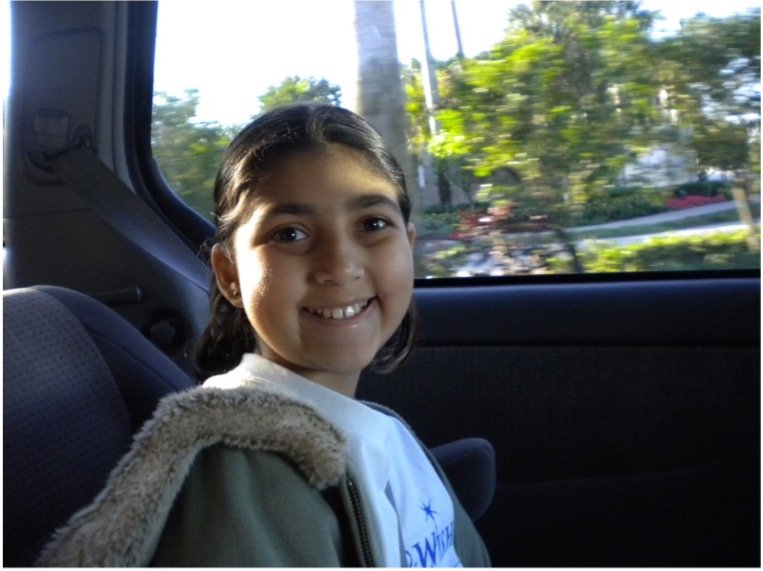
This was my third time having intense moon face in childhood. I was 10 here. This was the worst for me. I was growing into my body, but the body I was growing into felt foreign. This was the age that my thoughts began to center about how I looked and how others viewed my appearance. I felt like the person I was inside and the person I saw in the mirror were two different people, constantly disconnected. I grew into teen hood and young adulthood with the same thoughts always seeping in. The constant weight fluctuations as a child constantly made me second guess how I felt about myself. No matter what weight I was at, when I looked in the mirror, the little girl with chubby cheeks was always the one staring back. This body dysmorphia never let me feel content with my body. I was in a continuous fight with myself, and I was always losing. Over time, and as I matured more, I tried to combat this. It became routine for me to constantly remind myself that the struggles with my body were caused by something out of my control. It wasn’t my fault, and I can’t punish myself every day for something I didn’t do. What I can control is how I speak to myself when I look at my body. My relationship with my body isn’t perfect and I don’t think it ever will be. I now just view those photos as different versions of myself, versions that were strong and resilient to the pain that IBD can cause. I need to constantly remind myself that my body isn’t my worst enemy and to control my thoughts when I begin to believe that it is. It’s easy to hate on our bodies and hate what IBD has done to them, believe me, I do it all the time. But I must remember that even though my body is not perfect, it’s the vessel that keeps me alive, doing the best it can, and that’s ok with me.

This article is sponsored by Trellus

Trellus envisions a world where every person with a chronic condition has hope and thrives. Their mission is to elevate the quality and delivery of expert-driven personalized care for people with chronic conditions by fostering resilience, cultivating learning, and connecting all partners in care.
Learn more about Trellus here


Working Full Time with IBD

By Carina Diaz (Texas, U.S.A.)

All I remember wanting when I was really sick was to have my own apartment and a full time job like my friends. I’ve been working a 9 to 5 job for almost three years now and have fully experienced the pros and cons. What I didn’t realize until I started was that managing my IBD is a job within itself. Balancing the two can be very exhausting.

The accessibility that remote work provides has really changed the game.

Deciding to disclose that you have IBD to your employer is a difficult and personal choice. I have been very lucky that at my current and previous jobs, I’ve felt comfortable talking about my illness. Not only that, but COVID-19 has made the world embrace remote work, and as someone who deals with fatigue regularly, this has helped me a ton. I don’t have the energy to get up every day, make breakfast, shower, and commute to work. The accessibility that remote work provides has really changed the game.

It can be tricky in an interview to gauge work culture, but I’ve found that it’s very important to ask as many questions as possible on it. Below is a list of some examples:

  1. How would you describe the work environment?

  2. What is your management style?

  3. Which company value do you more relate to and why?

  4. What are the qualities of the top performing employees?

  5. What does work/life balance look like at your company?

These questions can help give a clearer picture on what the company is expecting from their employees. Do they micromanage? Or do they just care that you get the job done? Do they work more than 40 hours a week? Are the top performers workaholics? What are the benefits and perks of working there? The answers will reveal a lot.

It can be tricky in an interview to gauge work culture, but I’ve found that it’s very important to ask as many questions as possible on it.

Another perk of my current role is having unlimited PTO. If I feel like I need a day off to rest, I’m able to do so. It’s not just a nice vacation perk. Organizations like Chronically Capable are great resources to find jobs that have flexibility. It helps to start your job search with a list of “must have” qualities that you’re not willing to compromise on. Tiktok has also been a really good resource on building a resume, interview tips, and how to plan a job search.

A “must have” on my list is being open about having IBD in the interview process to gauge how it’ll be received. I mention having monthly doctor appointments, but that this wouldn’t get in the way of finishing tasks. Most companies I’ve interviewed with have said that’s no problem, and I’ve been very lucky in that regard, but not every organization will be that way. 

There are laws in place to prohibit discrimination, but unfortunately not every employer is willing to be flexible and offer appropriate accommodations. I feel very lucky to have positive experiences when joining the work force so there are good employers out there! For me, being open about my illness is a way of advocating for myself and ensuring that my needs are met.

Dealing with Moon Face

By Natasha Kacharia (U.S.A.)

I never thought about myself as a superficial person. But if someone asked me about the worst part of living with ulcerative colitis, it would not be the hemorrhaging of blood, the vomit, the diarrhea, the stomach cramps, the sleepless nights, loss of muscle, or the joint pain.

It would be moonface. It would be the fat deposited on my cheeks and neck making my face appear round like the moon.

Whenever I enter a flare, my doctor prescribes me oral steroids called prednisone. Desperate for relief, I always agree and consume the prednisone without protest. A couple of the many unfortunate side effects of prednisone is weight gain and moonface. Thus, whenever I start on prednisone, I also make an effort to watch what I eat to help minimize the side effects. But it never works. And, everytime, in addition to having my clothes not fitting, my face abnormally expands, making my cheeks puffy and my pointy chin a double chin. I get moonface.

I learned to handle weight gain. I wear my classic XL Stanford Christmas sweatshirt in the winter and my oversized CS t-shirts in the summer. No, I never liked how my body looked on prednisone, but I could hide it. But how do I handle moonface? I cannot exactly cover up my face, even with a mask.

And, what my friends and family fail to understand is that it is one thing to hate your body - everyone hates their body to some extent - but to hate your face is an entirely different beast.

There is no escaping your face. Your face is what you stare at when you brush your teeth or you enter a zoom meeting. It is the first part of you that a person looks at when they meet you. Your face makes your first impression.

And moonface is not the first impression I want to make. I tell people that I used to be a nationally ranked roller skater, and they don't seem to believe me. I tell people about my past romances, and they don’t seem to believe me. To them, I look like a slightly overweight girl who fell victim to freshman fifteen, even the people who know about my ulcerative colitis do not entirely believe that my face is simply a side effect of a medication. It is not their fault. I have a hard time believing myself too. Flare me and remission me always feel like an entirely different person. A different entity.

Because the girl with moonface spends an hour long zoom meeting distracted by how puffy her cheeks are, she wears a mask everywhere - partially because she is high risk but mostly to cover up her face. She misses random guys flirting with her. She misses believing someone when they call her pretty. She misses how the world treats her because let’s face it; the world is easier to the pretty and skinny.

So, no, I never really thought about myself as superficial, but it is easier to dig deeper than the skin when you like the surface.

Featured photo by Erin Profaci from Pexels.

My Leadership Journey With IBD: Just Getting Started

By Dr. Fasika Teferra (Ethiopia)

I realized I needed to bring about change, as I was also affected by it. I couldn’t standby anymore and dared to be different, a trailblazer.

The day I decided to take the big step and start something that was unknown set me up for all the things I would do in the next few years. In school and at home, I was always taught to follow a certain person or structure. That was the definition of success for most people I know, including myself. There was no room for creativity, no room for exploration. We don’t choose our universities or our majors unless we pay to go to a private college. It was the same in healthcare. Although I was equipped with the knowledge to comprehend what my doctor was saying to me, I didn’t ask any questions. I was focused on fitting in the structure that was put before me instead of doing something different. I remember the day I found out there were other Ethiopians living with IBD. I was so happy to know I was not alone, but at the same time felt more alone. I wondered why there was no one talking about this condition, educating the community, and debunking myths. As I looked deeper into the lack of community, I started to see the gaps in the system. There was no community program to teach more about the condition, and medications seemed to be scarce. I saw that lack of knowledge is not just among the general population, but also among doctors and policymakers. I realized I needed to bring about change, as I was also affected by it. I couldn’t standby anymore and dared to be different, a trailblazer.

Like I said, I was never a risk-taker. After my diagnosis, I lived in fear for the first few years. Looking back, I can almost say I was not living at all. The season where I started to think about what I can do to solve problems is where my personal growth began. I never learned it in school, and I had no one to look up to at the time. As time went by, I realized I started to see potential opportunities where others might see unsolvable problems. When I am faced with a problem, I know I could protest, take it to the media, demand change, or I could lead by example and show how it can be done differently.

My leadership journey began a year before I founded the nonprofit Crohn’s & Colitis Ethiopia. My motto had always been to think big, start small, and act now. I used the limited resources I had to create something amazing. I had been so appreciative of the limited resources available because it helped me become innovative and fixed on finding solutions. I will be sharing what my big ideas are, how small I started, and what actions I took to help me advance my mission. I am doing this in the hopes of helping someone else reading this wondering if they can dare to not just think, but start something as bold as I did.

Traveling with your IBD Medications

By Varada Srivastava (India)

Recently I travelled with my biologics for the first time internationally. The process of preparing for it, going through immigration, security, and ensuring the medication temperature was maintained was a long and confusing procedure. Through this article, I hope to help anyone planning to travel in the near future.

Since most countries started opening their borders recently after COVID-19 one of the main concerns of anyone with IBD is travelling with medication. Especially since many laws have been changed. I travelled from India to Japan at the beginning of July 2022 and this was my experience.

1. Research the medical laws of the country you’re visiting.

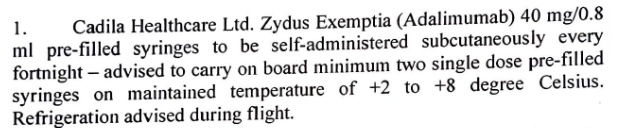
Japan has strict laws when it comes to opioids. My pain medication contains Tramadol so I asked my doctor to mention the exact amount of pills I’d be carrying there. This is an image of my prescription which mentions the manufacturer, dosage, the number of injections I’m carrying and it also mentions that it is a self-injection. In some countries, it is important to mention that Humira/biosimilars of Humira are supposed to be self-injected.

2. Prepare prescription documents before the flight.

It's essential to make sure all documentation regarding your disease and medications is available. The more detailed it is, the easier security checks will be.

3. Talk to the Airlines.

Most airlines allow injections to be carried on board. However, it is best to inform them beforehand. Also, let them know whether you’ll need to use the injection on the flight. My flight was booked with ANA airlines and they were very understanding about the situation.

4. Storage conditions.

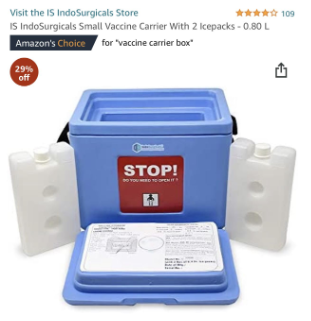
Humira and other biosimilars need a maintained temperature of 2-8 degrees celsius. Make sure to carry them in an ice box or vaccine carrier. Most airlines don't keep these medications in their refrigerator due to hygiene reasons but you can ask the flight attendants for ice while on the plane.

5. Security checks.

Many people travel with injections whether it's biologics or insulin. Therefore the security is well versed in this. Check whether your medication can pass through X-ray scanners beforehand and keep the prescription handy.

It's overwhelming and scary to travel when you have IBD, hopefully following these steps might make your next travel a little bit easier.

Featured photo by Oleksandr Pidvalnyi from Pexels.

Embracing the term "Disability"

By Natasha Kacharia (U.S.A.)

Last year, I was applying for an internship. I do not remember what internship but that is not the point. This internship, like most, had a voluntary self-identification of disability section that goes on to list what a disability may include: blindness, deafness, cancer, etc. However, this list was different because it included gastrointestinal disorders.

I know. I know. The lists of disabilities are usually prefaced with the phrase: disabilities may include but are not limited too. Yet, the fact that this internship specifically bulleted my condition put an unexplainable smile on my face.

You see, the voluntary self-identification of disability section always stressed me out. I never knew what box to check: yes, no, or I do not wish to disclose.

Screensot from the Voluntary Self-Identification of Disability form

The fortunate or unfortunate reality of living with a chronic illness is that people do not see the constant stomach cramps, the hemorrhaging of blood, the fatigue, the insomnia, the arthritis, or the nausea, and they definitely do not see the psychological effects of the disease. No, when people look at me, they see a healthy, possibly a little unfit, college student.

Thus, when the disability section inevitably comes on the application, I always wonder what box to check: yes, no, or I do not wish to disclose.

The same questions always run through my head: Does my condition qualify as a disability? Am I disabled?

Do you understand my indecisiveness now? When people think disability, I am not the person they imagine.

However, with a singular phrase – gastrointestinal disorders – the internship made me feel seen. Finally, I was free from my indecisiveness and the weights of my secret. For a singular moment, my invisible illness did not feel so invisible anymore.

Yet, I still had trouble identifying as disabled. Was I only disabled when I was in a flare, or can I always check the disability box? Do employers only ask for disability disclosure to engage in affirmative action for individuals with disabilities? If so, then do I have the right to check the disabled box, as having an invisible illness, I have not been actively discriminated on due to it. Meeting other people within the chronic illness community simply made me more confused; some readily embraced the term disability, while others sheered away from the term chronically ill. I met people whose illnesses were far more severe than mine and did not self-identify the term disabled, so what gave me the right? Was I being overdramatic? The fact that the people surrounded me did not recognize my struggles did not give me the space to embrace my own struggles.

But I am done. I am done with self-doubt. I may have an invisible illness, but I am done being invisible. I am ready to dance in the open, so for my next application, I am going to check yes. Yes, I have a disability.

Featured photo by Tara Winstead from Pexels.

Imposter Syndrome Being Healthy

By Isabela Hernandez (Florida, U.S.A.)

I was diagnosed with IBD when I was three, specifically with ulcerative colitis. When I look back at my life, there is not a time where I do not remember constantly living and dealing with my chronic illness. When I think about my childhood, the first thing I think of is being sick. Living with illness means we deal with an extra set of emotions and priorities that a lot of the world does not have to. Medicines, appointments, refills, procedures, and pain immediately flood my brain the minute I wake up in the morning. It is something we all deal with and try to integrate as best we can into our daily life.

Medicines, appointments, refills, procedures, and pain immediately flood my brain the minute I wake up in the morning.

As I grew up, in a strange and twisted way, I started to feel comfort being sick. Hospitals felt like home. Walking into doctor’s office felt more normal to me than walking into school. Over time, I felt this intense solace within being sick and for some reason, started to feel uncomfortable being healthy. Being sick was MY normal, so what was being healthy? Around the time I was 11 or 12, I was put on an experimental treatment that allowed me to stay in “remission” until I was 19. I put remission in quotes because it does not mean the disease is done and over. We still deal with medications, appointment, mild procedures, and mild symptoms. In these seven years where my disease had toned down, every day I woke up with this feeling that being somewhat healthy was wrong. I knew how to be sick. I was good at it. But, I had no idea how to deal with anything being in remission. I had a serious case of imposter syndrome these years and felt this extreme anxiety that in any moment, I was going to go back into my comfort zone of flaring, something I had endured for so long that it felt normal.

It is not fair that we spend so much more time in sickness than in health, that now sickness is our normal.

Not a lot of people mention that although flaring IS the worst part of having IBD, being in remission doesn’t mean life is instantly easy. It comes with a whole new set of fears and anxieties about how to go back to “normal” life. What is normal life for us when in remission? It is very confusing and something I still try to figure out on the daily. It is not fair that we spend so much more time in sickness than in health, that now sickness is our normal. It is our life. But what I have come to realize is that my sickness is NOT who I am. It has definitely shaped many parts of my personality and how I have become who I am now, but it is not the biggest and most defining part of who I am. I used to think that my IBD was who I am and that is it. It is definitely not, and we are just the people that our sickness has shaped us to be. I know that every day is a struggle, in remission or in a flare. I recognize that and actively try to remind myself that even though I feel comfort being sick, it is NOT normal. It just makes us all stronger.


 This article is sponsored by Trellus

Trellus envisions a world where every person with a chronic condition has hope and thrives. Their mission is to elevate the quality and delivery of expert-driven personalized care for people with chronic conditions by fostering resilience, cultivating learning, and connecting all partners in care.

Learn more about Trellus here


Digestive Disease Week 2022 and the Need for More Patient Voices

By Mara Shapiro (U.S.A.)

I had the privilege of attending Digestive Disease Week 2022 in person in San Diego at the end of May. I attended the conference as a member of the press for MD / alert (my employer). In addition to attending live sessions, writing articles, and interviewing doctors to create content as a medical journalist for my physician-oriented publication, I was also attending the conference through the lens of an IBD patient advocate.

This was my first time attending a medical conference, and it was a truly eye-opening experience not only professionally but personally. Getting to witness the excitement and gravitas of a major scientific gathering of top gastroenterologists from around the world was thrilling. Meeting fellow CCYAN patient advocates and CCYAN supporters was uplifting and rewarding. It is challenging to find enough adjectives for “excitement” as I describe all the highlights. I was very much like a “kid in a candy store” getting to be a part of the DDW experience.

However, I would be amiss to not mention the imbalance I felt as an IBD patient at a conference focusing so heavily on IBD research and scientific innovation. I, an IBD patient and the subject of most of these sessions and presented research, felt like my experiences were not being accurately represented. I felt lost in a slog of late breaking data and clinical trial endpoints. Where were the patient voices? How come patient narratives were not being presented? Why, in a sea of thousands of IBDologists (as they call themselves on #GITwitter), did I feel so alone?

I have to believe that there is a way to merge scientific discovery and research with patient advocacy, combine the clinician voice with the patient voice, and reach a collaborative understanding of what it means to live with IBD. So often in medicine, the patient’s experience gets forgotten or overshadowed by clinical research and treatment algorithms. Therefore, when patients do get a chance to share their story, it is often given a secondary stage or lesser attention.

What could happen if patient stories were used to aid in the contextualization of all medical research presented at these conferences?

I think we could create a discourse that is not just productive to clinicians and scientists, but that resonates with patients, the very focus and backbone of all this research. We can improve this disconnect. Patients should be able to recognize themselves in the research being presented about their disease.


Advice for clinicians and patients

For clinicians:

  • Please continue to support patient advocacy efforts such as CCYAN.

  • Continue to listen to and support your patients and their lived experiences of chronic illness.

  • Consider implementing more patient-reported outcomes and qualitative measures into your research.

  • Engage and network with patient advocates at conferences.

For fellow patients:

  • Continue sharing your story.

  • Remember that there is room for you at these conferences, and don’t be afraid to find your voice in these settings.

Postpartum Anxiety & IBD

By Dr. Fasika Teferra (Ethiopia)

Did you know that women with IBD are at a higher risk of developing new-onset mental health disorders in the perinatal period? [1] Not every pregnancy, birth, and postpartum experience is all happy and bright. One of the most neglected topics that should take the spotlight during pregnancy follow-up is postpartum depression and anxiety.

There is a whole spectrum of mental illness and mental health, and that holds true for postpartum depression and anxiety. I do not attribute my late recognition of postpartum anxiety to a lack of knowledge because I am a medical doctor, but rather, it is due to ignorance. I didn’t think that having some of the symptoms I had was that big of a deal. I was told as a first-time mom, I would worry about everything, but I didn’t stop and think to what extent that was normal. Thankfully, I had a very subtle experience and found some things I could do to catch myself when I am worrying too much. Meditation and breathing techniques had been quite successful.

Although I was able to finally recognize it, it was already months after my delivery. As a first time mom, I read through all the blogs I could find and all the youtube videos I could discover. They taught me about how to pack my hospital bags, what kinds of cloths to wear and things to bring for your baby to list a few. But there were none that I came across that prepared me for what would happen after we leave the hospital and start our lives with our newest family member. It never even crossed my mind to watch out for something like this or even discuss it with my husband. It just isn’t being talked about enough yet.

There are so many mothers who struggled with this behind closed doors and some who have passed away because of this. I want to do my part by raising awareness to this critical issue of motherhood. There is still more that needs to be done. It is not shameful to be experiencing it, and it is certainly okay to ask for help!


1.     Vigod SN, Kurdyak P, Brown HK, Nguyen GC, Targownik L, Seow C, Benchimol EI. A5 FIRST-ONSET PSYCHIATRIC DISORDERS IN PREGNANT AND POST-PARTUM WOMEN WITH INFLAMMATORY BOWEL DISEASE IN ONTARIO, CANADA: A POPULATION-BASED STUDY. Journal of the Canadian Association of Gastroenterology. 2018 Feb;1(suppl_2):7-8.

My Journey as an International Student

By Maalvika Bhuvansunder

Living on your own in a new and beautiful country sounds like one of the best things that could happen. For individuals with a lifelong debilitating illness like IBD, it can be extremely scary to live alone. The independence could come at a cost as there is a lot that could go wrong, but there is also so much that can go right!

My journey began with a lot of uncertainty, all these questions: Should I even be doing this? Would I survive without my parents there? What do I do if I have a flare? How would I manage cooking when in flare, and so many more. I had never even slept over at a friend's place since the diagnosis, as my home was my haven, let alone move to a completely different country! This was when my parents stepped in and explained to me, this was my dream to go to the UK and to pursue it no matter what. To make things easier, my dad travelled with me to the UK and helped me settle in. 

One of my biggest fears going in was, how would I make friends with this condition, would I even have the energy to make new friends? I decided to keep my fears aside and to be candid about my condition. It was not worth it for me to make friends who would not understand my situation, and I’d rather not have such friends. Being candid truly paid off in the best way possible! The friends I made there were understanding of my condition and acknowledged that with this condition, there are certain limits. They always found a Crohn's friendly alternative for us to do and never made me feel inferior. I remember having one of the worst flares I had experienced there and being worried about how was I going to tackle this. Let me tell you all that it was the moment after the flare that gave me the confidence that I GOT THIS! I survived a flare alone for the first time, and although it seems weird that something like this made me so happy, that’s what I was: happy. My friends who were in the UK constantly checked up on me and so did my new ones. It gave a sense of relief that although, to a large extent, I have to deal with this alone, I had people who I could turn to at such times.

Just when I thought I got this and I can handle everything, the biggest crisis we all faced hit, the PANDEMIC. I had plans to go back home, but the flights were suspended. I was in shortage of medicines and every supermarket was in shortage of food. I genuinely did not know how I was going to survive this. Calling home and crying about it my mom gave me the best advice, either I can cry at this situation or see how to manage the crisis. I contacted all the nearest clinics and found to my relief that the one closest to me was open. The first thing I did was meet the doctor and stock up on the meds. As for the food, well, Mom to the rescue. Within a day, she couriered all necessary items and made sure I had enough stock to last me for months. Another thing that helped me get through this was my friend. She was studying in another city in the UK, and we decided the best thing to do was to be together during this time. Together, we made sure to make the best of the situation and be each other's support at that time. She was a lifesaver! I do not think I could have survived the pandemic on my own.

IBD had taken a lot away from me, but I am glad I took this step despite all the fear and apprehension. Living in a new country turned out to be the best decision of my life. I got to pursue what I had always wanted to and learned a lot about myself. This experience was needed for me to have the confidence that I can manage things on my own.

There are a few simple steps one can take to make sure our journey in a new country goes smoothly. In collaboration with one of the fellows, we are coming up with a handbook containing useful information for anyone deciding to move to a different place for their studies. Hopefully, you all have the same amazing experience I did!