

NEWS
Confined with Crohn’s
By Simon Stones

Like millions of people around the world, I am doing my bit to control the COVID-19 pandemic, as well as my own health, by staying at home. What seems like torture for many is actually a relief for me – even though I may be getting a bit fed up of being forced to stay in after a few months.
Having followed posts on social media over the last few weeks as more and more countries have imposed ‘lockdown’ measures, I’ve grown increasingly concerned for people’s physical and mental health – having quite literally seen people breakdown and unable to cope after a matter of days cooped up in their homes. For some, they’ve never had to experience being forced to do something they don’t instinctively want to do. For others, it reignites the memories of past traumas when they were forced to stay at home – perhaps during their diagnosis of IBD. But finally, for some, home isn’t the safe place that it is for many of us, and we need to recognise that and try to support those individuals as much as possible.
During these unprecedented times, we’ll experience a whole raft of emotions – fear, anxiety, anger and frustration being right up there at the top. However, being the optimist that I am, I think there’s going to be an awful lot of things which society will learn from this pandemic as a whole – and even more things which we’re going to learn as individuals, which will make us re-evaluate our lives and actions – hopefully for the better.
Nobody likes being told that they need to do something – it goes against our instinctive behaviour to be social and independent. However, it’s for our own good. As somebody taking biological immunosuppressive treatment to manage my Crohn’s disease and arthritis, I know that I am at an increased risk of complications if I was to contract the coronavirus. If I have no contact with people, then I’m dramatically decreasing my risk of contracting the virus – as well as limiting my need to rely on healthcare services which are going to be stretched beyond limit in the coming weeks and months. To be fair, being at home has not bothered me one bit – I’m quite enjoying it! I have had PLENTY of opportunities to be used to this though. Throughout my childhood, I was forced to spend more time at home because of ill health, and in recent years, I’ve had no choice but to stay at home more to look after my mum. These experiences have fortunately taught me a few lessons for life. Aside from feeling happy and safe at home, my experiences have taught me to be comfortable with my own company – something which many people struggle with. They’ve also taught me to appreciate what really matters in life – your health and your loved ones, which more and more people are slowly starting to appreciate.
While I’m coping really well, I appreciate and empathise with others who are struggling – which is nothing to be ashamed of. It’s at times like this when everyone is reminded that we’ve got to look out for each other. My door (metaphorical of course at the moment!) is always open, for people who want to chat, rant, scream, cry or sing – so please reach out to me if you just need to talk. I also thought this could be an opportunity for me to share some things which work for me while staying at home. They may not work for you, but it may be worth giving them a try!
Routine or no routine – that is the question
Some people love routine and structure to their days; others much prefer randomness! There is no right or wrong answer – you’ve just got to find what works for you. Despite being particular on a lot of things in life, I’m one of those who I guess ‘sits on the fence’ with this one. My working week tends to follow some kind of pattern, though I’ve learned to keep things fairly flexible, to fit around me. Some days, I really don’t feel like doing much, so I’ll take it easy. Other days, I’m on it from the get-go, and will fit in tons of things. The most important thing to remember is find what works for you!
Finding your activity regime
Keeping active has never been more important! Here in the UK, people are allowed to go outdoors for one form of physical activity per day. I’ve decided to not go beyond my house, for obvious reasons, and so I’ve dedicated time every single morning to finally get back into yoga – which I’m absolutely loving after nearly three weeks of practice now. It has taken the current situation to force me into practicing something until it becomes a habit – and I certainly feel better for it now. Yoga is one of those forms of activity which is great for those of us with joint problems, since you can do as much or as little as you want! I’ve been using the Down Dog app, which has a guided instructor taking you through things. Not only does my body feel better for doing it, but my mind is also feeling clearer. It has forced me to slow down, focus on myself, and ‘be’ in the present. Yoga may not be your thing, so find something that is – at least give something a try, and if it’s not for you, move on to the next!
A dedicated space to work
Having a dedicated space to work is really important. I have my computer set up on a desk in my bedroom, with the correct set up for my posture. There’s also plenty of space for the textbooks, papers and other materials to be alongside. It helps for you to have somewhere to go where you can focus solely on what you’re trying to do, which also works when you want to leave your work alone and think about something totally different!
That being said, variety is also important, especially when you’re sat in the same spot, looking at the same screen (and the same wall behind it for me) more or less every day. So, I’ve agreed with myself to use my desk as the place where I’ll write my PhD thesis. For everything else, such as dealing with other emails, charity work, and other computer tasks, I’ll use my laptop at different places in the house. Sometimes it’s on the bed, or at the dining table, or sat on the sofa, or even in the garden! These aren’t ideal places to be, especially for your posture, but it’s sometimes nice to have a change of scenery.
Keep yourself fed and hydrated
While some people may find that they eat and eat and eat while they’re at home all the time, I’m actually the exact opposite! Especially when I am working, I often slip into the habit of doing ‘just a bit more’… and before I know it, it’s 4pm and I’ve still not had any lunch – which is no good! So, I’m really disciplined with myself now and ensure that I always set time, away from the computer, to have breakfast, lunch and dinner. Making sure you keep yourself hydrated is also really important – which may mean cutting back on the coffees! I’ve switched everything to decaf now so I can enjoy a cuppa without making myself more dehydrated. I’ve also been tracking my fluid intake on my Fitbit app (as well as calorie intake) which does force you to keep up with what you should take each day.
Take breaks, and don’t feel guilty
This is a big one! You may feel under pressure to be working every hour while working at home – but that really doesn’t work. I tend to break my day up with breaks here and there – sometimes it may just be going to the kitchen to get something to eat or drink, but sometimes it could be 30 minutes or an hour spent watching some TV, or reading, or listening to some music. Whatever it is, make sure you do it! You’ll find you work so much better during short, focused periods of time, when your mind can be on the task you’re working on.
Stay connected with others, as much or as little as you want
It’s really important to stay connected with loved ones, acquaintances and colleagues, especially at times like this. I often speak with family members and mum’s friends several times a week over the phone, just like I chat to our neighbour over the fence when we’re both near the side door. Friends tend to message and video call, which is always nice. We have to look out for each other. It’s also fine to sometimes switch off from the outside – we need that too. I sometimes ignore phone calls during the day, especially when I’m busy working. Keeping connected is important, but I also have to work at the same time, so multiple interruptions each day for an hour phone call at a time isn’t always helpful! Don’t feel guilty – I usually drop them a message to say I’ll call them later, unless something is wrong!
Making the best of a bad situation
Nobody would wish for what’s happening to the world right now – but sadly, a lot of it is out of our control. The control we have is to follow guidance, stay at home, limit our contact with others, and ensure we act responsibly when it comes to shopping and using healthcare services. What we can control is our thoughts and actions. It’s not easy by any means, but it is possible. How can you make the best of a bad situation? What can you now do that you’ve been putting off for ages? How can you use this time wisely to focus on yourself and your loved ones? These are all things that are in our control. Whether you take some time to slow down, or pick up a new hobby, or even plan for the things you’re going to do when the world comes out of hibernation – they’re all things that can help to pass the time. Never let the things you can’t do stop you from doing the things you can do!
Please reach out to local/national groups and associations for help and support, even if it is just somebody to talk to. People are ready and waiting to offer a listening ear. Don’t forget to check for up-to-date information from your national Government or public health authority during the COVID-19 pandemic. Stay safe, stay healthy, and stay positive!

Living Beyond the Limits of IBD
By Grady Stewart

“Tired of feeling dizzy from my situation, I realized I had a choice. I could let anger drive my college experience, or I could appreciate the things I was capable of doing. “
I lived in a dorm building named South Hall when I was diagnosed with ulcerative colitis. It was four floors of ambitious and energetic college freshman. At night, I could hear a wavy hum of untapped potential buzzing in the air. The beginning of college, or the beginning of anything, really, is always incredibly alive with possibility. I was surrounded by other students who were tired of waiting. Together, we all marched headlong in any adventure that awaited us. We were adults at last. It was our time.
The community atmosphere and energy of college is rarely found anywhere else. Specifically, the college dorm is the world’s most diverse ecosystem. You throw a few hundred students who come from different places and who have different backgrounds into one building. You tell them to coexist, and somehow, it’s self sustaining.
While college is a time of new friendships and experiences, it’s also easy to blend into the bustling background of daily college life. Adulthood comes with stacks of new responsibilities. It’s cutting the ropes that have anchored your life, and sailing off into the unknown. Independence means making difficult and often ambiguous decisions on your own. Living with a chronic illness, such as Crohn’s disease or ulcerative colitis, complicates young adulthood even further.
Many of my classmates were seemingly able to attend class, complete household chores, and party every weekend with ease. For me, however, it was a challenge. It was difficult to look around at the thousands of students surrounding me and see them achieving things that felt impossible to me. It’s frustrating to have persistent anxiety about where the nearest bathroom is, when for others it’s an afterthought. Simply put, my first taste of freedom was bittersweet. Like Prednisone, the aftertaste lingered and was hard to swallow.
It’s isolating to feel weak and abnormal. Moreover, physically living in a dorm room can be lonely. Other students were able to roam the campus without any concern, but often I confined myself to my dorm due to pain. I felt regret at not being able to fully experience certain aspects of college life. Chronic illness is a spiral that envelops your life. It spun around me until everything else in life was blurry. Tired of feeling dizzy from my situation, I realized I had a choice. I could let anger drive my college experience, or I could appreciate the things I was capable of doing.
There’s no clear solution to unraveling the sticky web of chronic illness. Everyone has a different relationship to their body and their health. Everyone has a different path to college, their career, or adult life in general. Today, I’ve graduated from college and survived numerous triumphs and setbacks. I have a full time job, and get excited about buying snacks in bulk from Costco. Clearly, I’m a real adult. One of the keys to embracing life with ulcerative colitis or Crohn’s is embracing change.
It’s easier written, or said, than done. However, I believe that illness is not an impenetrable barrier. It’s an obstacle, a heavy boulder, that patients must carry. Still, everyday that I live with ulcerative colitis, I learn something new about myself. As a result, it’s become easier to adapt to life with illness. I know my strengths and my weaknesses, and I have gotten stronger. My experiences have made it easier to move, while carrying the weight of my diagnosis. Transitions, like from college to employment, are not impossible for me, instead they provide an opportunity for me to overcome my illness. After all, I have IBD, but I am not my disease. In the end, I know the boulder of IBD will erode into a tiny pebble. Until then, I’ll keep living beyond my limitations.
My IBD Life: Living with Incontinence
By Nikhil Jayswal

Hello everyone!
Last month, I wrote about the issues I face travelling as someone with an ostomy. I pointed out that the lack of easy access to clean and accessible public sanitation facilities has been a major source of problems for me. It was still so when I did not have an ostomy because before having an ostomy, I was incontinent and relied heavily on adult diapers. The experience of being incontinent for a year and a half, greatly affected my outlook on life and my inner self. Incontinence is a very emotional topic for me, and this month I want to share those emotions with you.
To clarify things, when I say incontinence, I mean faecal continence – the inability to hold stools. It is a common symptom experienced by many people suffering from IBD, and it is more pronounced if the rectal and anal regions of the GI tract are affected by IBD. There is a sense of “urgency” when it comes to going to the toilet and once in a while, our bodies betray us and “accidents” happen.
I suffered from total incontinence, which means that I had no control over my bowels and I had A LOT of these accidents/mishaps. As a consequence, diapers became an integral part of my wardrobe. However, adult diapers are very, very uncomfortable - they never fit nicely, they leak from the sides, and once you’ve pooped in them, you can’t sit until you clean up and replace the diaper. Eventually, I was able to travel and work wearing diapers, but being in a public place with a diaper was still scary. There would be no place to change them in a safe, private and hygienic manner.
The first time I soiled my clothes and the sheets, I cried straight for an hour. My mother helped me to clean everything and tried to console me, but I kept on sobbing. I went to meet my GI a few days later and told him that I was having these incidents. In response, he casually told me to use diapers. I felt like I was making a big deal out of a tiny thing. I went back home crying silently. I began wearing diapers since that day and I kept trying to acclimatize myself to the experience of wearing a diaper 24/7. Adult diapers in my experience, really aren’t designed for movement. I had to learn how to adjust them so I could sit properly. I had to use some hacks to ensure that if my poop was watery, it wouldn’t leak off the sides of the diaper. With every passing month, I was becoming more and more proficient at living, travelling and working with the “comfort” of a diaper.
On the other hand, my disease was not responding to any treatment and kept escalating in severity. That kept escalating the frequency of my visits to the toilet and also worsened my incontinence. Things quickly started going downhill after I failed the biologic Adalimumab, a.k.a Humira. Soon, I was admitted to the hospital because of my worsening condition. My CDAI (Crohn’s Disease Activity Index) was over 700 (a score above 350 is considered an indication of severe disease activity). My toilet visits were very frequent, almost every hour and I had become completely incontinent. I can still remember the helplessness I felt when poop began to run involuntarily down my thighs, while I was cleaning myself up after a visit to the toilet. I was horrified because I had zero control over it. I could not hold it for a fraction of a second. I remember myself crying and letting poop flow down my legs until it had stopped, and then going back to my hospital bed and then crying again. After a few more such incidents, I was ordered to not have any food and also restrict myself to the bed. I was bed-ridden. This was the absolute lowest point of my IBD journey.
The first time I saw someone bed-ridden in the hospital, I made a promise to myself. I promised to always find the strength to go to the toilet, no matter how sick I would be. I promised never to let myself get bed-ridden. Little did I know that someday, I wouldn’t be able to keep that promise. When I had figured out how to travel and work efficiently wearing diapers, I had acquired a certain sense of pride. I thought I would always be able to adapt to anything. I used to feel independent and strong. All that pride, that strength, came crashing down when I was bed-ridden.
The day I was ordered to stay on the bed, my doctor gave me an Infliximab a.k.a Remicade infusion, which luckily worked! After 4 days of the infusion, I had firm stools. I was bed-ridden for those 4 days. Remicade helped me get my dignity, my strength back. It did not resolve my incontinence completely, but I regained a tiny bit of control and was able to work and live with the assistance of diapers again. There was one particular very nasty accident at work, where I soiled my pants, and somehow managed to escape back home without anyone noticing what had happened to me. Apart from that though, I was a pro with diapers. In my next hospital admission, I even managed to sneak out of the hospital and go outside on the road to get food and get a look at the world I couldn’t see from my hospital bed. Couldn’t have done that without diapers.
Incontinence, or having no control over your excretory processes, is something that goes against the very idea of being young. We generally associate it with babies and the elderly. Poo becomes taboo as soon as we are potty-trained. What happens in the toilet stays in the toilet. Bed-wetting becomes a matter of shame. Incontinence somehow made me feel inferior to my healthy friends. Being bed-ridden was an even more indignifying experience for me than being incontinent. Being bed-ridden meant I was no longer able to “stand on my feet”. Remicade and diapers helped me get back my sense of freedom. That freedom, even if it was partial, was a big boost to my morale. I felt less sick. I felt I was still a young man.
My incontinence parted with me only after my ileostomy surgery. We lived together for a year and a half and it took away some things from me, but also taught me many things. The process of getting comfortable with incontinence was a tough one, but I think once I learnt how to handle incontinence, I learnt how to handle my condition without letting it affect me emotionally.
So let us get comfortable with our poop, our urine, and our bodies. Let us talk about incontinence and being bed-ridden so that these experiences do not have the power to affect our mental and emotional health. And if anyone out there reading this is struggling to get out of their homes, because of unpredictable diarrhoea or lack of a toilet, please give diapers a chance. They are not a perfect solution and can be irritating sometimes, but with a little bit of tweaking and a little bit of planning, they can help you experience the beautiful world outside of your home.
I’ll leave you with some words from another one of my favourite songs to listen to when I’m feeling down – “Not Afraid” by Eminem.
I'm not afraid, to take a stand
Everybody, come take my hand
We'll walk this road together, through the storm
Whatever weather, cold or warm
Just letting you know that you're not alone
Holla if you feel like you've been down the same road
Thank you for listening to me! Have a good day. :)
My Therapy Journey

“Making mental health a priority in the puzzle of figuring out an IBD or any chronic illness diagnosis is vital to providing holistic health care to patients. ”
Having a chronic illness is so hard on the body. The constant pain or fear of pain can consume your life. For me, when I go to the gastro doctor the symptoms that have meant I am doing well are: are my bowel movements regular, can I keep food down and does my stomach feel okay. Through this journey it always felt like a piece of the puzzle was missing. When I was first diagnosed, I was always feeling sad, misunderstood and angsty. When I was going through my first flare ups I noticed I would become more sad and lonely than the usual sad and lonely. Dealing with a chronic illness and body pain is an isolating experience already and on top of it all processing the mental turmoil of diagnosis and life can feel unbearable.
I first went to therapy when I was 13, three years after my Crohn’s diagnosis. Therapy can be a very overwhelming experience. It is expensive and insurance companies so often make it an even harder process to navigate. The healthcare system in the United States of America is blatantly set up to scare you away from being any sicker than you are and resources for finding mental healthcare can be scarce, especially if you do not live in a big city. Not to mention the societal disapproval of seeking help is so strong.
After overcoming all these barriers to mental health care and my family hearing and understanding me after stating my need for mental support, my mother and I started the search for a therapist. We were new to this whole therapy thing and were on our own to figure it all out. We failed to acknowledge the many types of therapy and that the styles and process of therapy vary vastly. I have been through my fair share of therapists to say the least. It was hard enough to see one let alone find a therapist whose practices best uplifted my functionality. Especially living in a smaller town, it was hard to find someone who understood the trauma of being a young person with a chronic illness. Many times therapists would reinforce the adult disbelief of my sadness and hurt, an experience all too common with my other doctors. The trauma that comes with disbelief is off putting enough to avoid help. I did indeed find the right therapist for my young self and was able to stabilize my depression and grow comfort and knowledge from my experiences.
As I grow older, I have much more complexity to my identity. So, it can be more complicated finding a therapist to support me in all my identities. Living in Chicago has helped open a door of resources that include free or sliding scale therapy and group therapy that allows me to work on my depression and anxiety everyday. I have recently found the right process for myself which takes the form of art therapy. It has taught me the ability to harness a practice. Creating something out of fabric is a way in which I am able to culminate anxiety or put importance elsewhere. Physical creation brings clarity to many life situations and it allows me to explore my pain through art.
Reflecting back, I am so thankful to have parents that heard me when I said I needed help and support from a mental health professional. I needed help processing the bodily trauma that happened in such formative years in my life. Without therapy, there would have been no emphasis on my mental health at my GI doctor’s appointments because it was never addressed. I would have greatly benefited from a psychologist on staff at the gastro doctor or at least a referral after being diagnosed. Making mental health a priority in the puzzle of figuring out an IBD or any chronic illness diagnosis is vital to providing holistic health care to patients.
It's Not Just My Stomach
By Rachel Straining

It’s not just my stomach.
It’s the clumps of hair I had to watch fall out in the shower. It’s the fatigue that pulls you under like a crashing wave in the ocean and you have no other choice but to succumb to its current until you’re able to swim to shore. It’s the countless hours spent sitting in waiting rooms and on the cold, scratchy paper of an examination table. It’s being too afraid to eat that one food again, too afraid to go to that one place again, too afraid that it will happen all over again. It’s not just my stomach.
It’s often just as much mental as it is physical. It’s often just as much whole body as it is, in my case, intestinal.
I think that’s the thing that a lot of people don’t know about inflammatory bowel disease (IBD). I think that’s the thing that people without it will never know unless we say it - that it affects a lot more than just our “stomachs.”
It’s something that’s hard for others to understand because an invisible illness inherently brings with it invisible side effects that remain unseen. It’s something that’s hard to talk about because there’s this socially constructed stigma around it. That’s why I think that it’s something that we have to talk about, on our own terms, in whatever way we’re comfortable.
Because the more we do, the more we can break that stigma for ourselves and for anyone else who is silently struggling and feels like they’re alone because no one else is talking about it. The more we make the invisible visible, the more we can gain back that power. The more we bring light to our darkest struggles, the more we can help guide others to see the moon. The more we illuminate the truth, the more we can live it.
Because the thing is, it’s not just our stomachs. And it’s time for people to know that.
And yeah, there are days when I can put on a fire outfit and a hot red lipstick and stand tall in the face of everything that’s tried to tear me down. But that does not, and will never, take away from the reality of what I’ve gone through and what I’m going through.
Even when others can’t see it, it’s not just our stomachs.
It’s the fear of the future and the PTSD of the past. It’s current care and preventative care, needing to keep things under control now while simultaneously trying to make sure things don’t spiral out of control down the line. It’s attempting to gain control over something that can have a mind of its own.
It’s trying to learn and relearn a body and a soul that are constantly changing, trying to learn and relearn how to live a life that’s continuously evolving with an additional layer of unpredictability.
It’s knowing how much this disease affects different aspects of your life, but doing your best every day to not let it define your life - to not let it define you. It’s working to foster a kind of acceptance that on some days it just feels like it does. It’s working to foster a kind of belief that on days it feels like it defines your life, it doesn’t mean it will forever.
Living with IBD brings with it different things for different people. But I think that, at its core, we can all agree that it’s not just our stomachs. We can all agree that everyone is going through something that others may know nothing about. We can all practice a little more empathy and implement a little more kindness because of it.
“The more illuminated the truth, the more we can live ours.”
7 Things You Shouldn’t Say to Someone with IBD
By Samantha Rzany

Photo by cottonbro from Pexels
IBD is a pretty hard thing to deal with. As an invisible illness, people can’t see everything going on inside my body. My body is waging a war against itself and no one can see it when they first look at me. I’ve gotten quite a few reactions when I tell someone about my ulcerative colitis. A lot of people react really well when I tell them, asking about symptoms, what my day-to-day life looks like, what kinds of foods I can and can’t eat, what treatment options there are, etc. But there are always those that suddenly become PhD level experts in digestive diseases as soon as the words IBD are out of my mouth. And these “experts” tell me everything I’m doing wrong. A lot of people just don’t quite know what to say. There’s no right thing to say, there’s nothing that someone can say that is going to cure my IBD. But there are definitely things that people say don’t help. I made a list of the top 7 things you shouldn’t say to someone with IBD.
7
“Oh I know someone who has IBS! They changed what they ate and felt TOTALLY better!”
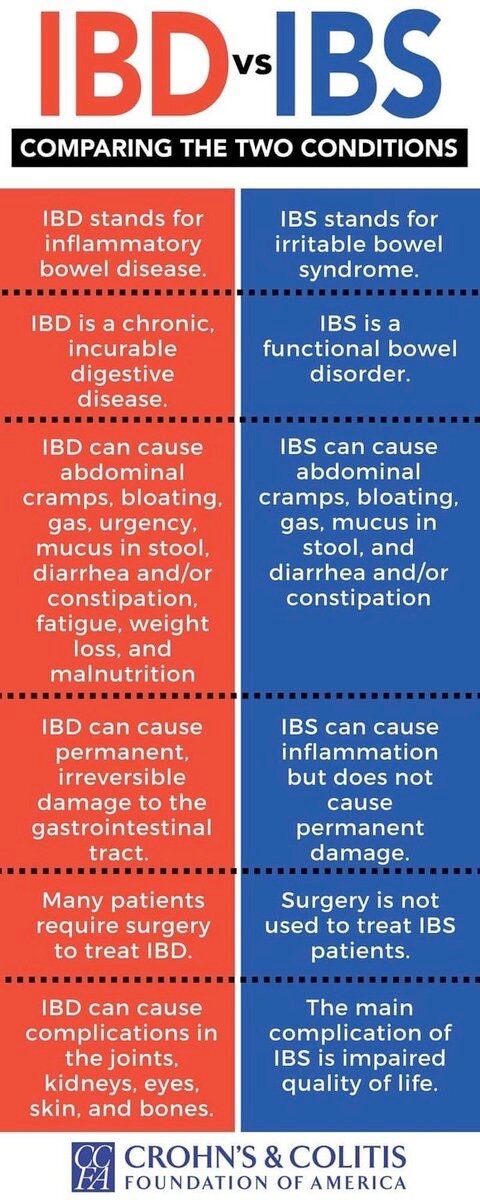
Irritable bowel syndrome (IBS) and inflammatory bowel disease (IBD) seem similar in nature and they definitely have overlapping symptoms. But they are not the same disease. IBS only involves the colon, does not cause ulcers or lesions in the bowel, and is managed with medications and lifestyle changes such as diet and stress reduction. IBD, however, causes ulcers in the tissue of the digestive track. IBS is a syndrome, while IBD is a disease. IBS does not cause any inflammation, rarely causes hospitalization or surgery, the colon appears free of disease or abnormality during an exam, and there is no increased risk for colon cancer. With IBD, there is destructive inflammation that causes permanent harm to the intestines, the colon is visibly diseased during exams, and there is an increased risk for colon cancer. While both definitely impact daily life, IBD cannot be managed by just lifestyle changes. While people that say they know someone with IBS is trying to relate, it’s not the same. I have IBD and even in remission I still have IBS too. They just aren’t comparable conditions. See the infographic from the Crohn’s and Colitis Foundation for America comparing the two, below!
6
“You should stop eating junk food and try a salad! Your stomach probably just needs a vegetable!”
For some reason, my body does not like to digest a lot of healthy foods. Vegetables with hard rinds, salads, some fruits… my body does not digest it. For the most part, what goes in comes out without it being broken down. The pain associated with eating these foods is often unbearable. Even in remission, I have to eat raw vegetables and roughage sparingly. When I was flaring last year, I couldn’t even have little bits of lettuce on a sandwich. I was a frequent flyer of McDonald’s because, for some reason, I could handle junk food better than I could handle healthy foods. It got to the point where I would do anything to eat a salad. I missed apples and lettuce and cucumbers so much. People often told me it must be nice to just eat junk food and not have to worry about eating healthy. But the junk food I could eat didn’t have the nutrients I needed. And I missed veggies so much. Then there were the people that would tell me my IBD was probably just caused by junk food or could be treated by eating healthy. If eating a salad and never having French fries again meant curing my IBD, I’d do it in a heart beat. Unfortunately, that’s not how it works – and shaming me for eating the few things my body could handle just makes it worse.
5
“Can’t you hold it? You JUST went to the bathroom!”
No. I can’t hold it. When I was flaring, I was going to the bathroom within 5 minutes of eating anything. I was in the bathroom at least 20 times a day. And when I had to go, I had to go right at that moment. Middle of a store, an exam in class, driving down the road… whatever it was, I had to stop and run to the bathroom. Life would be a lot easier if I could just hold it. And crazy enough, I do know that I just went. That’s part of the disease, though. Frequent and urgent bathroom visits. Sometimes with no warning. Reminding me that I just went and making me feel bad for having to stop what I’m doing doesn’t make things move faster.
4
“But you were fine yesterday – can’t you just push through it?”
My IBD symptoms change day to day, sometimes even hour to hour. I can commit to plans and have to cancel 5 minutes before. I can look forward to something for weeks, only to feel sick an hour before I’m supposed to go out. And it is the worst. If I can push through it, I do. I made it through college and starting my first job. I was in the hospital for 4 days the first week of my job. I got out on a Monday night, drove two hours to my infusion center to get my first infusion, and then went to work the next morning. There is a lot that I push through. Sometimes, I need to lay in bed and be close to the bathroom and that’s okay. I hate having to cancel plans. I hate feeling so sick that I can’t do the things I was so excited to do. Not being able to push through it does not make me a bad friend or a flaky person. It makes me a wise patient because I know my limits and my body enough to know when I need rest and when to take care of myself.
3
“Have you tried reducing your stress? Maybe try yoga or something.”
While stress can certainly make my IBD worse, it does not cause it, and reducing stress does not treat it. My life can certainly be high stress. Being diagnosed with a chronic and incurable condition at 20 years old is definitely stressful, but I know how to manage my stress. If some stress-reducing yoga could stop the blood, the pain, the ER visits and hospital stays, and everything else that comes with IBD, I’d make a career out of it. But it’s not that easy. Knowing how to manage stress can help some symptoms during a flare up and help calm things down to a point. Stress management is not a cure for IBD and telling me to stop being stressed makes me more stressed.
2
“Why are you so tired? You haven’t done anything today.”
This is one of the most frequent things I hear. To an outsider, it’s true. I am absolutely exhausted all the time. I could sleep all day and lay in bed all weekend and go to work Monday morning feeling like I pulled a week full of all-nighters, but that’s what a chronic auto-immune disease will do. I had one doctor explain my fatigue like this: remember how tired you feel when you’re fighting off a cold or the flu? Like no amount of sleep will make you feel awake? You feel achy and worn down and your brain feels like mush? That’s how someone with IBD feels all the time. Instead of their immune system attacking a virus like the flu, it is constantly attacking itself – all day and all night. Those with IBD often have weak immune systems due to the medications they are on, making it more likely to get sick. Our bodies are fighting double just to function the way a healthy body can. So yes, I am tired all the time. I may have slept 14 hours the day before and had two cups of coffee, but I’m still tired and I could always use a nap. I wish I had the energy that a 21 year old should. That would mean I could go out and do what my friends can. However, I have accepted that my body has limitations and I need more sleep than the average person to function at the same level.
1
“Just use oils! You need to stop pumping your body with all that poison!”
I will be the first to tell you, if an essential oil could make my immune system stop attacking itself, I would bathe in it all day and night. Sometimes, oils may help to an extent with headaches or nausea that come as side effects from medications I am on, but no essential oil or combination of oils will ever cure my disease. Of course I wish that something natural would work the way my immunosuppressant infusions do. Even a combination of 6 different medications at once did not help the way my current infusion medication does. It’s scary to have to pump a medication into my body every 6 weeks. Especially a newer medication that we do not know long term effects of. But it’s keeping me healthy and keeping me alive. And shaming me for how I am dealing with my chronic disease is never okay.
While all these are things I hear often and things that are definitely frustrating, I know they often come out of a place of not knowing how to respond and wanting to help. The most helpful thing someone can do is be there. Be there when I’m in remission and at my best, and be there when I’m laying in pain on the bathroom floor at my worst. Ask questions. Ask how you can help. Ask what my IBD means for me. Educate yourself. Don’t assume based on things you may have heard or things that work for a friend. In the end, be the kind of friend you’d want if you had IBD.
Why Me? Why Advocacy?
By Rachael Whittemore

Reading the inspiring stories written by my co-fellows and having conversations about what it means to for each of us to be IBD advocates for young people prompted me to consider the different paths that led us to our roles in advocacy. Each of us have been through times of uncertainty, emotional and physical pain, bowel preps, needle sticks, treatments and more to hopefully get us to remission and the promise of life similar to what we had before we were diagnosed. We have different interests, different educational backgrounds, come from different cultures…maybe we’re even from different countries or different areas of the same country. I know my diagnosis story and IBD journey is different from theirs, and that’s ok, but above all else, we share a bond of navigating life as young people with chronic illness.
By this point, you might be wondering - why advocacy? Before I can answer that question, I have another admission: as much as I felt that I was strong and capable and felt like I took everything in stride, I was angry at the world and at my body when I received my diagnosis (I’m sure many of you can relate!). Even though I have an immediate family member with ulcerative colitis, it felt like everything I knew about the disease went out the window once my diagnosis became a permanent part of my medical record. I took care of myself, was always active, ate healthfully, and yet I still ended up with IBD. I felt like my body had broken up with me. Feelings of shame, exhaustion, and physical disconnection came to color those first few months of living with ulcerative colitis, as I realized I would have to figure out how to navigate something that seemed entirely outside of my control.
I won’t sugar coat things – it really did take a while for me to feel like I had a grasp on what my body was experiencing, and the various things I needed to process that, both emotionally and physically. But in time, with the support of family and close friends (and meds and diet changes), I allowed myself to process my diagnosis and my own lived experience, and as a result, I slowly found ways to get my symptoms under control. Still, one question lingered: what to do next? As much as I was frustrated, I thought about how it’s hard to talk about IBD, often viewed as a “bathroom disease,” with others. It seemed like it would never be ok for me to openly discuss IBD and I found myself struggling to figure out how to approach the various aspects of my life that were inevitably impacted by it - from social situations to work requirements. At that time, I was working in a medical office to get experience before going to Physician Assistant (PA) school. To me, there was little clarity among the general public about what IBD was, and a lack of resources for those affected. I wanted to find some way to make a difference, even if only at a small level. This is how IBD and patient advocacy suddenly took on a whole new meaning for me.
“Take a deep breath. You can take that next step…”
I did some Google searching and got involved with the Carolina’s Crohn’s and Colitis Foundation (CCF) and got to know others with IBD. I worked on our local planning committee, attended our Take Steps walk to raise awareness and research funding and, while there, noticed how many young people were walking there as patients. My overlapping time working with CCF and learning how to manage my ulcerative colitis shaped my passion for patient advocacy and education. As a future medical provider (graduation coming up in December!), being a patient advocate was especially important to me since I’d spent extra time in my own patient shoes. This has continued as I became involved with CCYAN and as I started my final clinical rotations for PA school this year.
It may seem like my path to IBD advocacy was clearer cut since I’m in the medical field. While I believe my occupation certainly gives me additional perspective, it was really the weight and frustration I experienced as a patient diagnosed with ulcerative colitis that inspired me to take something negative and use it to positively impact others. For some of you, it might take some time to come to terms with your diagnosis or even recover from being diagnosed in the first place. You might have to recoup from surgery, get used to your infusion schedule, or use more courage than you ever anticipated to get past the ongoing medical visits and unpleasant exams we go through as part of our treatment process.
At the end of the day, even if you already feel ready and able to “do something,” give yourself time to reach a healthy place - physically and mentally. From there, think about your hobbies, passions, and the resources you wish you’d had when you were learning to navigate your own IBD journey. Who knows, you might just find your own path to advocacy. Keep in mind, the word “advocacy” itself might seem intimidating, but there’s no need to ascribe undue weight to it. There are so many things, both large and small, that can have an enormous impact on others. It doesn’t matter if it’s starting an IBD group at your school or a blog about your experience. Remember, the internet can be a beautiful thing and there are many ways to share your story and have it heard and supported by people who can both empathize with and learn from your experiences, even if they’re thousands of miles away.
Take a deep breath. You can take that next step – whether it’s learning how to share some of the uncomfortable parts of your story with your friends or beginning to forge your own path as an IBD advocate. Like many of our fellows have said before, this disease is part of you, but it doesn’t have to define you. Even something as small as sharing the #IBDvisible infographic during Crohn’s and Colitis Awareness Week in December can be a great first step to give others insight into your journey and create a space for dialogue where there was none before. I’ve only lived with ulcerative colitis for four years, but in that time I’ve made peace with my “body breakup,” and I’ve learned to be thankful for all of the amazing things I’m still able to do with this body as someone who is so much more than a diagnosis. And, as more time has passed, I’ve gone from the perspective of “why me?” to “why not? Why not make advocacy a part of my IBD journey?” I hope you’ll find that, in time, you can, too.

Cooking With Colitis: Chicken Noodle Soup
Winter got you down? Watch as Rachael, one of our 2020 fellows, walks you through this soup that's great for cold weather or when you're not feeling 100%. Recipe is posted below and, as always, feel free to change to meet your dietary needs. Don't forget to check us out on our other social media platforms!
The recipe for this yummy meal can be found here:
Extra tips!
If you have homemade stock or bone broth, that would be a great and nutritious addition.
I like to add several handfuls of baby spinach at the end to get some extra greens in there.
If you want to make it veg, use veggie stock and omit the chicken. Add any extra veggies you like - greens, white beans, canned tomatoes, etc.
Based on your dietary needs, change the recipe as much as you need! The onions, celery, carrots, garlic and oil are a good base for a lot of different soups - the world is your oyster with this recipe. :)
Recipe -
Ingredients:
1 medium white/yellow onion, chopped
2-3 carrots, chopped
3-4 stalks celery, chopped
1 Tbsp each of butter, olive oil - use either or based on dietary needs/preference!
Pinches of dried thyme, oregano, basil, parsley (or to taste)
1-2 bay leaves
2-3 cloves garlic, minced or ~1 tsp garlic powder
Salt & pepper to taste
2 quarts of chicken stock (or homemade if you have it)
Shredded rotisserie chicken (one small should be plenty)
Slightly undercooked large egg noodles - use as much as you like, but usually ⅓ to ½ a bag
Directions:
Heat butter/olive oil at medium heat until hot, then add onion, celery and carrots.
Cook, stirring occasionally until onions and celery start to cook down and become translucent, about 10-15 min or as needed. Add thyme, oregano, garlic (or garlic powder), bay leaves, salt and pepper.
Cook a few minutes more, until everything smells extra delicious, and add ~1 cup of chicken stock (at least enough to cover the veggies). Bring to simmer.
Bring pot of salted water to boil to cook the egg noodles. Make sure you underook them a bit by 1-2 min since they will finish cooking in the soup. Rinse/drain.
Add egg noodles to soup mixture and simmer for 10 min. Add shredded chicken, turn heat to low, and cook for ~5 more minutes or until heated through.
Taste, season more as needed and remove bay leaves. Congrats, you’re all done. :)
The Pathway to Body Acceptance as a Chronically Ill Person
By Amy Weider

When I was in fourth grade, I was going through the symptoms of my upcoming Crohn’s diagnosis. I was young and did not understand or have the language to explain the pain my body was feeling. While Crohn’s and IBD are invisible illnesses, i.e. one does not look “sick” to a normal passer byer, my constant puking and diarrhea made me lose a significant amount of weight. As a 4th grader this was a bit alarming to my folks, but the general reaction made by my peers and adults around me was to comment on my weight loss and uplift me for it. “You look so much better now” I remember this statement so vividly from a boy in my fourth grade class. “It’s super cool that you finally decided to lose some weight,” someone said to my ten year old body. I was ecstatic to hear this. When you are growing up Femme in a world that encourages you to hate your body and only allows you to idolize those who occupy an able body that wears a size two, it is fitting that this weight loss seemed like a success to me as opposed to a signal that I was chronically ill. I could not differentiate between healthy and skinny, they meant the same to me.
“I could not differentiate between healthy and skinny, they meant the same to me.”
I internalized so many of these comments and the general societal note that any extra amount of weight made me less than. When I was put on prednisone it induced me to gain all the weight back plus more and get “moon face” as well as stunt my growth. As a formally skinny person, I was embarrassed to have this body and it forced me to endure much body dysmorphia because of the quick changes. My mind didn't understand how this was supposedly a healthier version of myself.
When I think back to this time in my life I want to give my ten year old self a big hug. Healing with the body that I inhabit is treating it with the love and respect that I so desperately needed when I was actively a sick young person. My body size continues to change today even in remission. Body dysmorphia and trauma still occupy much of my life. When I was a size two I remember constantly thinking I was fat, now a size ten I do all I can to waste no more days worrying about my size. Acknowledging sizeism and fatphobia allows me to deconstruct and actively tear down these underlooked systems of oppression that taught me to hate myself and other bodies. Today, I know that my body does not even have to be healthy, skinny or pretty for me to love it. I love the way my body takes up space. I accept that my body is sick while simultaneously being an amazing vessel that holds all my thoughts and dreams. Learning radical self love was revolutionary for me and so many others.
“Today, I know that my body does not even have to be healthy, skinny or pretty for me to love it. I love the way my body takes up space.”
People gain and lose weight for SO MANY different reasons, folks with chronic illnesses deal with a fluctuation of weight due to their medicine, hospital visits or general “sick” stress. Even deeper, any kind of body trauma can induce weight loss or gain. Sure, if you are blindly assuming someone is unhealthy because of their weight, it allows you to think very highly of yourself but when we comment on one specific part of the body not the whole person, their whole experience and all the symptoms, your comments are worthless. In general, commenting on other folks’ bodies is a baseless way to assert a dominance on others.
All bodies deserve love! The body positive movement is currently challenging the notion that one specific body is healthy and beautiful and all the other ones must conform. Folks like LIZZO, Megan Jayne Crabbe (@bodyposipanda), Iskra Lawrence, Sonya Renee Taylor (The Body Is Not An Apology) are pushing back everyday by freely and openly loving themselves as a political agenda and are encouraging others to do so as well. Folks with chronic illnesses and disabilities are at the center of this movement and are helping bring nuance and love to it.

“Everyone poops.”
By Samantha Rzany

“Living with an invisible illness is hard. But every time I share my story, the illness becomes a little less invisible to those who take the time to listen.”
As Taro Gomi best said, “Everyone poops”. From a very young age, we became aware that, indeed, everyone does poop. But when I was little, I don’t think I could have imagined just how much I would poop…
I just passed my one year since being diagnosed with Ulcerative Colitis. After a year and a half of countless doctor’s appointments with no real results, I finally had an answer. I had my first colonoscopy the day before finals during my first semester of my senior year of college. The prep was anything but fun, but I went into the procedure not expecting anything to come of it, as had happened so many times before. After the scope, the doctor came into the room. I remember being pretty out of it from the anesthesia. She spent all of five minutes in the room with us, throwing out words like “ulcers”, “irritated”, and “diagnosis”. She told me I had ulcerative colitis, that I needed to schedule a follow up appointment with my regular GI, and that she’d write a script for some suppositories and enemas. At the time, I had no idea what those even were. Little did I know how familiar I’d become with them.
I smiled and nodded, certain that it was a “drink some water, reduce stress, and take some of this medicine” kind of thing - like the gut version of “ice and Advil”. I left the hospital sure that it was another diagnosis thrown around when they’re not really sure what was wrong. Then people started asking how I felt about my new diagnosis. I didn’t know anything about ulcerative colitis. Doctors threw around different diagnoses for the last year and a half of testing, and none of it really meant much. I assumed this was the same.
After a quick Google search in the car ride back to my dorm, I realized that ulcerative colitis was no “quick fix” kind of disease. It was chronic. And there was no cure.
A few weeks later, I had my follow-up appointment with my regular GI. She discussed my treatment plan, explaining that for now I was going to be on topical treatments – the suppositories and enemas – but that there were more aggressive treatments out there. She mentioned steroids and immunosuppressant drugs. She said that she never expected me to even need immunosuppressant medications, so there was no need to do the blood tests required to see if they would be safe for me. I went home feeling much more at peace with the diagnosis – I mean I could handle a few suppositories and enemas twice a day, right?
Over the next two months, I started to get sicker and sicker. I could hardly eat without extreme pain and very frequent bathroom visits. I was eating rice for every meal, since it was all I could tolerate. I eventually started eating baby food too because it was easy on my stomach and gave me the nutrients I needed.
Two ER visits in a span of 3 weeks later, the ER doctor prescribed me Prednisone. We in the IBD community lovingly call this the “Devil’s TicTacs”. The doctor told me he didn’t expect me to be on it for more than two or three weeks – just long enough to treat my flare up. He said I may gain 5 pounds or so, but that they’d fall right back off.
“I eventually started eating baby food too because it was easy on my stomach and gave me the nutrients I needed.”
The next three months were some of the hardest in my life. I was so sick. I was in the ER every couple weeks to get fluids and nutrients that I couldn’t retain on my own. I was having bad side effects from the Prednisone, but it wasn’t making things any better. I was also trying to finish up my last semester of college. Only because of my incredibly understanding and accommodating professors was I able to graduate a year early at the end of April with a degree in Psychology and Leadership.
I switched to a GI through the University of Chicago back home. He said I needed to start receiving immunosuppressant infusions, since I had failed each of the previous medications. We had tried so many times to wean me off the Prednisone and supplement with other oral mediations, and nothing was working.
A few days before I was scheduled to receive my first infusion of Entyvio (the immunosuppressant I chose), I was getting very sick. I spent four days in the hospital receiving high dose IV steroids and lots of nutrients and fluids. I was discharged from the hospital and went straight to the infusion center.
Within 6 weeks, I could tell a huge difference in my health. I was actually getting better. After 5 months and 47 pounds later (guess the ER doc was a little off on that one), I was finally able to get off of Prednisone. In August, I was declared to be in remission.
Since then, I have continued to stay in remission. We increased my infusions to every 6 weeks and I still have symptoms sometimes, but I am so grateful to be doing well.
I have found so much support in the IBD community. Whether it be online support groups, working as the Pilot Director in Illinois for Health Advocacy Summit, having a team for the Crohn’s and Colitis Take Steps Walk, or participating in this fellowship, the amount of love and support I have received is unreal. People I have never even met are the ones I can talk to about any and everything. I have found strength and courage in sharing my story and in reading other’s stories. While all of this support doesn’t cure my IBD or relieve my symptoms, it certainly makes me not feel so alone. Living with an invisible illness is hard. But every time I share my story, the illness becomes a little less invisible to those who take the time to listen.