

The Rollercoaster of Emotions of IBD

By Mahder Ayalew Bezabih

The experience of deep, debilitating pain from a cramp is one that can have an immediate and profound impact on both the physical and emotional well-being of an individual. The intensity of the pain can be overwhelming, leaving one at a loss for words to adequately describe its effect. It can be particularly distressing for those who strive to live their lives with a sense of gratitude, appreciating the things they have and not taking them for granted. However, the occurrence of a cramp can disrupt this mindset completely, causing a shattered sense of gratitude and leaving me feeling utterly helpless, as if there is no one to save me from the anguish.

In moments like these, it becomes difficult for me to envision a future filled with happiness and joy. The debilitating pain casts a dark cloud over any thoughts of a brighter future, making it seem distant and unattainable. This is especially true when the pain resurfaces repeatedly, as it has recently. The continuous recurrence of the pain after undergoing surgery can be disheartening, eroding any hope that things will improve or that relief will come anytime soon.

Drawing comparisons to others who may have faced even more excruciating and challenging circumstances can add a layer of guilt to the already overwhelming emotions. It is challenging to comprehend how those like myself manage their pain and hardships. Their strength and resilience can feel both inspiring and incomprehensible when one is engulfed in their own agony.

It is important to acknowledge that pain, whether physical or emotional, is a deeply personal experience. Each person's threshold and ability to cope with pain varies, making comparisons somewhat fruitless. It is equally crucial to remember that pain should not be invalidated or dismissed simply because there may be others enduring more severe or arduous circumstances. Pain is pain, and it deserves recognition and support regardless of its magnitude.

During these moments of immense suffering, reaching out for support is crucial. Whether it be seeking medical assistance to manage the physical discomfort or confiding in loved ones and professionals about the emotional toll, connecting with others can provide a lifeline in the midst of darkness. Emotional support, understanding, and empathy can help alleviate feelings of isolation and desolation. Additionally, engaging in self-care practices, such as relaxation techniques, mindfulness, or gentle exercises, may offer some relief and a sense of control over one's well-being.

While enduring such intense pain can feel insurmountable, it is vital to remember that pain does not define a person's entire life. Seeking appropriate treatments, exploring various pain management strategies, and maintaining hope for a brighter future are essential components of navigating through these challenging times. Each person's journey is unique, and it is okay to ask for help and support when needed. Remember, you are not alone, and there are resources available to help you through this difficult period.

Featured photo by Sams Wild from Pexels.
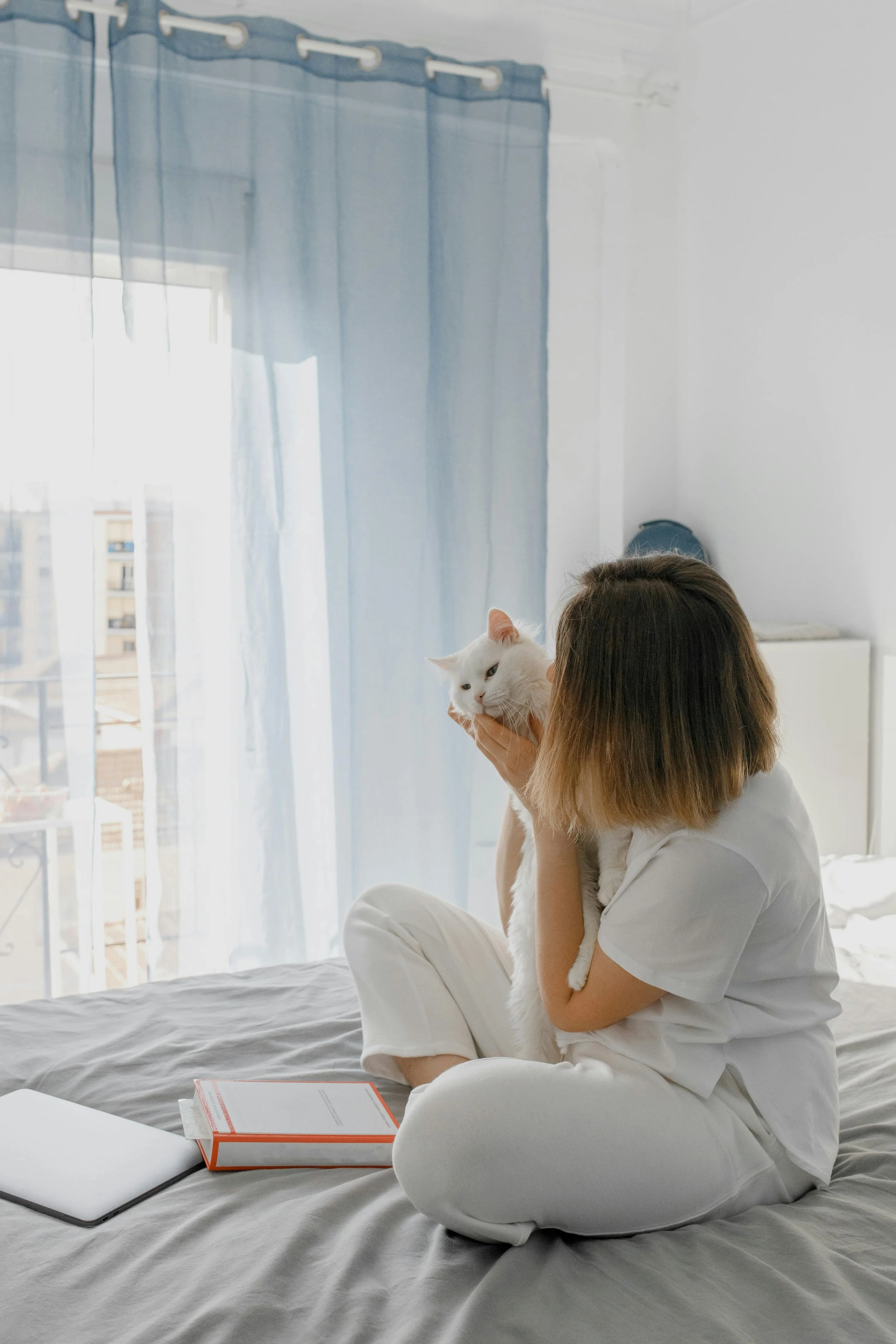
Feline Lessons in IBD Self-Care

By Laurel Dorr

Almost a year ago now, my family decided to get a cat. It had been years since we’d had a pet, but as my siblings and I are all young adults at varying stages of moving out, it was a good time for my parents to invest in a permanent companion. Through social media and the local animal shelter’s website, we found one or two kittens to consider adopting.

Once my parents got to the shelter, though, those plans quickly changed. While they briefly interacted with the grey-haired litter they went there to meet, another little orange cat distracted them. I wasn’t there, but as my parents tell it, he would shove his way in front of the other kittens to get my parents’ full attention, already intent on coming home with them.

Evidently, he was pretty persuasive. My mom likes to say that “we didn’t choose him; he chose us.” The rest is history.

At that time, I was going through a rough period with my health. Initially, it seemed like I was doing well. My IBD treatment was working great, but simultaneously, my liver enzymes went out of control. Eventually, I had to stop the medication that had worked so well - which led to my health deteriorating for several months, along with my emotional state.

That’s where our little lion man comes in (quickly dubbed Mumford - yes, an homage to the band Mumford & Sons). Whether he was cuddling with me when flares kept me home from work, or sitting outside the bathroom door and meowing at me in concern when I emerged, he was a constant presence and comfort during this time.

More recently, as my health has mostly stabilized, he has been helpful in other ways. I’ve learned a lot from him. He’s good at regulating himself, in that self-sufficient way cats have. He knows exactly when he needs to rest (even if that means crawling under someone’s bed for peace and quiet, although he prefers being around people), when to eat, when to burn off some energy. All the things I am the worst at.

Yet there is still plenty for his caretakers to do. And in training myself to watch his cues and predict his needs, I am learning to better care for myself, too. In my head, I am constantly asking, “Does he need more water? Is he getting too many treats? Is he waiting for someone to play with him?” Somehow, this has conditioned me to monitor my own needs more closely. When I’m in a mental funk, I notice myself wondering, “Do I need to get out of the house, or talk to someone? How have my eating habits been this week? Would I feel better if I got some exercise?” And just as Mumford seems out of sorts when his routine is interrupted on the weekends, I am learning to prioritize my own consistent schedule. And guess what? It actually helps.

That might be what I'll miss the most when I move into a dorm this fall. I know it’s going to be a major transition, and I could use his little reminders of these lessons. But I’m so grateful for this year with him, and this unexpected opportunity to look more closely at my self-care skills.

Featured photo by Nataliya Vaitkevich from Pexels.

The Surprising Emotional Complexity of Remission

By Laurel Dorr

No inflammation visible. Labs and biopsies clear. Looks like you’re in remission.

Like many patients, I waited a long time to hear words like that. Long enough that I wasn’t sure what remission would look like anymore. Would all of my symptoms be gone, somehow? Would I still be stressed over unpredictable flare-ups, or treatment failure? Would it mean fewer tests and procedures, less frequent medical appointments? Fewer phone calls between medical offices and insurance companies?

Some of that has been true. My follow-ups are now being scheduled in longer intervals. Most of my labs have been stable for a while now. Some of my symptoms have significantly improved, or they’re at least getting there.

But that’s not the whole story. New problems have cropped up just as others are calming down, uncovering issues adjacent or indirectly related to my IBD. Beyond that, my current treatments come with more intense side effects than I’ve had in the past, some more manageable than others. And the prior authorizations and eligibility assessments and appeals trudge on, as ever.

“Remission” has been a surprisingly emotional process. Intellectually, I’ve known for years that this is a chronic condition; but the emotional reality of that is setting in. My mindset is shifting from “we’ll fix this” to “we’ll manage this.” Emotions about my initial diagnosis, frozen by survival mode kicking in, are now resurfacing as well.

I don’t know how long this remission will last, or even what it will look like from one day to the next. After years of uncertainty, it’s a little daunting to realize this might be as close to “healthy” as I can get.

Another part of this process is becoming a new kind of patient. I have gotten used to advocating for myself - learning how to weigh treatment options, to research my condition, to ask the right questions. But in some ways, remission has been a completely new condition to grapple with. It has its own set of symptoms, whether they’re residual Crohn’s complications or side effects from my medications. Some of those symptoms are potentially treatable, but it’s a new trial-and-error process with no certain outcomes. (Plus, after years of researching and discussing IBD treatments almost exclusively, learning about completely different medications and approaches has been humbling, to say the least.)

As I described before, it requires a different emotional perspective, too. It’s one thing to advocate for yourself when everyone agrees, on some level, that you’re actively ill. It’s another entirely to ask for help when you “should” be doing fine. Whether it’s making sure I’m articulating the full impact of my lingering symptoms to my doctors, or explaining to family and friends why I still don’t feel or function “like normal,” it’s tougher to speak up.


But honestly, I'm fighting myself more than anyone. The people-pleaser in me just wants to say I’m fine, everything is fine.

Thankfully, I’ve been met with a lot of support through this process. But there’s always some fear that others won’t understand that “remission” can be more complex than it sounds. It’s not a simple narrative, but no one is going to know what’s going on unless I can talk about it.

As tricky as speaking up can be, I’ve also had some difficulty gauging how much to self-advocate. It’s a little harder to understand what I need now, or how my body is doing. Just as I had to re-learn my body when I got sick, I also have to listen for new signals from it now.

I have already found myself pushing a little too hard for answers that just needed time, or getting frustrated about problems that improved on their own. While that’s not always the case, I’m learning that I don’t have to fight every battle as strongly as I used to. Where patience could be dangerous in the past, it can actually be beneficial to me now.

All this to say, remission hasn’t been a good OR bad process for me. It’s just more complex than I ever imagined. There are still many incredible upsides, from my overall prognosis and to my daily quality of life. I’m indescribably grateful for the success of this treatment; for my body’s resilience; and for what remission means for my future, even if it’s not permanent. Simultaneously, I am learning and coping with a new stage of chronic illness, which can also be challenging.

Featured photo by James Wheeler from Pexels.

In The Skies: Traveling with IBD

By Linda Yoo

With the pandemic slowing down and summer trips starting to begin, my time on airplanes have started to increase. For a long time, air travel was the most stressful part of vacations and trips. I would dread preparing for flights due to the unpredictable nature of flights, being stuck in the middle seat, the restricted bathroom access during takeoff and landing, and the tight quarters with little room for movement. Additionally, I often experience GI distress during flights. Air pressure changes during flights can lead to increase bloating which can be painful and uncomfortable. Changes in time zones and sleep schedules often impact my mood and IBD symptoms as well. However, I feel more excited about flying after finding some activities that help manage my IBD on flights.


Some of my tips and tricks:

  • Leave plenty of time to go through security and find the gate. More stress often can lead to more symptoms.

  • Wear comfortable clothing that can easily adapt to different temperatures.

  • Stay hydrated, prepare to carry an empty water bottle through security, and find the nearest water foundation

  • Walk around the airport before the flight. Light movement can help decrease stress, boost mood, and help with relaxation.

  • Bring snacks that are easy to open and fit dietary needs

  • Go to the bathroom before the flight.

  • Create an emergency pack, which can include as-needed medications, wet wipes, an extra pair of clothes, or even a hot pack. Try to find travel-friendly items that can help relieve symptoms quickly and can be accessed easily during the flight.

  • If traveling with liquid or refrigerated medications, bring a printed prescription label and try to leave it in its original packaging (prevents spilling). Also, prepare to spend a bit of extra time through security.

  • If it is a night flight, bring items for sleeping (e.g., face mask, headphones, pillow). If the destination is in a different time zone, try adjusting to the time zone a couple of days earlier.

  • If needed, call the airline's customer service or disability line to request accommodations. You can request a seat with easy access to the bathroom.

  • Ask for help if needed; this can be your neighbor or a flight attendant. Sometimes we need an extra hand, so do not be afraid to speak up.

  • Don’t forget to breathe. Flights can be frustrating, and tensions can run high when flights are delayed or canceled. The goal is to get to the final destination safely. Having the bigger picture in mind helps pass the momentary stress from traveling.


Although flights are not my favorite part of vacations and trips, I have found ways to manage my IBD symptoms. IBD has taught me to “go with the flow,” as not everything always goes as planned. But preparing a few days ahead of my trip helps me feel more confident and less stressed. As air travel continues, I hope to continue refining my list of activities and items to make traveling with IBD easier!

Featured photo by Janiere Fernandez from Pexels.

Whispers of the Halved Sock

By Tanisha Singh

In the realm of weariness, whispers awaken,

Chronic illness casting shadows deep and long,

A tale unfurls, a fragile sock forsaken,

Symbolizing battles where strength and fatigue belong.

Within this narrative, a half-formed knit,

Emblem of resilience, fragmented yet bold,

A journey unfolds, where energy is split,

And the load of life becomes a tale untold.

Amidst the clamor of the spinning machine,

That demands full loads, brimming with might,

Weary hands falter, their strength unseen,

Half a bunch of laundry, their solace and light.

Each garment carries dreams, woven thread by thread,

Yet fatigue, a cloak that masks aspirations anew,

But in the midst of weariness, courage is bred,

Half a sock embodies the strength to push through.

Let the washer’s hum become a lullaby sweet,

Soothing weariness with a gentle embrace,

In each unfinished task, resilience finds its beat,

The laundry of life, forever incomplete, yet filled with grace.

Within the whispers of the halved sock, we find,

A story of adaptation, acceptance, and might,

Yet hidden beneath, a struggle undefined,

To navigate the maze of each arduous fight.

For in the midst of weariness, everyday tasks fade,

Drained of their colors, their vigor, their cheer,

A constant battle waged, where strength is frayed,

And simple acts become mountains, daunting and sheer.

The load of life’s laundry, a heavy burden to bear,

When anemia’s grasp weakens every step,

Each task, a mountainous climb, a weary affair,

Yet resilience blossoms, refusing to accept defeat.

So let this tale of the halved sock convey,

The silent struggle within the mundane and routine,

A reminder that each day is fought in its own way,

And the smallest victories shimmer, radiant and serene.

In the whispers of the halved sock, we find,

A testament to courage amidst the haze,

A plea for empathy, for patience, and kind,

As we navigate the labyrinth of challenging days.

May this poem serve as a reflection of your journey and a source of solace and understanding.

Featured photo grayscale clothes hanging on cable by Jose Antonio Gallego Vázquez from UnSplash.

Surgery: A First Person Account

By Mahder Ayalew Bezabih

The experience of undergoing surgery can be a daunting and overwhelming one, particularly when it comes unexpectedly. This is certainly true when it comes to my experience. I found myself facing surgery for a partial small bowel obstruction and ileocecal intussusception after undergoing a colonoscopy. Although we worked hard with my doctor to avoid the need for surgery by changing my diet and medication, I ultimately found myself needing to take this drastic step.

Going into the surgery, I was understandably fraught with a range of emotions. I felt like a failure for not having followed my diet properly and blamed myself for the situation that I now found myself in. I struggled greatly in the month leading up to the surgery to present a strong face to my family, even as I cried alone and struggled to come to terms with what was happening.

Despite this, I was able to take some solace in the knowledge that I was receiving the very best care available. I was treated by a team of skilled and compassionate surgeons and nurses who were supportive every step of the way. Even during the moments leading up to the operation, I was able to remain calm and focused, making jokes to ease the tension in the room.

I was unconscious during the surgery itself. However, I was able to piece together some details afterwards from the operation room note. I received resection and anastomosis via laparoscopic surgery, which took a total of three hours.

After the surgery was completed, I struggled with a range of physical and emotional challenges. I needed to sleep but woke frequently and suffered from bouts of vomiting. In the middle of the night, I found that I was unable to cope with the discomfort any longer and reached out to the nursing staff for support.

I have improved with medication, day by day as the pain goes away. The wound has healed. I am eating well—over time, not the day after surgery of course. Now one month after surgery, I am mentally and physically well and able to return to work.

All in all, my experience serves as a powerful reminder of the importance of persistence and resilience in the face of medical challenges. Although the road to recovery may be long and difficult, with the right support and care it is possible to emerge from even the most daunting situations stronger and more resilient.

Featured photo by Karolina Grabowski from Pexels.

Eros and Thanatos

By Tanisha Singh

Content warning: discussion of suicidality and mentions of disordered eating'

For mental health resources, see IBD Patient Support Foundation India

Maslow’s theory of motivation, originally conceived by psychologist Abraham Maslow as the “Hierarchy of Needs” in 1956, states that there are certain human needs which, depending on their order in the hierarchy, elicit a proportionate motivational response from an individual. In short, meaning that certain physiological needs such as food, water, air, safety, love and belongingness need to be fulfilled before one can find the motivation to pursue growth needs such as self-actualization. When you are chronically ill, you find yourself battling at the lower levels of this hierarchy before you can gather the energy, motivation or well-being needed to pursue self-actualization—if at all. At least for me, it’s been a challenge to overcome the fatigue, the tiredness, the anxiety, the hunger that comes with my disease, so much so that there was a professional degree I wanted to pursue in the past and now I had to renegotiate my goals to settle for a less intensive course instead given my ability to manage my chronic disease.


All of this struggle has greatly affected my self-esteem. I feel disabled and lacking in ability, especially in how I lack the energy to do all the things someone my age would usually be able to do. A part of it is based on my perspective on having fallen sick, which may not be the most resilient of all ways to view such a thing. I am sure there are people who don’t view this as such a major setback the way I do. But the thing is that I simply do feel this way, no matter what I tell myself. I try daily to cultivate a more optimistic outlook—and I really do try very hard—but with fleeting moments of strength, I wind up mostly with despair and dejection. Perhaps this is because even before the illness, I struggled with my mental health. I didn’t have an easy childhood. I spend most of my days today as I did then, in isolation, devoid of familial nourishment. As a result, I run out of the emotional and physical nutrients with very little left to pursue “growth.” I was suicidal before the illness and struggle even more so now. The pain and hunger affect me every day—not to mention, for example, the dizziness of anemia. It’s important to mention here that this may not be indicative of a general experience of every patient, but is just reflective of my experience. Despite medications and care, I struggle with a lot of pain, discomfort, and several other contingent health issues that have compelled me to follow a very limited diet, hence the hunger (and my disordered eating history). 


So, this time around when I decided to end it all given the quality of my life, I really decided to end it. It was unlike all the other times because I really finally decided to do it this time. And I was simply counting down to the day I was going to do it. And in the waiting period I discovered a latent wish to live that had never surfaced before. The death wish was the only psychic motivation that echoed in my head all my life: the only thing I was most motivated towards. But this time around it was different, because the death sentence became very real. It was going to happen, I was going to end it all. And as I grew closer and closer to the decided day, I had this really trivial but strangely profound thought. I said, in my head, “But I have not listened to all the music I wanted to listen to. And I really feel like re-watching Modern Family again. Oh! And how much I want to lose myself to dance! I am going to miss that! And these two friends of mine that I have been talking to lately in my last days, Ziggy and Mo, I want to talk more with them. Talk and talk and talk, halfway to dusk, while music soothes my nerves and gently puts me to a restful sleep. And ideally I would wake up to a breakfast of aloo paratha and chai.” Well unfortunately the alloo parathas won’t happen (☹), but I stayed for the music, for the dancing, for laughing with friends, and for the love of art.  


These desires make sense if you knew that I always wanted to be an actor/dancer growing up and just when I moved to Mumbai to pursue my dreams, this disease happened and things have never been the same. I still push myself to go to dance class though, even though I am struggling to have enough energy to keep up, and the dizzies that I told you about! They won’t let me progress as fast as the others, if I am going to have to drop down on my knees every 10 minutes in the choreography! And so “growth” will have to be subjectively defined. It may not look like the capitalism-fueled modern day “growth,” but choosing and finding meaning in seemingly trivial things like music, art, movies, dancing, talking to friends may just be growth needed for a chronically sad girl who chooses to live despite the pain and the disease.


Being on the edge of dying made me want to live. For the small things. For the music, for the art, for the dancing, and for the friends! Mo and Ziggy perhaps acted as a buffer between me and the death wish, giving me enough time and mental stability to arrive upon the wish for life. Eros and Thanatos as psychoanalyst Sigmund Freud would say. The two major drives/instincts that grip our psyches, meaning that the battle to choose death or life is a perpetual reality for each one of us. Sometimes maybe we need to truly choose life and the stuff of life, the experiencing of the sensory, the real and the immediate, as opposed to the ethereal ideas of success and achievement that touch us only fleetingly and from a distance. Perhaps suicidality can allow one to assert and regain a sense of control over circumstances they can’t control—from that point of choice one chooses life again! For now, that is me, and I still struggle daily with suicidality, the pain, the hunger, the sadness, the isolation, but I am glad to have arrived upon at least a list of things I could live for. And the thing about it is that the list continues to grow. Besides the music, art, dance, and friends, (and psychoanalysis as is quite evident) I also want to live to see my clients (as a therapist myself) truly thrive. Maybe all these deeply existential struggles can be used to help others navigate through these tough existential themes of living. What it tells me is that meaning has to be made, and has to be given to life which is personal to us. 

Cheers to the trivial but significant stuff of life that make one choose it—every day!

Featured photo Eros Y Thanatos by Nath Planas from Wikimedia Commons.

A Patient’s Agency: Taking Action Through Nutrition

By Divya Mehrish

The past two decades have witnessed a significant rise in reported IBD cases amongst American adults, which has now hit around 2.2 million (1). In parallel with this rise, the number of studies examining the influence of diet on IBD symptoms has increased. But diet is such a personal phenomenon that uniquely affects all people, especially IBD patients, and is thus a complex issue to investigate scientifically. For example, some patients find that eliminating gluten, processed food, or dairy helps relieve pain or gastrointestinal discomfort. But most of us identify these foods by trial and error, trying to figure out what might be a trigger and what might soothe and nourish our gastrointestinal tracts. However, nutrition is not a game to be played.

Who can most effectively target the kinds of foods that are most nourishing and easy to tolerate for a sufferer of IBD? The patient. I believe there currently exists a significant hole in the current dialogue around the relationship between nutrition and the manifestation of IBD symptoms. The missing voice in this dialogue belongs to the patient.

Given that IBD is a complex condition that impacts every individual differently, we, as patients, represent primary sources who can give voice to the nuances of our diseases and collaborate with our providers to identify potential treatments for our particular cases. We are a uniquely powerful lens into IBD.

In my own hospitalization, I felt as though my nutrition-focused questions were not given the time they deserved. To streamline the treatment process for a particular patient, doctors should take into consideration the specific health journey, lifestyle, symptoms, questions, perspectives, and goals their patient communicates to offer more individualized medical recommendations and therapies, thereby actively shifting the current patient-provider dynamic.

While there are many essential elements of the patient-provider dynamic to reflect on, I am focusing on the great potential for collaboration, particularly on the patient’s side, in nutrition—a critical element of IBD recovery given that this condition manifests in the GI tract and can directly interfere with an individual’s digestion and nutrient absorption.

If your provider does not open the space for conversations centered around nutrition, you can take the initiative to be curious, ask questions, and direct the discussion in a way that will make the space most meaningful to you and your case. In my personal experience, I found online forums to be particularly helpful. In the seven years since my diagnosis, I have noticed a steady increase in the number and variety of IBD-specific community forums available. The most active of these online support programs are run and monitored by major organizations such as the Crohn’s & Colitis Foundation, which allows patients (whose diagnoses must be confirmed through a registration process before permission to post is granted) to exchange advice and personal experiences. Many patients use these platforms to seek out empathy directly from other patients. The existence of and patient reliance on these rich discussion hubs suggests that patients take advantage of these forums to engage in meaningful conversations, especially around the relationship between nutrition and IBD flare-ups.

To fight my own battle against IBD, I have been forced to recognize that my body is not, in fact, the enemy, but an entity I need to cooperate with and nourish. While nutrition is just one answer to the multidimensional puzzle that is IBD, we, as patients, exist in a tremendously vulnerable and powerless place when gravely ill, and often want to feel as though we can take action over our health and can make intentional changes in our routines to improve our symptoms. Through using knowledge, ideas, and inspiration gleaned from online patient forums as a foundation to transform the conversations that take place in the doctor’s office, I believe us patients can more clearly offer our providers the full story of how our illnesses impact all realms of our health—physical, personal, social, mental, and emotional. We are so much more than chronic illnesses—not “problems” that need fixing but instead beautiful, multifaceted entities on our own journeys to full health.

(1): “Inflammatory Bowel Disease: Data and Statistics,” Centers for Disease Control and Prevention (Centers for Disease Control and Prevention, November 9, 2021), http://www.cdc.gov/ibd/data-statistics.htm.

Featured photo by Pixabay from Pexels.

This is the body I have today. 

By Laurel Dorr


cw: Body Image

When I was diagnosed with Crohn’s, I wasn’t prepared for all the ways it would change my relationship to my body. In particular, I didn’t know how it would affect my body image. When I was at my sickest, I dropped to my lowest weight since I was a teenager. As soon as I was diagnosed and started my first course of steroids, I lost about thirty pounds in as many days. I was getting sicker when I should have gotten better. Everyone seemed surprised that I was losing weight on prednisone. My weight stayed down for several months. I complained about it being a constant reminder of how unwell I was or how strange this new body felt. But beneath that, I was also relieved.

I didn’t have a very body-positive perspective to begin with, and I had struggled with my weight for years. Finally, the number on the scale had started to budge. Once I started to stabilize on my second biologic, I took my renewed appetite as a positive sign that my condition was improving… until my weight started to creep back up. And up. And up. Of course, I knew that I needed to eat more than a couple pieces of toast a day to get well. After more than a dozen iron infusions, I knew that I needed more nutrients to keep my anemia at bay. I knew this fuel was even clearing away my brain fog. However, I was also acutely aware of how differently my clothes fit. How the large-frame glasses I’d bought a year before looked goofily small on my steroid-swollen face. I made adjustments, with increasing frequency, to Zoom camera angles and selfies, trying to look more like my old self, and I avoided looking at pictures of myself on social media.

After being on prednisone for almost a year straight, I gained more than double the weight I’d lost at the beginning. Prednisone made me feel terrible in a lot of ways, but the way it altered my body image was the worst. Finally, I was put on a medication that allowed me to wean off—and for awhile, stay off—steroids. All of the not-myself-ness I’d been feeling melted away, almost immediately. My appetite became more manageable, and I had the energy to treat my body in healthier ways—better sleep, more movement. It didn’t happen overnight, but my body slowly began to feel more like it used to.

That doesn’t mean things are back to “normal,” whatever that means. Even if my weight continues to go down, my body simply isn’t the same. I described the extremes of my weight changes, but the reality is that it still fluctuates back and forth, as medication doses and other factors shift over time. I’m coming off yet another prednisone course now, and it might not be the last time I need it. Even if it is, weight fluctuations aren’t unusual, especially with Crohn’s disease—at least for now, these changes are relatively normal for me.

After all those months struggling with my body image, I’ve become more accepting of these changes, the inevitability of them. Some of it is out of my control, some of it isn’t; but none of it is a punishment. More importantly, I just don’t think about my body image as much anymore. This is the body I have today. Some days, it’s that simple. There are things I like about it, and things I don’t. Some days, those things change, or are more noticeable. But I’ve learned to look at it with less judgment. I buy new clothes when I need to, instead of squeezing into pieces I’m not comfortable in. I don’t avoid taking pictures with my friends, and I don’t cringe when I see unflattering angles of myself. Some days, I’m better at taking care of my body than others; but I also recognize that my weight is not a direct reflection of how “healthy” or “fit” I am at any given time. I’m allowed to live in this body, whatever it looks like. I deserve to enjoy this body. Right now, that’s enough.

De-Stressing to Your Best with IBD

By Linda Yoo

Early in my IBD journey, I noticed a relationship between high stress and worsening IBD symptoms. Thus, I worked to de-stress and find new hobbies. My efforts backfired as I got more stressed from trying to de-stress which defeated the point. I joined new groups and created hobbies that ended up feeling like a chore, not sparking joy, and leading to frustration. To not fall into this pit hole again, I began intentionally choosing my de-stressing activities.


For the most part, I have come up with some rules I follow, which are de-stressing activities:

-       do not push me to a breaking point

-       do not diverge from my usual routines and habits

-       do not require keeping a score or ending up with a win/loss

-       can result in a product (e.g., a painting, vase) but there is no expectation of a product or to be productive

-       can be left at any time without consequences or guilt


These activities require little effort, are flexible, and some can be altered to accommodate even my worst IBD days. I do not choose activities that require absolute commitment (e.g., scheduled classes) or do not have a bathroom nearby. These two items were my biggest problems when choosing activities. I found it at times difficult to share with strangers my dynamic disability when I missed a class or had to leave early. Additionally, not having access to a bathroom is very difficult for me, even in remission. I gravitate toward going to places that have bathrooms for peace of mind.


Some of my favorite de-stressing activities are:

-       Take a bath with a bath bomb

-       Sit at a coffee shop and people-watch.

-       Go to the library and look at the art on the front covers of books

-       Walk into a craft store/furniture store/home decor store/mall and get lost

-       Listen to a podcast on a new topic

-       Take a towel, lay it on the grass, and deep breathe


It is important to note that exercise can be a great de-stressing activity! I think it can be fun to diversify activities and have options for low-energy days as well. Choosing an activity on my list can feel a bit spontaneous and exciting, and I like to keep a list of activities with me on my phone. The most important part of my de-stressing activities is that they do not have an end goal, a predetermined outcome, or an expectation of being productive. To fully enjoy the moment and the activity, I need to be completely fine with it taking up space and time without worrying about any outcomes. I try to complete a few activities per week and deliberately make room in my schedule for de-stressing. If I do not plan the time I need for these activities, they get put on the back burner and I end up feeling burnt out. De-stressing activities are key to keeping my IBD in remission and boosting my mental health!

Featured photo by Taryn Elliot from Pexels.